Blog

  • Unlocking the Future of Fleet Management with Blockchain Technology

    The fleet management industry is undergoing a significant transformation, with blockchain technology playing a pivotal role in revolutionizing how fleet data is handled. The global fleet management market, valued at USD 22.32 billion in 2024, is expected to reach USD 100.42 billion by 2034, growing at a remarkable CAGR of 16.23%. As the market rapidly expands, blockchain is emerging as a game-changing technology, offering vast opportunities to improve data security, transparency, and operational efficiency.

    Get All the Details on Our Solutions – Brochure Download @ https://www.towardsautomotive.com/download-brochure/1139

    Enhanced Data Security and Transparency

    One of the most impactful advantages of blockchain in fleet management is its ability to secure and transparently share critical data across multiple stakeholders. Fleet operators, maintenance providers, insurance companies, and customers often need to exchange sensitive information. With blockchain, this data can be securely shared with an immutable, transparent record of transactions. This reduces the risk of fraud, errors, and discrepancies, providing a trustworthy source of truth for all parties involved.

    For example, blockchain can track and verify vehicle maintenance histories, insurance claims, and fuel transactions. Each event is recorded in a decentralized ledger, which cannot be altered or tampered with, ensuring that all transactions are accurate and transparent. This increased reliability of data makes it easier for operators and other stakeholders to make informed decisions based on the most up-to-date and trustworthy information.

    Improving Vehicle Lifecycle Management

    In fleet management, maintaining accurate and transparent records of vehicles is crucial for smooth operations. Blockchain technology enhances vehicle lifecycle management by ensuring the integrity of data related to ownership, maintenance, and accident history. This is particularly beneficial for fleet operators managing large volumes of vehicles.

    With blockchain, vehicle records can be securely stored and shared, providing an immutable history of each vehicle’s lifecycle. When vehicles are sold or transferred between operators, blockchain makes the process smoother by ensuring that all records, including service history and accident reports, are accurate and accessible. This transparency helps operators build trust with buyers and sellers, streamlining the purchasing or leasing process.

    Streamlining Billing and Payment Processes

    Blockchain technology can also streamline administrative processes like billing and payments. Fleet management often involves multiple services, such as fuel, toll payments, and maintenance. Blockchain’s automation capabilities enable more efficient, error-free billing processes by reducing the need for manual intervention and paperwork.

    For example, fuel and toll payments can be automatically tracked and reconciled, reducing the chances of human error and administrative overhead. This efficiency not only cuts down on operational costs but also improves cash flow for fleet operators by accelerating payment cycles and reducing billing disputes.

    Supporting the Transition to Electric Vehicles

    As the adoption of electric vehicles (EVs) continues to grow, blockchain is poised to play a key role in managing EV fleets. One of the challenges with EVs is ensuring the transparency and security of charging sessions, battery health, and energy usage. Blockchain offers a secure platform for monitoring and verifying these aspects, helping fleet operators maintain accurate data on the condition of their vehicles and their energy consumption.

    Blockchain can also help reduce the risk of fraud in EV-related transactions. By securely recording each charging session, operators can ensure that the data is accurate and tamper-proof, providing a trustworthy way to monitor energy usage across a fleet of EVs. This transparency is essential for managing electric fleets efficiently and ensures that operators have reliable data on energy consumption for cost management and optimization.

    Invest in Our Premium Strategic Solution @ https://www.towardsautomotive.com/price/1139

    You can place an order or ask any questions, please feel free to contact us at sales@towardsautomotive.com

    Explore the comprehensive statistics and insights on automotive industry data and its associated segmentation: Get a Subscription 

    For Latest Update Follow Us: https://www.linkedin.com/company/towards-automotive

  • The Leading Role of Red Light & Speed Enforcement in the Road Safety Market

    The Leading Role of Red Light & Speed Enforcement in the Road Safety Market

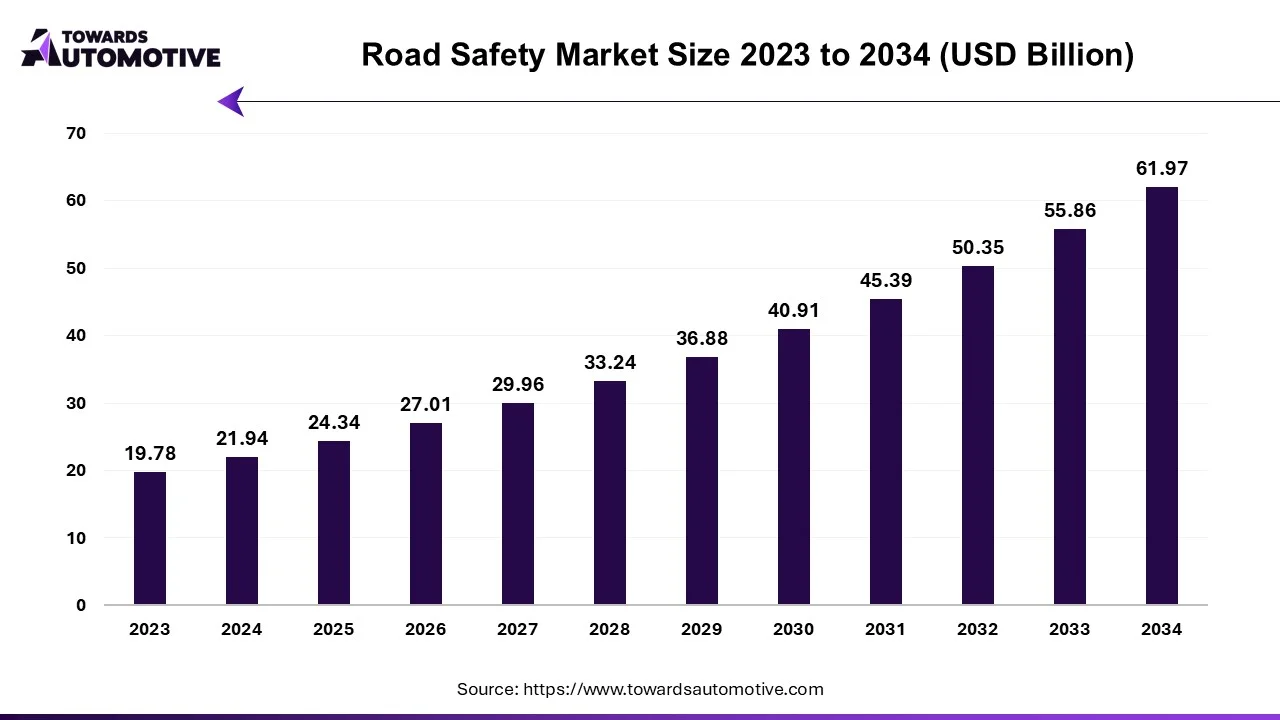
    The global road safety market is poised for significant growth, with a current size estimated at USD 21.94 billion in 2024. This market is expected to expand to USD 61.97 billion by 2034, growing at a robust CAGR of 10.94% from 2024 to 2034. A major contributor to this growth is the red light and speed enforcement segment, which addresses two of the most prevalent causes of road accidents: speeding and red-light violations. By leveraging automated enforcement systems such as red-light cameras and speed detection cameras, this segment plays a crucial role in reducing traffic violations, promoting road safety, and enhancing overall public welfare.

    Road Safety Market Size 2023 to 2034 (USD Billion)

    Get All the Details on Our Solutions – Brochure Download @ https://www.towardsautomotive.com/download-brochure/1253

    Reducing Traffic Violations and Promoting Safer Roads

    Automated enforcement tools provide continuous monitoring and evidence-based enforcement, which significantly deter reckless driving behaviors. By capturing violations in real-time, these systems ensure that traffic laws are upheld even in the absence of on-site law enforcement officers. This level of efficiency and consistency is essential in reducing accidents caused by speeding or disregarding traffic signals, which are major contributors to road crashes worldwide.

    In addition to minimizing violations, red light and speed enforcement technologies enhance public safety by creating an environment where drivers are more likely to comply with road regulations. The constant presence of these systems serves as a deterrent, encouraging drivers to adjust their behavior, ultimately contributing to a safer road environment for everyone, including pedestrians, cyclists, and motorists.

    Increasing Adoption by Governments and Municipalities

    Governments and municipalities are increasingly recognizing the value of red light and speed enforcement solutions as essential components of their broader traffic management and safety strategies. These systems reduce the need for manual enforcement, allowing local authorities to allocate resources more efficiently. Rather than relying on traditional policing, which can be resource-intensive, these automated tools offer a more scalable and effective approach to ensuring traffic laws are followed.

    Furthermore, integrating these systems into traffic management networks allows for better coordination and monitoring. Local authorities can collect data on traffic patterns, accident hotspots, and violation rates, which can inform future policy and infrastructure decisions. This data-driven approach not only enhances enforcement efforts but also supports the broader objective of improving urban mobility.

    Technological Advancements in Enforcement Systems

    The effectiveness of red light and speed enforcement systems has been significantly boosted by advancements in technology. Artificial intelligence (AI) and machine learning algorithms are increasingly being incorporated into these systems, improving their accuracy and reliability. AI enables real-time analysis of traffic behavior, ensuring that violations are detected and processed with minimal errors. Machine learning algorithms further enhance the system’s ability to adapt to new traffic patterns, making enforcement even more precise and efficient.

    By utilizing these cutting-edge technologies, red light and speed enforcement systems can process violations faster and more accurately, reducing the likelihood of false positives and ensuring that traffic violations are addressed promptly. This technological leap is also facilitating the deployment of more sophisticated systems that can handle high traffic volumes without compromising performance.

    The Impact of Urbanization and Rising Vehicle Ownership

    Urbanization and increasing vehicle ownership are significant factors driving the demand for red light and speed enforcement systems. As cities grow and traffic volumes rise, the risk of accidents escalates. The need for efficient and scalable traffic management solutions has never been greater. Red light and speed enforcement technologies help mitigate the dangers associated with growing traffic volumes, ensuring that urban environments remain safe for all road users.

    Additionally, as cities modernize their road infrastructure, the integration of red light and speed enforcement systems into smart traffic management networks is becoming more common. This integration not only improves the enforcement of traffic laws but also enhances the overall efficiency of the transportation system. Smart traffic networks can optimize traffic flow, reduce congestion, and prioritize safety, further contributing to the market growth of automated enforcement technologies.

    Invest in Our Premium Strategic Solution @ https://www.towardsautomotive.com/price/1253

    You can place an order or ask any questions, please feel free to contact us at sales@towardsautomotive.com

    Explore the comprehensive statistics and insights on automotive industry data and its associated segmentation: Get a Subscription 

    For Latest Update Follow Us: https://www.linkedin.com/company/towards-automotive
  • Global Freight Transport Management Market Set for Robust Growth: Projected to Reach USD 86.52 Billion by 2034

    Global Freight Transport Management Market Set for Robust Growth: Projected to Reach USD 86.52 Billion by 2034

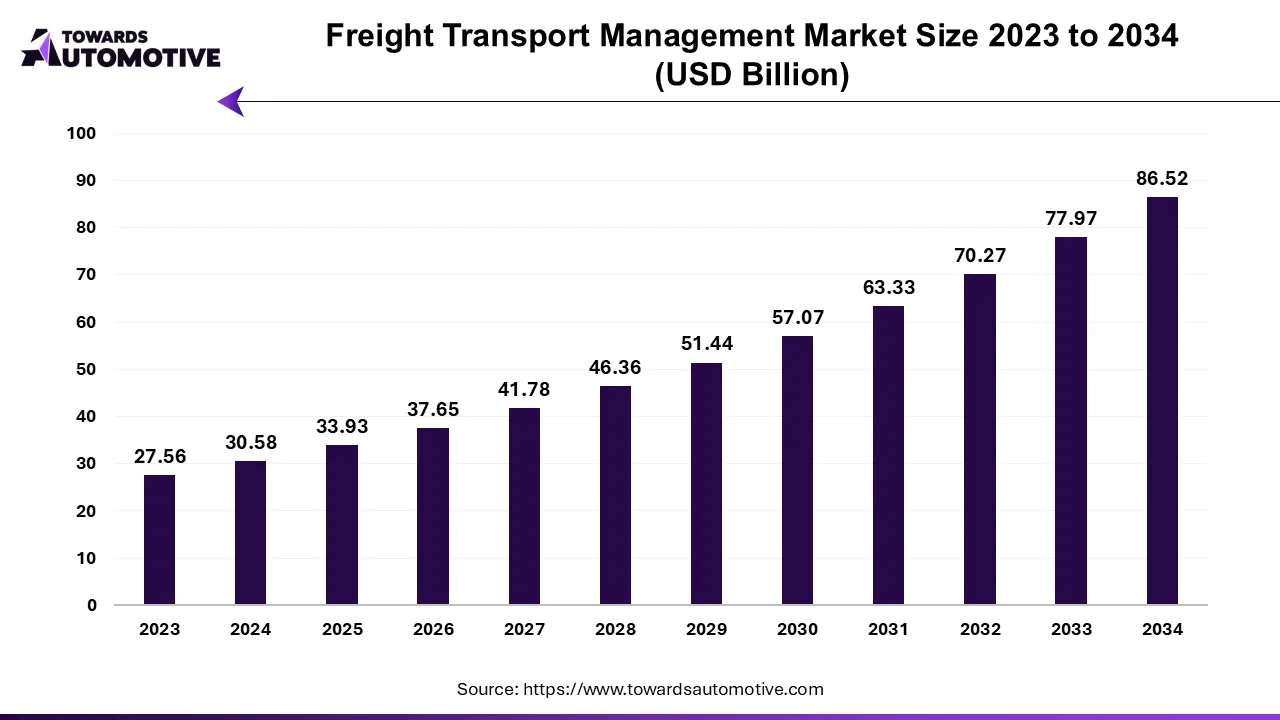
    The global freight transport management market is poised for remarkable growth in the coming decade. As of 2024, the market size is estimated at USD 30.58 billion, with projections indicating a substantial rise to USD 86.52 billion by 2034. This growth is driven by the increasing demand for efficient logistics operations, advancements in technology, and the global expansion of trade networks. With an impressive compound annual growth rate (CAGR) of 10.96% from 2024 to 2034, the freight transport management sector is set to experience transformative changes.

    Freight Transport Management Market Size 2023 to 2034 (USD Billion)

    Get All the Details on Our Solutions – Brochure Download @ https://www.towardsautomotive.com/download-brochure/1129

    Factors Driving Market Growth

    Several factors contribute to the rapid expansion of the freight transport management market:

    1. Technological Advancements: The integration of technologies such as artificial intelligence (AI), machine learning, and blockchain in freight management systems is revolutionizing logistics operations. These technologies enhance route optimization, improve visibility, and reduce costs, making them integral to the industry’s growth.
    2. E-commerce Boom: The continuous growth of e-commerce has escalated the need for efficient and reliable freight transport solutions. Businesses are increasingly relying on freight management systems to handle complex logistics challenges and meet customer expectations for fast, cost-effective deliveries.
    3. Global Supply Chain Expansion: As companies expand into new markets, there is a greater need for sophisticated freight transport management systems. These systems allow businesses to manage their global supply chains more effectively, reducing lead times and optimizing inventory management.
    4. Sustainability and Regulatory Compliance: Freight transport management solutions are also evolving to meet growing environmental concerns and stricter regulations. Platforms that focus on reducing carbon footprints and ensuring compliance with international standards are gaining traction.

    Key Market Players and Innovations

    In response to the growing market demand, several companies have introduced cutting-edge platforms to enhance logistics operations. For instance, in October 2023, CocoonFMS launched CocoonOPS, a transport management system designed to streamline logistics. Similarly, Transporeon introduced its Freight Marketplace in September 2023, offering a comprehensive freight transportation management platform. These innovations are setting the stage for further improvements in freight operations, particularly through digital transformation.

    In addition, Tiger Logistics launched FreightJar in May 2023. This platform provides businesses with a user-friendly interface to book and manage freight, addressing critical challenges in the logistics sector.

    Future Outlook

    The freight transport management market is expected to continue its robust growth over the next decade. By 2034, the market is anticipated to reach USD 86.52 billion, fueled by advancements in technology and an ever-expanding global trade ecosystem. Companies across industries will increasingly turn to advanced freight transport management solutions to optimize their operations and meet the rising demands of modern logistics.

    As the market grows, businesses will need to focus on sustainability, technological innovation, and efficiency to stay competitive. The next decade promises to reshape the logistics landscape, offering vast opportunities for growth and expansion.

    Invest in Our Premium Strategic Solution @ https://www.towardsautomotive.com/price/1129

    You can place an order or ask any questions, please feel free to contact us at sales@towardsautomotive.com

    Explore the comprehensive statistics and insights on automotive industry data and its associated segmentation: Get a Subscription 

    For Latest Update Follow Us: https://www.linkedin.com/company/towards-automotive

  • The Growing Impact of Turbocharging Technology in the Passenger Car Segment: Market Growth and Advancements

    The Growing Impact of Turbocharging Technology in the Passenger Car Segment: Market Growth and Advancements

    The passenger car segment has emerged as a leading driver of growth in the automotive turbocharger market, fueled by a combination of consumer demand for high-performance vehicles, fuel efficiency, and the push for lower emissions. Turbocharging technology is becoming increasingly integral to the development of passenger cars, as automakers aim to meet the evolving expectations of environmentally conscious consumers while enhancing vehicle performance.

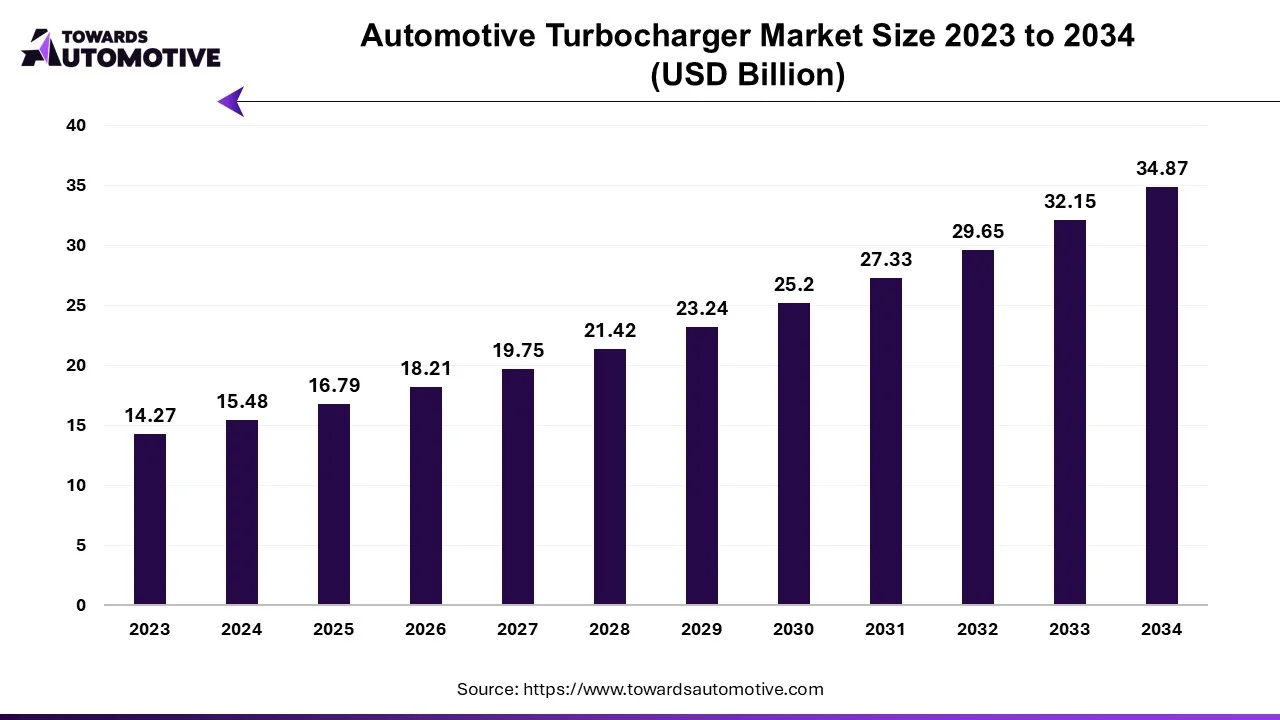
    The global automotive turbocharger market is valued at USD 15.48 billion in 2024 and is projected to reach USD 34.87 billion by 2034, expanding at a robust CAGR of 8.46% from 2024 to 2034. This rapid growth underscores the increasing adoption of turbocharging technology, particularly in the passenger car segment, where it is playing a crucial role in shaping the future of the automotive industry.

    Automotive Turbocharger Market Size 2023 to 2034 (USD Billion)

    Get All the Details on Our Solutions – Brochure Download @ https://www.towardsautomotive.com/download-brochure/1069

    A Solution to Rising Fuel Prices and Environmental Concerns

    One of the most compelling reasons for the growing adoption of turbochargers in passenger cars is the rising demand for fuel-efficient vehicles. With fuel prices climbing and concerns about the environment intensifying, consumers are increasingly seeking vehicles that offer excellent fuel economy without compromising on power and performance. Turbocharged engines provide an ideal solution to this challenge, offering a significant boost in power output while enhancing fuel efficiency.

    By compressing air entering the engine, turbochargers increase the engine’s efficiency, allowing it to produce more power without requiring larger, more fuel-hungry engines. This leads to better fuel economy, lower carbon emissions, and a reduction in the environmental impact of passenger vehicles.

    Advancements in Turbocharging Technologies

    In recent years, turbocharging technologies have advanced significantly. Features like variable geometry turbochargers (VGT) and twin-turbo systems are allowing automakers to fine-tune their vehicles’ performance. VGTs allow for more precise control over the airflow to the engine, optimizing fuel consumption and emissions across various driving conditions. Twin-turbo systems, on the other hand, provide more power across a wider range of speeds, further improving fuel efficiency without sacrificing performance.

    These innovations have made turbocharged engines even more attractive to automakers, as they allow for better optimization of fuel consumption and reduced emissions, which are becoming increasingly important as governments impose stricter environmental regulations.

    The Rise of Hybrid and Electric Vehicles

    Another factor contributing to the growth of turbocharging in the passenger car segment is the increasing shift toward electric and hybrid vehicles. In hybrid powertrains, turbochargers are used to complement electric motors, further enhancing vehicle performance and fuel efficiency. This combination of traditional internal combustion engines with electric power offers a balanced approach to reducing emissions while maintaining the driving dynamics that consumers enjoy.

    Turbochargers play a critical role in hybrid vehicles, where they help maximize the potential of smaller, more efficient engines, allowing these vehicles to achieve optimal performance even when running on electric power alone. As the market for hybrid and electric vehicles continues to expand, the demand for turbochargers is expected to follow suit.

    Invest in Our Premium Strategic Solution @ https://www.towardsautomotive.com/price/1069

    You can place an order or ask any questions, please feel free to contact us at sales@towardsautomotive.com

    Explore the comprehensive statistics and insights on automotive industry data and its associated segmentation: Get a Subscription 

    For Latest Update Follow Us: https://www.linkedin.com/company/towards-automotive
  • Revolutionizing Vehicle Diagnostics: Key OBD Device Launches and Market Growth Outlook

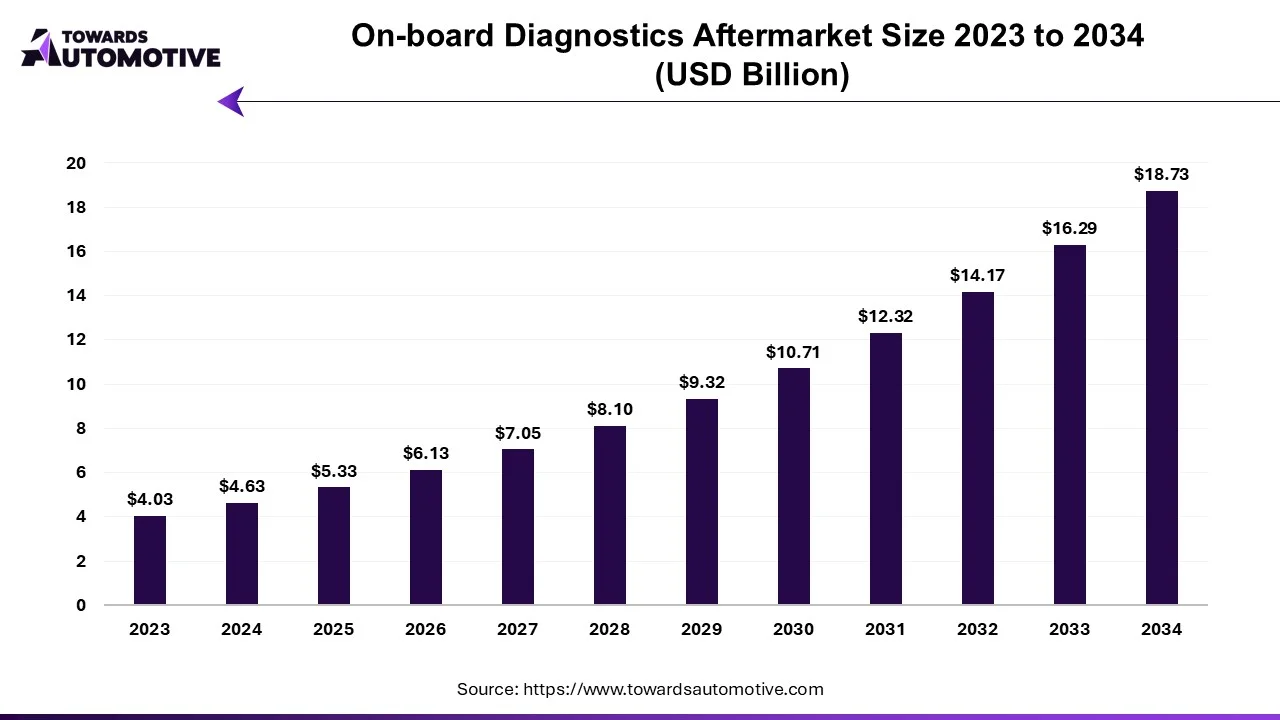
    The automotive diagnostics industry has witnessed significant advancements in recent months, with major players introducing innovative solutions to enhance vehicle performance monitoring. On-Board Diagnostics (OBD) devices are at the forefront of this revolution, helping drivers, fleet operators, and automotive technicians identify and diagnose issues in vehicles in real-time. As the global market for these devices continues to expand, we’re seeing a surge in product launches and technological innovations. The global on-board diagnostics aftermarket size is projected to grow from USD 4.63 billion in 2024 to USD 18.73 billion by 2034, expanding at a robust compound annual growth rate (CAGR) of 14.99% from 2024 to 2034. This growth is reflective of the increasing demand for advanced diagnostic tools and solutions in the automotive industry. Let’s take a closer look at some notable OBD device launches by leading companies in 2023 and 2024.

    On-board Diagnostics Aftermarket Size 2023 to 2034 (USD Billion)

    Get All the Details on Our Solutions – Brochure Download @ https://www.towardsautomotive.com/download-brochure/1102

    Bosch: A New Era for Heavy Vehicle Diagnostics

    In October 2024, Bosch unveiled its latest OBD device specifically designed to diagnose trucks and heavy vehicles. As the demand for fleet management and real-time vehicle monitoring grows, Bosch’s new offering targets the unique needs of larger vehicles. This diagnostic tool will help fleet operators better manage maintenance schedules and improve the operational efficiency of trucks and heavy machinery. Bosch’s deep expertise in automotive technology and diagnostics positions this device as a significant advancement in the OBD market, catering to the needs of industrial and commercial vehicle sectors.

    Queclink: Expanding Coverage Across North America

    Earlier in September 2024, Queclink launched the GV500CNA, an OBD device tailored for detecting issues in vehicles across North America. The GV500CNA offers a wide range of features aimed at enhancing vehicle diagnostics, particularly for the North American market. Queclink’s device is designed to detect and monitor key vehicle parameters, enabling real-time alerts and data analytics. This allows fleet managers and vehicle owners to monitor vehicle health, improve safety, and reduce downtime. With a focus on the North American region, Queclink is positioning itself as a key player in the OBD space, offering solutions designed to meet the specific needs of vehicles on the roads in this area.

    Jio: Insights into Vehicle Performance

    In November 2023, Jio launched the JioMotive OBD device, marking its entry into the automotive diagnostics space. The JioMotive device is designed to provide valuable insights into the performance of vehicles, helping owners and fleet managers monitor critical aspects such as engine health, fuel efficiency, and maintenance schedules. The device’s connectivity features allow for seamless integration with mobile apps and cloud-based services, giving users the ability to access detailed vehicle diagnostics from anywhere. By offering advanced diagnostic capabilities and leveraging Jio’s network infrastructure, the JioMotive OBD device promises to revolutionize the way vehicle performance is managed and analyzed.

    Hella Gutmann: AI-Powered Automotive Diagnostics

    In August 2023, Hella Gutmann introduced a cutting-edge automotive diagnostics solution powered by artificial intelligence. Unlike traditional OBD devices, this AI-based tool leverages machine learning algorithms to analyze vehicle data more accurately and efficiently. By continuously learning from vast amounts of diagnostic data, Hella Gutmann’s AI tool enhances the diagnostic process, providing more precise and quicker problem identification. This solution is designed to assist automotive professionals in diagnosing complex vehicle issues, making it a powerful tool for service centers and repair shops. With AI integration, Hella Gutmann’s solution takes automotive diagnostics to the next level, improving the overall service quality and vehicle reliability.

    Invest in Our Premium Strategic Solution @ https://www.towardsautomotive.com/price/1102

    You can place an order or ask any questions, please feel free to contact us at sales@towardsautomotive.com

    Explore the comprehensive statistics and insights on automotive industry data and its associated segmentation: Get a Subscription 

    For Latest Update Follow Us: https://www.linkedin.com/company/towards-automotive

  • Driving Growth in the Global Crane Market: The Impact of Construction Industry Advancements and Infrastructure Investments

    Driving Growth in the Global Crane Market: The Impact of Construction Industry Advancements and Infrastructure Investments

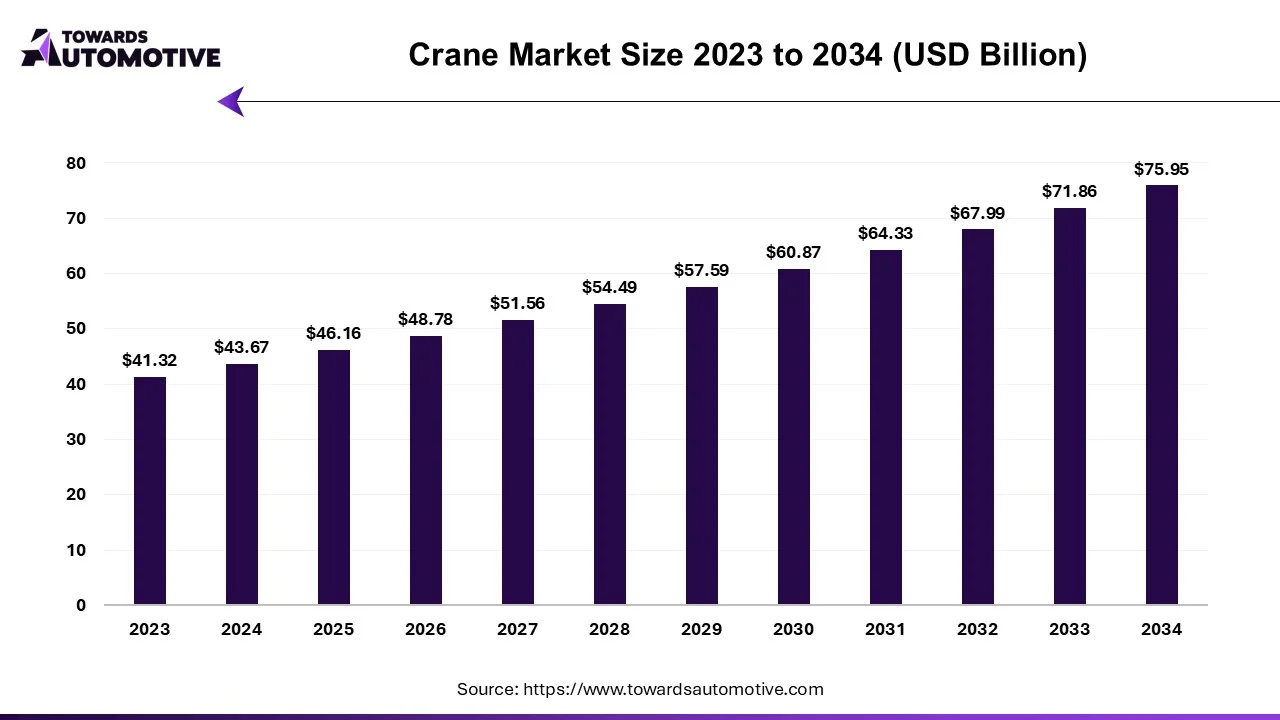
    The global crane market is experiencing robust growth, fueled largely by the construction industry. Valued at USD 43.67 billion in 2024, the market is projected to reach USD 75.95 billion by 2034, expanding at a compound annual growth rate (CAGR) of 5.69% over the next decade. This growth is driven by rapid urbanization, population expansion, and an increase in infrastructure investments. Cranes have become indispensable in the construction sector, playing a crucial role in tasks such as lifting, moving, and placing heavy materials with precision and efficiency. The surge in large-scale construction projects—ranging from residential complexes to commercial buildings and industrial facilities—has further accelerated the demand for cranes to meet tight timelines and ensure smooth operations on job sites.

    Crane Market Size 2023 to 2034 (USD Billion)

    Get All the Details on Our Solutions – Brochure Download @ https://www.towardsautomotive.com/download-brochure/1092

    Growth in Infrastructure Projects

    The global rise in infrastructure projects is one of the primary factors driving crane market growth. Governments around the world, particularly in emerging economies, are investing heavily in infrastructure to support the demands of urbanization. These large-scale initiatives, including highways, railways, bridges, and airports, require cranes to manage complex lifting tasks. The increasing need for cranes in these infrastructure projects creates substantial market opportunities, with manufacturers racing to meet the rising demand for advanced equipment capable of handling larger, more demanding projects.

    Demand for Specialized Cranes

    As construction projects evolve and become more diverse, so too does the demand for specialized cranes. Tower cranes, in particular, are in high demand for high-rise buildings and dense urban areas where vertical lifting capabilities are essential. Mobile and crawler cranes are favored for their versatility and ability to operate efficiently on a variety of infrastructure and industrial sites. Furthermore, the rise of prefabrication and modular construction has sparked a need for cranes that can handle large prefabricated components. This shift is changing how cranes are used in the construction industry, driving innovation and pushing manufacturers to develop more efficient, adaptable cranes that can meet the needs of modern construction practices.

    Technological Advancements in Crane Operations

    Technological advancements are revolutionizing crane operations within the construction sector, contributing to both efficiency and safety. Automation, IoT-enabled systems, and real-time data monitoring are transforming the way cranes are operated, reducing downtime, improving safety, and enhancing operational efficiency. These innovations allow crane operators to remotely monitor equipment performance, track vital metrics, and make informed decisions that optimize productivity and minimize costs. As a result, the crane market is witnessing a shift toward more intelligent and data-driven operations.

    Moreover, the construction industry’s growing focus on sustainability has driven the adoption of hybrid and electric cranes. With stricter environmental regulations in place globally, hybrid and electric cranes offer a more eco-friendly alternative to traditional diesel-powered models, helping companies meet sustainability targets while still delivering high-performance lifting capabilities. These environmentally conscious innovations are helping reduce carbon emissions and make construction practices more sustainable.

    The Future of the Crane Market

    The future of the crane market looks promising, with substantial investments in infrastructure and real estate development set to continue driving growth. As the construction industry becomes more complex, the demand for versatile, high-tech, and environmentally friendly cranes will persist, further fueling market expansion. The increasing use of automation, IoT, and sustainable crane technologies will push the industry toward greater innovation and improvement.

    With a market expected to expand from USD 43.67 billion in 2024 to USD 75.95 billion by 2034, growing at a CAGR of 5.69%, the crane industry is poised for a decade of robust growth. The continued rise of urbanization, large-scale infrastructure projects, and the increasing adoption of modern construction practices will ensure that cranes remain a crucial part of the construction process worldwide.

    Invest in Our Premium Strategic Solution @ https://www.towardsautomotive.com/price/1092

    You can place an order or ask any questions, please feel free to contact us at sales@towardsautomotive.com

    Explore the comprehensive statistics and insights on automotive industry data and its associated segmentation: Get a Subscription 

    For Latest Update Follow Us: https://www.linkedin.com/company/towards-automotive
  • The Key Role of Robotic Welding in Driving Growth in the Automotive Robotics Market

    The Key Role of Robotic Welding in Driving Growth in the Automotive Robotics Market

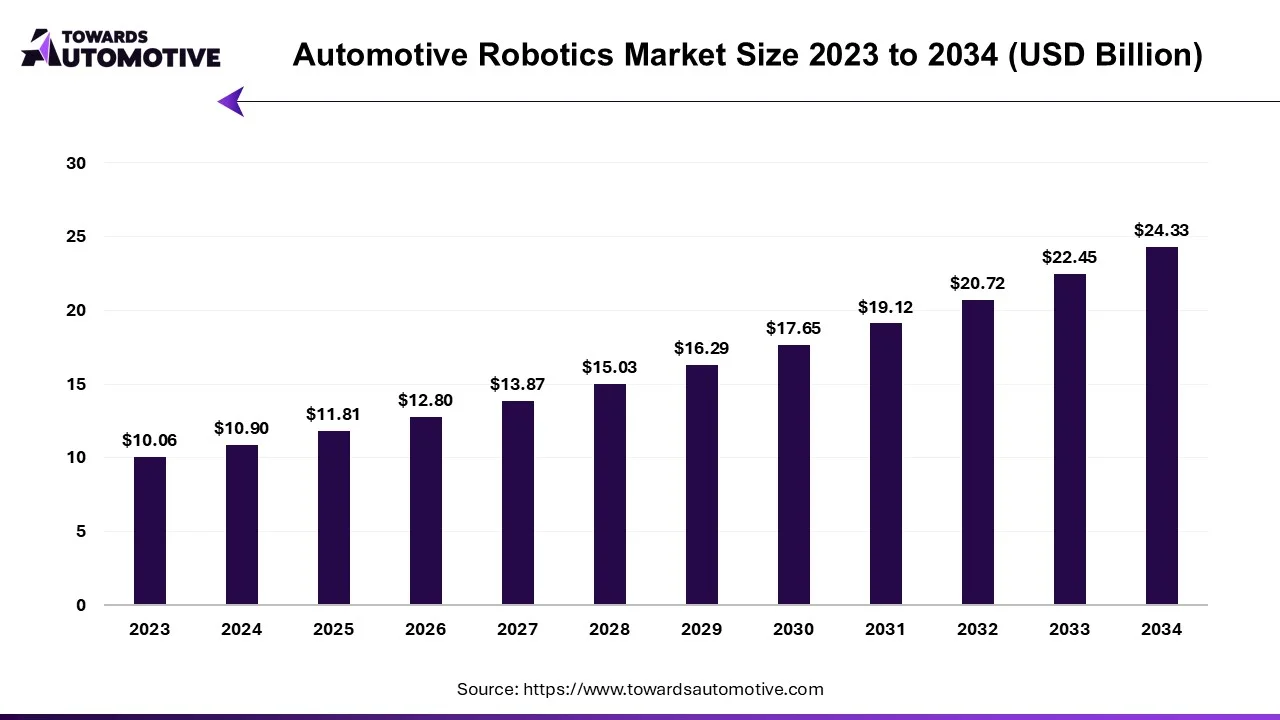
    The automotive industry has seen remarkable advancements in manufacturing processes, with robotics playing a crucial role in optimizing efficiency and quality. Among the various robotic applications, the welding segment has emerged as the dominant force driving the growth of the automotive robotics market. The global automotive robotics market size is estimated at USD 10.90 billion in 2024 and is projected to reach USD 24.33 billion by 2034, expanding at a compound annual growth rate (CAGR) of 8.36% from 2024 to 2034. Robotic welding systems offer several advantages, including increased precision, speed, and efficiency, which are pivotal in ensuring high-quality vehicle production.

    Automotive Robotics Market Size 2023 to 2034 (USD Billion)

    Get All the Details on Our Solutions – Brochure Download @ https://www.towardsautomotive.com/download-brochure/1044

    The Role of Welding in Automotive Manufacturing

    Welding is an essential process in vehicle assembly, particularly for structural components such as chassis, body panels, and frames. These components require high-strength, accurate welds to ensure the vehicle’s safety and durability. The introduction of robotic welding systems has revolutionized this critical process by providing consistent, high-quality welds across mass production lines.

    Robotic welding systems are designed to reduce the risk of human error, ensuring uniformity and precision in every weld. This consistency is vital for maintaining the integrity of vehicle structures and meeting the stringent safety standards required in the automotive industry. As manufacturers strive to improve quality while keeping production costs low, robotic welding offers an ideal solution for high-volume manufacturing, where speed and accuracy are paramount.

    The Flexibility and Versatility of Robotic Welding Systems

    One of the significant advantages of robotic welding systems is their flexibility. These robots are capable of handling a wide range of welding processes, including spot welding, arc welding, and laser welding. This versatility makes robotic systems an indispensable tool in the automotive industry, where different welding methods are required for various components and materials.

    Moreover, robotic welding systems can easily adapt to new manufacturing demands, including those driven by the rise of electric vehicles (EVs) and the use of advanced materials. The shift towards EVs has prompted the need for specialized welding techniques, particularly for lightweight metals like aluminum, which are commonly used in electric vehicle construction. Robotic systems are equipped with the necessary capabilities to handle these materials and techniques, further cementing their role in the future of automotive manufacturing.

    Enhanced Workplace Safety

    Another key benefit of robotic welding systems is their contribution to workplace safety. Traditional welding processes expose human workers to hazardous environments, such as high heat and fumes. Robotic systems, however, can perform welding tasks in these dangerous conditions without the need for human intervention, significantly reducing the risk of workplace injuries.

    By automating the welding process, manufacturers can ensure a safer working environment for their employees while maintaining high productivity levels. The increased safety, combined with the precision and efficiency offered by robotic welding, makes it a critical component of modern automotive production lines.

    The Future of Robotic Welding in Automotive Manufacturing

    As the automotive industry continues to evolve, the demand for high-quality, cost-effective, and efficient production methods will only grow. Robotic welding systems are poised to meet these demands, offering manufacturers a solution that improves speed, safety, and product quality. With their ability to handle complex welding processes, adapt to new materials, and contribute to safer working environments, robotic welding systems will continue to play a central role in shaping the future of automotive manufacturing.

    Invest in Our Premium Strategic Solution @ https://www.towardsautomotive.com/price/1044

    You can place an order or ask any questions, please feel free to contact us at sales@towardsautomotive.com

    Explore the comprehensive statistics and insights on automotive industry data and its associated segmentation: Get a Subscription 

    For Latest Update Follow Us: https://www.linkedin.com/company/towards-automotive
  • Driving the Future: Key Innovations in Automotive Infotainment Systems by Sony, Pioneer, and Panasonic

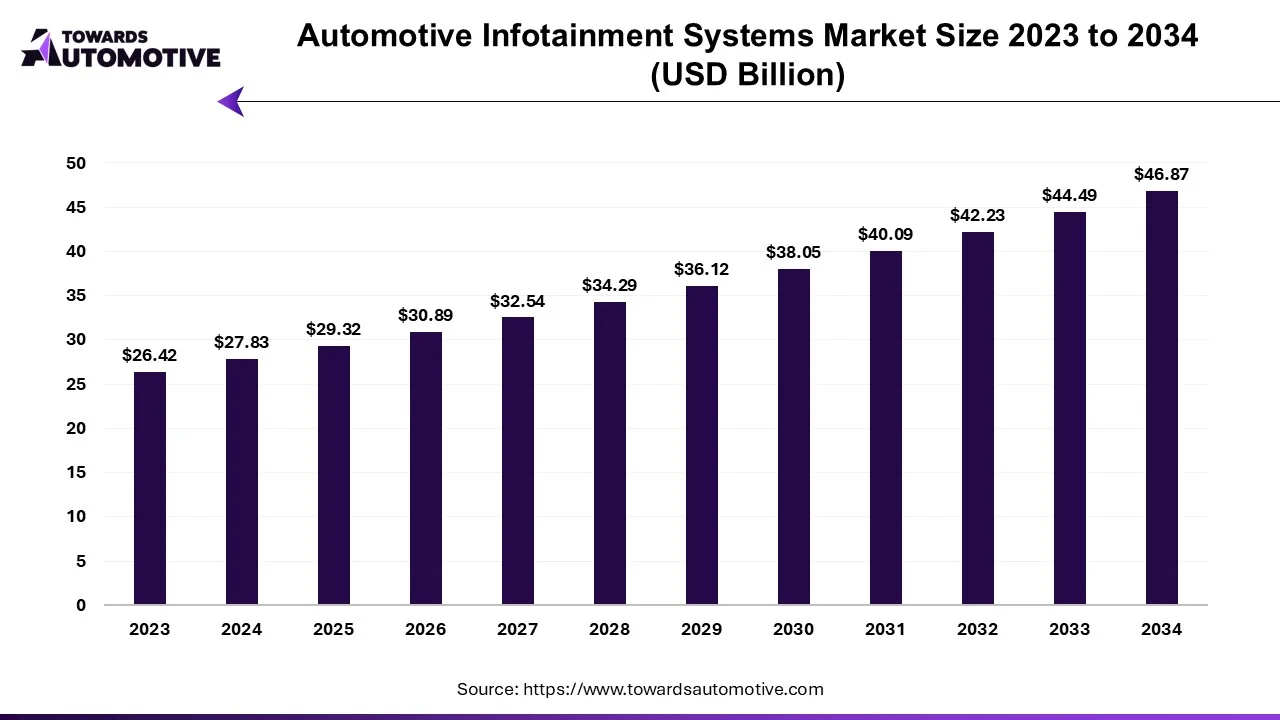
    The in-vehicle infotainment (IVI) systems have come a long way, transforming the driving experience with advanced features, improved connectivity, and enhanced entertainment. Leading brands such as Sony, Pioneer, and Panasonic are at the forefront of these innovations, introducing state-of-the-art technologies to revolutionize in-car experiences. The global automotive infotainment systems market, valued at USD 27.83 billion in 2024, is expected to grow to USD 46.87 billion by 2034, expanding at a compound annual growth rate (CAGR) of 5.35% during this period. This growth is a clear indication of the rising demand for enhanced infotainment solutions in the automotive industry. Here’s a closer look at the latest releases from these companies that are making waves in the automotive audio-visual sector.

    Automotive Infotainment Systems Market Size 2023 to 2034 (USD Billion)

    Get All the Details on Our Solutions – Brochure Download @ https://www.towardsautomotive.com/download-brochure/1043

    Sony XAV-AX8500: A Leap Forward in Car Audio-Visual Technology

    In February 2024, Sony unveiled its XAV-AX8500, a cutting-edge car audio-visual (AV) receiver designed to enhance the in-vehicle entertainment experience. The XAV-AX8500 comes packed with a variety of advanced features, offering a seamless and immersive audio and video experience for drivers and passengers alike. The system integrates a large, high-definition touchscreen that supports various media formats and connectivity options, including Android Auto and Apple CarPlay. Additionally, the system is equipped with built-in Bluetooth, making it easy for users to stream music, make hands-free calls, and navigate without distraction. Sony’s commitment to improving in-car entertainment is evident in the design and functionality of the XAV-AX8500, which is set to offer a more sophisticated and user-friendly experience.

    Pioneer: Revolutionizing Infotainment with Android OS Integration

    In July 2023, Pioneer took a bold step forward by launching an innovative new infotainment system powered by the Android operating system. This system is designed to support a wide range of vehicles, ensuring that more drivers can benefit from its advanced capabilities. With Android OS, the system offers enhanced connectivity, smoother integration with apps, and more customized features. Drivers can access a variety of Android-based apps, use Google Assistant for voice commands, and enjoy personalized experiences such as navigation, media streaming, and more. By integrating Android OS into its infotainment system, Pioneer has bridged the gap between mobile technology and the in-vehicle experience, making it easier for users to stay connected, entertained, and informed on the road.

    Panasonic SkipGen IVI System: Updated for a Smarter Driving Experience

    Back in January 2023, Panasonic Automotive Systems introduced an updated version of its SkipGen in-vehicle infotainment (IVI) system. This updated IVI system is designed to elevate the overall driving experience by offering advanced features that cater to the needs of modern-day drivers. The SkipGen system focuses on user-friendly interfaces, superior multimedia capabilities, and enhanced safety features. With the updated version, drivers can enjoy smoother navigation, real-time traffic updates, and an integrated voice recognition system that makes it easier to control the system hands-free. Panasonic’s SkipGen system promises to enhance the way drivers interact with their vehicles, making every journey safer and more enjoyable.

    Invest in Our Premium Strategic Solution @ https://www.towardsautomotive.com/price/1043

    You can place an order or ask any questions, please feel free to contact us at sales@towardsautomotive.com

    Explore the comprehensive statistics and insights on automotive industry data and its associated segmentation: Get a Subscription 

    For Latest Update Follow Us: https://www.linkedin.com/company/towards-automotive

  • BMW and Toyota Announce Partnership for FCEV Launch in 2028

    BMW and Toyota Announce Partnership for FCEV Launch in 2028

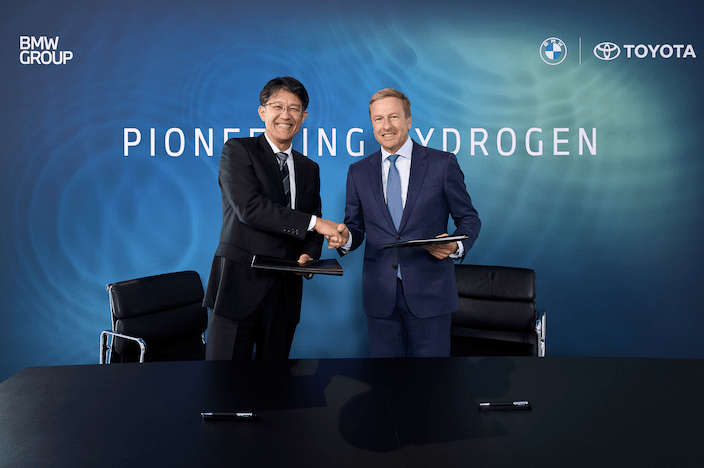
    In a significant move towards sustainability, BMW and Toyota announced a strategic partnership in September 2024 aimed at launching a Fuel Cell Electric Vehicle (FCEV) by 2028. This collaboration between two of the automotive industry’s giants will combine Toyota’s advanced hydrogen fuel cell technology with BMW’s engineering prowess to develop a new generation of zero-emission vehicles. The partnership is set to revolutionize the future of hydrogen-powered mobility, marking a bold step in the global shift toward cleaner transportation solutions. As the automotive industry faces increased pressure to meet stringent environmental regulations, this alliance represents a shared commitment to reducing carbon footprints and accelerating the adoption of green technologies in the automotive sector.

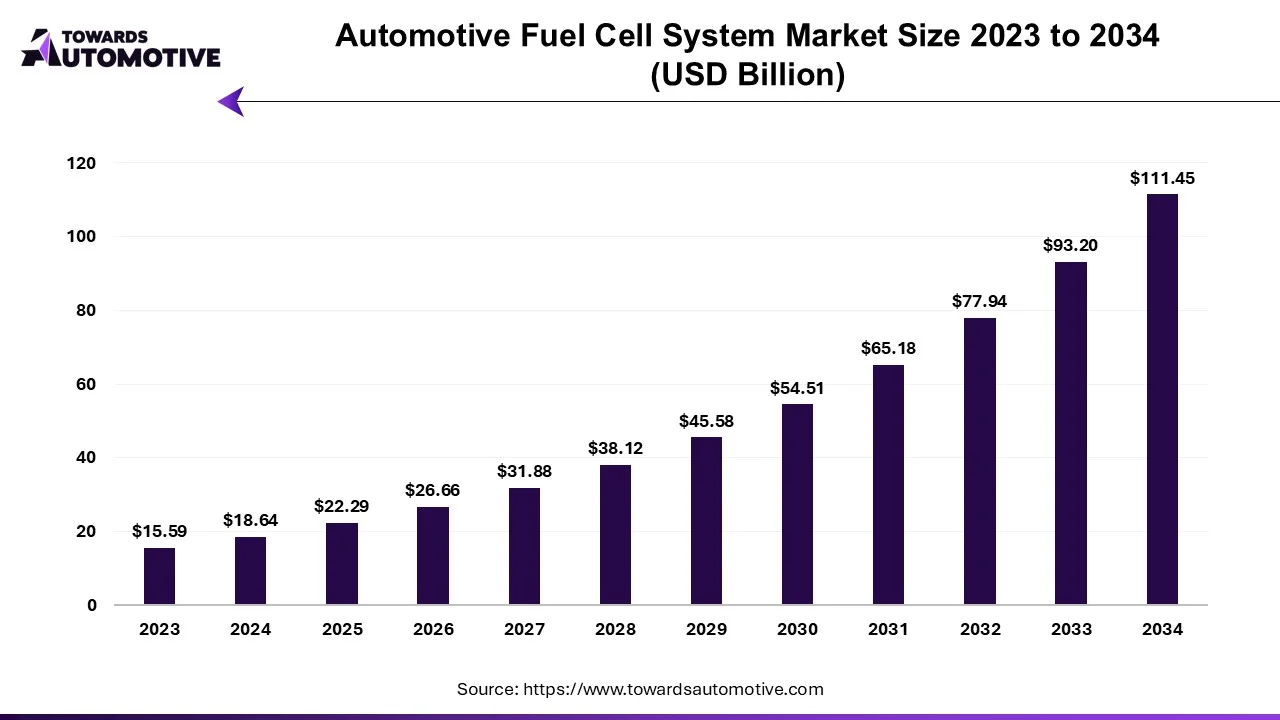
    This move is also part of the growing momentum in the global automotive fuel cell system market, which is poised for substantial growth. The market size, calculated at USD 18.64 billion in 2024, is expected to reach USD 111.45 billion by 2034, expanding at a compound annual growth rate (CAGR) of 19.58% from 2024 to 2034. This rapid growth reflects the increasing adoption of fuel cell technologies by automakers looking to meet environmental goals and offer cleaner alternatives to traditional vehicles.

    Automotive Fuel Cell System Market Size 2023 to 2034 (USD Billion)

    Download statistics of this report @ https://www.towardsautomotive.com/download-statistics/1015

    Honda’s FCEV: The 2025 Honda CR-V with Plug-in Charging

    Meanwhile, in June 2024, Honda announced an exciting addition to its lineup, the 2025 Honda CR-V, which will be equipped with a Fuel Cell Electric Vehicle (FCEV) powertrain. Designed for eco-conscious consumers, the new CR-V will feature a plug-in charging option that allows drivers to travel up to 29 miles in electric-only mode before the fuel cell system kicks in to extend the driving range. Honda’s move signals the automaker’s commitment to bringing innovative, sustainable technologies to the market, offering a versatile and environmentally friendly alternative to traditional gasoline-powered SUVs. With an increasing number of automakers embracing FCEVs, the 2025 CR-V will likely play a key role in Honda’s strategy to offer zero-emission mobility options to consumers.

    As the market for fuel cell systems continues to expand, the 2025 CR-V will contribute to a growing consumer shift toward hydrogen-powered vehicles, further driving demand for hydrogen fuel cell technology.

    Hyzon’s 200kW Fuel Cell System: A Leap Forward in Efficiency and Range

    In March 2024, Hyzon Motors unveiled its 200kW fuel cell system, a powerful innovation that promises to make hydrogen-powered vehicles more efficient and capable. Designed to reduce the overall weight of the vehicle, this new system is expected to significantly enhance the driving range of heavy-duty hydrogen vehicles. The system’s innovative design incorporates lightweight materials and advanced engineering, making it an ideal solution for commercial vehicles looking to reduce emissions while maintaining long-distance performance. With this development, Hyzon has further solidified its position as a leader in the fuel cell technology space, helping to pave the way for more practical and cost-effective hydrogen solutions in the transportation sector.

    This system aligns with the broader trends in the fuel cell market, where innovation and efficiency are key drivers. As Hyzon’s 200kW system gains traction, it will contribute to the growth of the global automotive fuel cell system market, further highlighting the increasing shift toward hydrogen-powered mobility.

    Buy the ready report now @ https://www.towardsautomotive.com/price/1015

    You can place an order or ask any questions, please feel free to contact us at sales@towardsautomotive.com

    Explore the comprehensive statistics and insights on automotive industry data and its associated segmentation: Get a Subscription 

    For Latest Update Follow Us: https://www.linkedin.com/company/towards-automotive
  • The Key Role of the Resin Segment in the Automotive Silicone Market

    The Key Role of the Resin Segment in the Automotive Silicone Market

    The automotive industry is experiencing a significant transformation, driven by advances in vehicle technology, materials science, and manufacturing techniques. One of the key materials that have been instrumental in this evolution is silicone, particularly silicone resins. The resin segment is at the forefront of this change, playing a vital role in the growth of the automotive silicone market due to its versatile applications and superior performance characteristics.

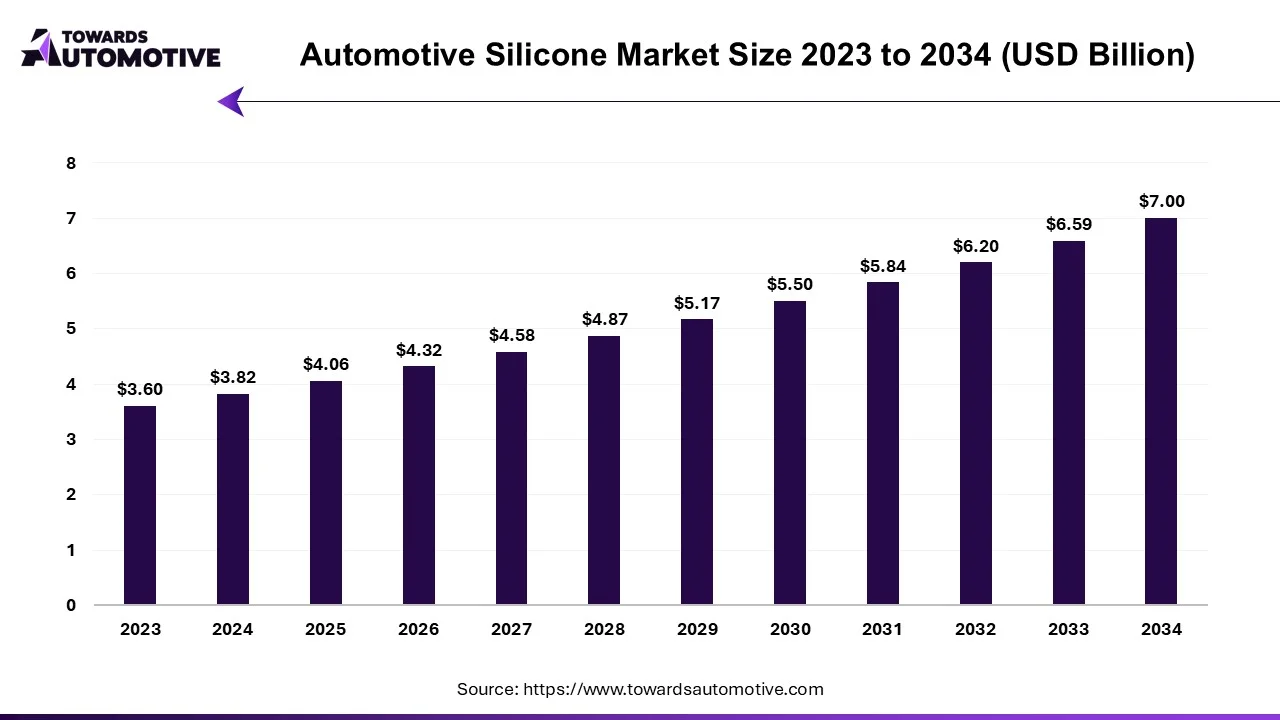
    The global automotive silicone market is currently valued at USD 3.82 billion in 2024 and is expected to reach USD 7 billion by 2034, expanding at a compound annual growth rate (CAGR) of 6.23% over the next decade. This robust growth is largely attributed to the increasing demand for high-performance materials like silicone resins, which are essential in both interior and exterior vehicle applications.

    Automotive Silicone Market Size 2023 to 2034 (USD Billion)

    Download statistics of this report @ https://www.towardsautomotive.com/download-statistics/1143

    Exceptional Performance in Automotive Applications

    Silicone resins are highly prized in the automotive sector for their exceptional thermal stability, weather resistance, and durability. These characteristics make them ideal for a wide range of automotive applications, both for interior and exterior vehicle components.

    Exterior Applications
    In exterior applications, silicone resins are widely used as coatings to protect automotive parts from harsh environmental elements. Whether it’s UV radiation, extreme temperatures, or corrosion, silicone resins act as a shield, ensuring that vehicle components remain protected for longer periods. This helps extend the lifespan of crucial automotive parts, reducing the frequency of maintenance and lowering the overall costs of vehicle ownership.

    The superior weather resistance properties of silicone resins are especially beneficial in a sector that relies heavily on vehicle aesthetics and performance. By maintaining the appearance and functionality of exterior components over time, silicone resins contribute significantly to the overall durability and appeal of the vehicle.

    Interior Applications
    Inside the vehicle, silicone resins offer valuable contributions as well. These resins are utilized in the production of high-performance coatings for dashboards, trims, and other interior surfaces. Their ability to provide a smooth finish and resistance to scratches enhances the vehicle’s aesthetic appeal while also ensuring the longevity of these surfaces. Silicone resins are integral in achieving the premium look and feel that modern vehicles often strive for.

    Moreover, the interior applications of silicone resins extend beyond mere appearances. In increasingly complex vehicle electronics, silicone resins provide essential protection. They are used as coatings for circuit boards and sensors, safeguarding critical components within the vehicle’s sophisticated systems. As automotive electronics continue to evolve, the need for reliable, high-performance coatings only intensifies, making silicone resins an indispensable part of the equation.

    Supporting the Electric Vehicle Revolution

    The rise of electric vehicles (EVs) has added a new dimension to the demand for silicone resins. As the automotive industry shifts toward sustainable energy sources, the demand for materials that can enhance the efficiency, safety, and longevity of electric vehicles has increased. Silicone resins are particularly valuable in this context, playing a crucial role in thermal management systems and battery pack coatings.

    In EVs, silicone resins help manage heat levels, ensuring that battery packs operate safely and efficiently. Their ability to withstand high temperatures while maintaining their structural integrity makes them ideal for use in these critical components. With the growing trend toward lightweight, energy-efficient vehicles, silicone resins are positioned to meet the evolving demands of the automotive sector, supporting cutting-edge designs and advanced manufacturing techniques.

    Driving Future Growth

    As the automotive industry continues to prioritize lightweight, energy-efficient, and durable vehicles, the resin segment is expected to remain a driving force behind the growth of the automotive silicone market. Silicone resins are poised to meet the challenges of modern vehicle design and performance, helping to create vehicles that are not only more efficient and environmentally friendly but also safer and more durable.

    With the rising adoption of electric vehicles, advancements in vehicle technologies, and increased investments in innovative materials, the resin segment of the automotive silicone market is set to thrive. As automotive manufacturers push the boundaries of design, silicone resins will continue to play an integral role, shaping the future of the industry. The automotive silicone market’s expected growth, from USD 3.82 billion in 2024 to USD 7 billion by 2034, is a clear testament to the vital role silicone resins will play in the industry’s future.

    Buy the ready report now @ https://www.towardsautomotive.com/price/1143

    You can place an order or ask any questions, please feel free to contact us at sales@towardsautomotive.com

    Explore the comprehensive statistics and insights on automotive industry data and its associated segmentation: Get a Subscription 

    For Latest Update Follow Us: https://www.linkedin.com/company/towards-automotive