Blog

  • Passenger Car Segment Driving Growth in the Vehicle Security System Market

    Passenger Car Segment Driving Growth in the Vehicle Security System Market

    The vehicle security system market has experienced significant growth in recent years, with the passenger car segment taking the lead. This segment represents a substantial portion of the global automotive market and plays a pivotal role in driving the overall growth of the industry. A variety of factors, including rising consumer concerns over vehicle safety and the increasing demand for advanced security technologies, have contributed to the passenger car segment’s dominance.

    The global vehicle security system market size was valued at USD 11.96 billion in 2024 and is projected to reach USD 19.12 billion by 2034, expanding at a compound annual growth rate (CAGR) of 4.86% from 2024 to 2034. This growth reflects the increasing demand for vehicle security solutions, particularly within the passenger car segment.
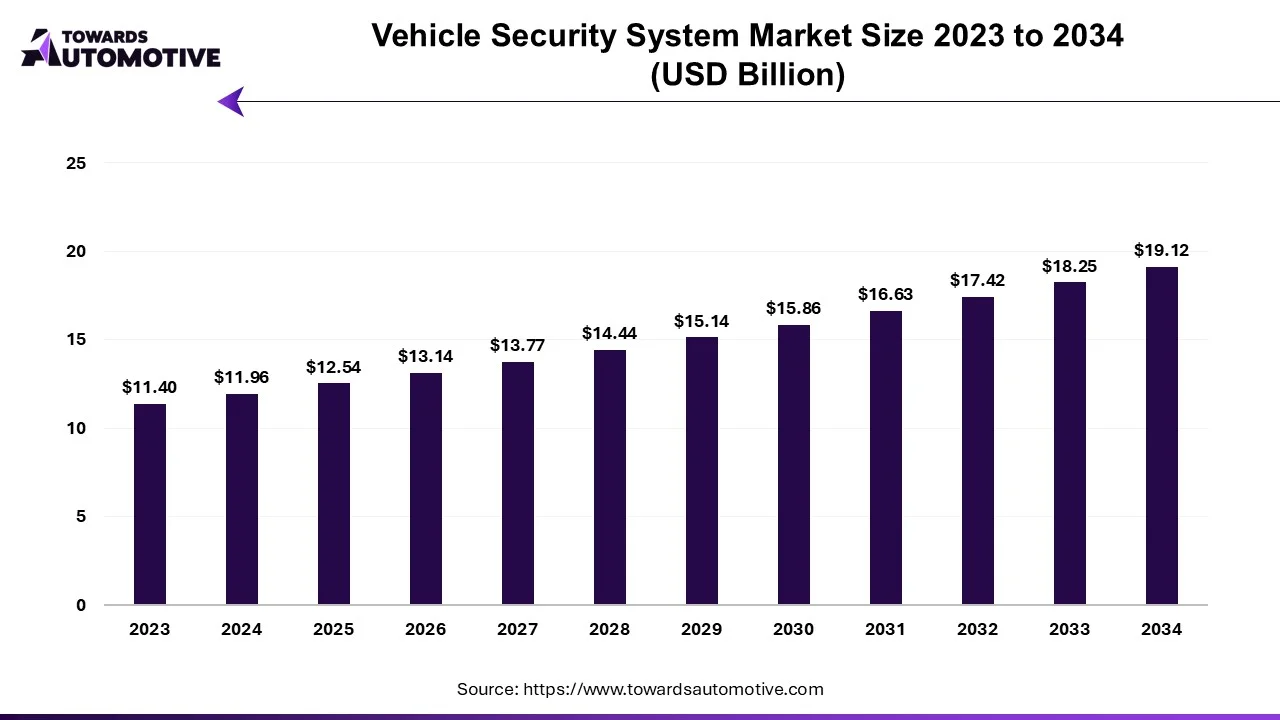
    Vehicle Security System Market Size 2023 to 2034 (USD Billion)

    Download statistics of this report @ https://www.towardsautomotive.com/download-statistics/1062

    Rising Demand for Passenger Cars

    One of the main factors behind the surge in vehicle security system adoption is the rising demand for passenger cars worldwide. As passenger cars become more ubiquitous, vehicle owners are increasingly seeking ways to protect their high-value assets from potential threats such as theft, vandalism, and accidents. This demand is fueling the integration of advanced security solutions that not only deter criminal activities but also offer peace of mind to consumers.

    Security features such as keyless entry systems, alarm systems, GPS tracking, immobilizers, and advanced anti-theft technologies have become standard in many passenger vehicles. These innovative systems provide enhanced protection and help vehicle owners minimize the risk of security breaches. As the threat of vehicle theft and break-ins continues to rise, automakers are more than ever investing in cutting-edge security technologies to meet the growing demand for safety and convenience.

    The Role of Connected and Smart Vehicles

    As the automotive industry embraces connected and smart vehicles, the demand for robust security systems has intensified. With more vehicles being equipped with connectivity features such as telematics, mobile app integration, and internet-enabled services, cybersecurity has become an essential concern. These advancements make vehicles susceptible to data breaches and unauthorized access, which in turn necessitate the integration of sophisticated security measures.

    To safeguard against these threats, automakers are developing and implementing advanced vehicle security solutions that incorporate strong encryption, multi-factor authentication, and other cybersecurity protocols. This trend has gained even more traction as the connected car ecosystem expands, enabling drivers to control vehicle functions remotely and access in-vehicle services through smartphones and other connected devices.

    The Rise of Autonomous and Electric Vehicles

    Another factor contributing to the growth of the vehicle security system market within the passenger car segment is the rising popularity of autonomous and electric vehicles (EVs). These vehicles, which are at the forefront of automotive innovation, come with highly sophisticated technologies that require advanced protection mechanisms.

    Autonomous vehicles, which rely on sensors, cameras, and artificial intelligence for navigation, need robust security systems to prevent hacking, data theft, or tampering with critical functions. Similarly, electric vehicles, which often feature proprietary technologies and software, must be protected from unauthorized access and potential cyber threats. As a result, the demand for specialized security solutions tailored to these advanced vehicles is growing rapidly.

    Consumer Awareness and Demand for Convenience

    Increasing consumer awareness about the risks associated with vehicle security is another important driver of the market. As vehicle thefts and break-ins continue to pose significant challenges, consumers are becoming more conscious of the need for reliable and effective security solutions. Many consumers are also seeking added convenience in the form of advanced features that integrate seamlessly with their daily lives.

    Automakers are responding to these consumer demands by prioritizing advanced security technologies in the development of new vehicles. In addition to traditional security features, such as alarms and immobilizers, consumers are now looking for systems that provide real-time alerts, remote access control, and personalized safety measures. These advanced solutions offer convenience, peace of mind, and improved overall security for vehicle owners.

    Buy the ready report now @ https://www.towardsautomotive.com/price/1062c

    You can place an order or ask any questions, please feel free to contact us at sales@towardsautomotive.com

    Explore the comprehensive statistics and insights on automotive industry data and its associated segmentation: Get a Subscription 

    For Latest Update Follow Us: https://www.linkedin.com/company/towards-automotive

  • AI-Enhanced Tire Pressure Monitoring Systems: Revolutionizing Vehicle Safety and Efficiency

    AI-Enhanced Tire Pressure Monitoring Systems: Revolutionizing Vehicle Safety and Efficiency

    In the ever-evolving automotive industry, Artificial Intelligence (AI) is playing a crucial role in enhancing the functionality and efficiency of various systems, particularly in Tire Pressure Monitoring Systems (TPMS). AI integration has brought significant improvements to TPMS, allowing for more accurate data processing, real-time tire pressure analysis, and predictive maintenance that not only enhances vehicle safety but also reduces operational costs.

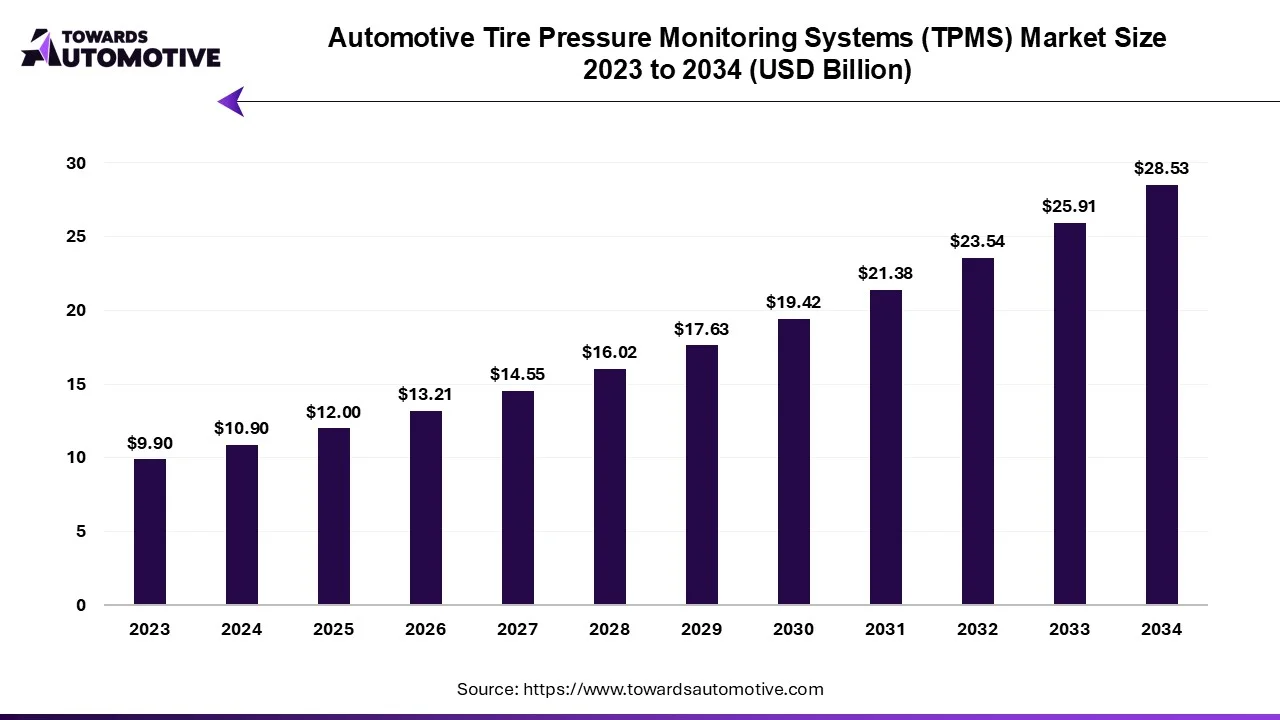
    The global automotive TPMS market is projected to grow substantially, with a market size estimated at USD 10.90 billion in 2024 and expected to reach USD 28.53 billion by 2034. This growth reflects an impressive compound annual growth rate (CAGR) of 10.10% from 2024 to 2034. As AI-driven innovations become more integrated into TPMS, this market is poised for rapid expansion, offering both manufacturers and consumers enhanced vehicle safety and performance.

    Automotive Tire Pressure Monitoring Systems (TPMS) Market Size 2023 to 2034 (USD Billion)

    Download statistics of this report @ https://www.towardsautomotive.com/download-statistics/1050

    Smarter Detection and Proactive Maintenance

    AI-driven TPMS leverages advanced machine learning algorithms to analyze vast amounts of data collected from various sources, including historical tire pressure data, road conditions, driving behavior, and environmental factors. By processing this information, AI can accurately detect under-inflation and, more importantly, predict potential tire failures before they happen. This early detection offers drivers the opportunity to address tire issues proactively, preventing costly repairs and enhancing vehicle safety.

    Beyond the traditional role of alerting drivers to low tire pressure, AI-enabled TPMS can now offer maintenance suggestions tailored to the specific needs of each vehicle. These systems assess tire health based on real-time data and recommend when to check or replace tires, potentially avoiding failures that could lead to accidents or breakdowns.

    Seamless Integration with Advanced Driver Assistance Systems (ADAS)

    One of the most exciting developments in AI-enhanced TPMS is its ability to integrate with Advanced Driver Assistance Systems (ADAS). This integration allows for the real-time sharing of critical data, such as tire health status, between the TPMS and ADAS. As a result, drivers receive predictive alerts that offer more precise control over tire maintenance, leading to a smoother and safer driving experience.

    With AI-driven TPMS, vehicles can continuously monitor tire conditions and adjust tire pressure automatically based on driving conditions, vehicle load, and environmental factors. This dynamic regulation of tire inflation levels optimizes fuel efficiency, reduces wear and tear, and extends the overall life of the tires. Moreover, by ensuring optimal tire pressure, AI-enhanced TPMS helps improve vehicle handling and performance, contributing to a safer and more comfortable ride.

    Enhancing Safety and Reducing Human Error

    Another significant benefit of AI-powered TPMS is its ability to reduce the likelihood of human error. Traditional TPMS systems often rely on drivers to manually check and maintain tire pressure, which can lead to oversight or neglect. With AI, tire conditions are continuously monitored, ensuring a higher level of operational reliability. By eliminating the need for constant manual checks, AI provides an extra layer of safety, reducing the chances of a tire failure that could result in accidents.

    Additionally, AI can share real-time tire health data with connected car platforms, allowing fleet operators to monitor and track the health of tires across an entire fleet. This centralized system improves fleet management by providing insights into tire conditions, helping operators plan maintenance more effectively and ensuring the safety of drivers and passengers.

    The Future of TPMS: Ongoing AI Innovations

    As AI technology continues to evolve, its impact on the TPMS market is expected to expand further. With ongoing advancements in machine learning, sensor technology, and data analytics, AI-powered TPMS will become even more efficient and reliable. Future systems may offer deeper integration with other vehicle systems, such as autonomous driving platforms, and further enhance predictive maintenance capabilities.

    One example of the growing trend in AI-enabled TPMS is the launch of Continental’s AI-powered TPMS in April 2023. This cutting-edge system is equipped with advanced sensors that can detect tire health in real time, and it can be easily operated through smartphones. Such innovations highlight the increasing role of AI in improving vehicle performance and user experience.

    Buy the ready report now @ https://www.towardsautomotive.com/price/1050

    You can place an order or ask any questions, please feel free to contact us at sales@towardsautomotive.com

    Explore the comprehensive statistics and insights on automotive industry data and its associated segmentation: Get a Subscription 

    For Latest Update Follow Us: https://www.linkedin.com/company/towards-automotive
  • Recent Developments in Automotive Sunroof Manufacturing: Key Partnerships and Collaborations

    Recent Developments in Automotive Sunroof Manufacturing: Key Partnerships and Collaborations

    The automotive industry has been seeing significant innovations in various vehicle components, with the development of sunroofs being a key highlight. In recent months, several notable collaborations and joint ventures have taken place, bringing together some of the biggest names in the sector. These partnerships are set to revolutionize the design and manufacturing of automotive sunroofs, particularly in India and globally.

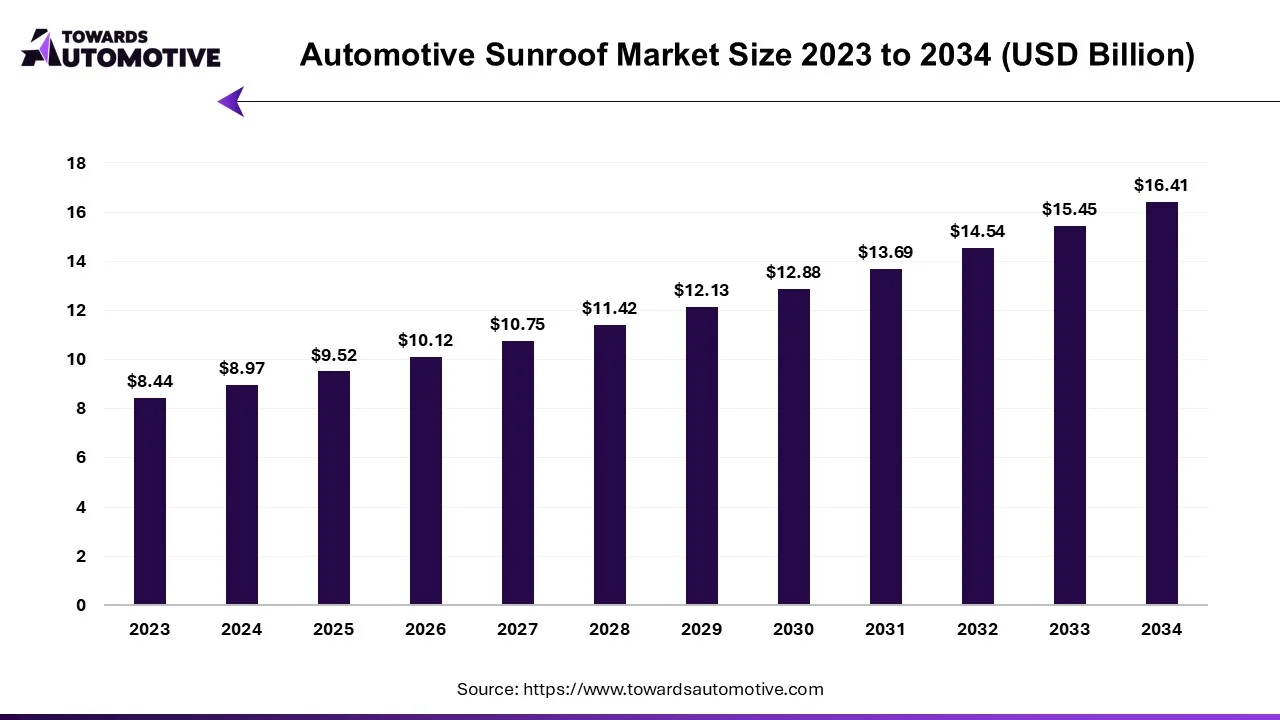
    The global automotive sunroof market is poised for impressive growth, with its size estimated at USD 8.97 billion in 2024. The market is expected to reach USD 16.41 billion by 2034, expanding at a compound annual growth rate (CAGR) of 7.29% from 2024 to 2034. This growth is being fueled by increasing consumer demand for premium features, such as panoramic sunroofs, which enhance the overall driving experience and vehicle aesthetics.

    Automotive Sunroof Market Size 2023 to 2034 (USD Billion)

    Download statistics of this report @ https://www.towardsautomotive.com/download-statistics/1041

    1. Minda Corpo Inks Joins Hands with HCMF for Automotive Sunroof Development in India

    In June 2024, Minda Corpo Inks, a leading player in the automotive components sector, joined forces with HCMF, marking a significant step forward in the development of automotive sunroofs in India. This joint venture aims to enhance the manufacturing capabilities and technological advancements for sunroof production within the country. By leveraging each other’s strengths, the partnership is expected to bring high-quality, innovative solutions to the Indian automotive market, tapping into the increasing demand for sunroofs in both mid-range and high-end vehicles.

    2. Gabriel India and Inalfa Roof Systems Partner for Automotive Sunroof Manufacturing

    Earlier, in May 2023, Gabriel India, known for its prowess in the auto component sector, collaborated with Inalfa Roof Systems, a global leader in automotive roof systems. This collaboration is focused on the manufacturing of automotive sunroofs, specifically designed to meet the growing demands of car manufacturers for premium features. The partnership aims to leverage Inalfa’s global expertise in roof systems while benefiting from Gabriel India’s strong manufacturing base, ensuring a steady supply of high-quality sunroofs for the Indian and global markets. Together, they are poised to provide innovative sunroof solutions, enhancing the driving experience.

    3. Aisin Seiki and Mercedes Partner to Develop Panoramic Sunroofs for EQS and EQE SUVs

    In another significant development, Aisin Seiki, a renowned Japanese automotive components manufacturer, announced a partnership with Mercedes-Benz in March 2023. This collaboration focuses on the development of panoramic sunroofs for two of Mercedes’ flagship electric vehicles: the EQS SUV and the EQE SUV. The panoramic sunroof is a key feature that enhances the luxury and comfort of these high-end electric SUVs, offering both aesthetics and functionality. Aisin’s cutting-edge technology combined with Mercedes’ engineering excellence is expected to deliver a top-tier sunroof experience for consumers, further solidifying the brands’ positions in the electric vehicle market.

    Buy the ready report now @ https://www.towardsautomotive.com/price/1041

    You can place an order or ask any questions, please feel free to contact us at sales@towardsautomotive.com

    Explore the comprehensive statistics and insights on automotive industry data and its associated segmentation: Get a Subscription 

    For Latest Update Follow Us: https://www.linkedin.com/company/towards-automotive

  • Automotive Seat Market Size & Business Expansion

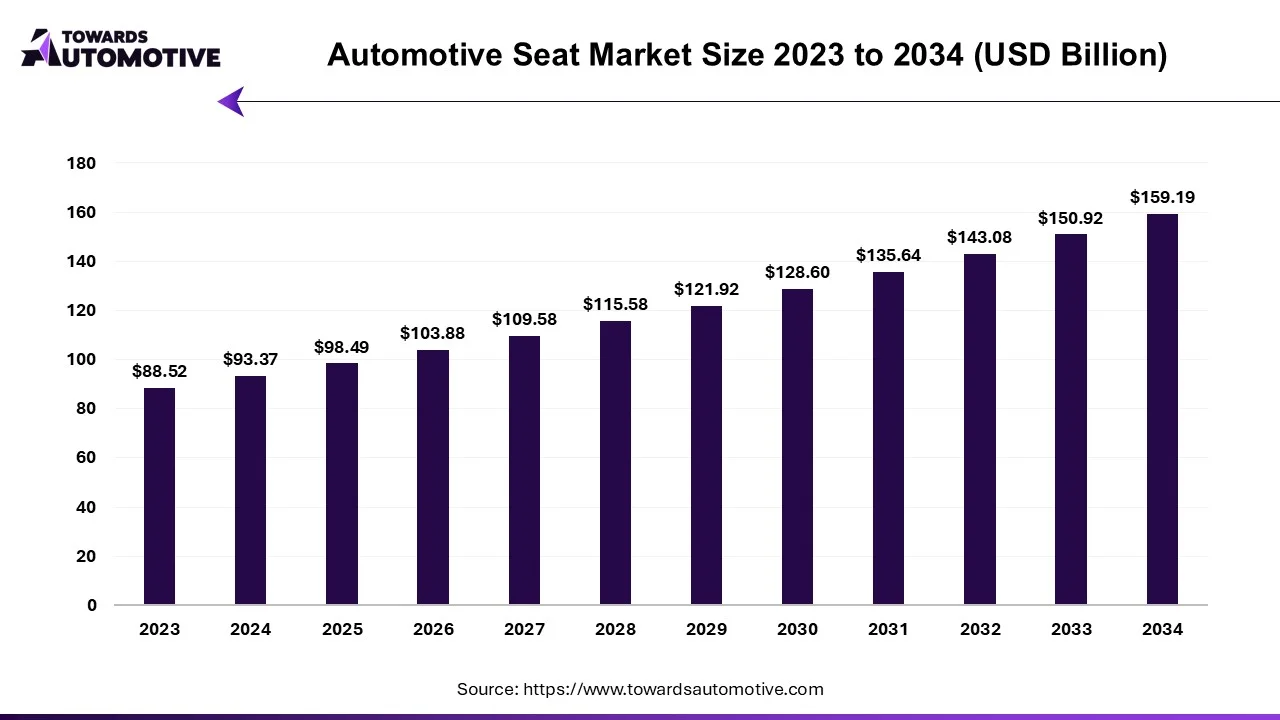
    The global automotive seat market is experiencing significant growth, with its size estimated at USD 93.37 billion in 2024 and projected to reach USD 159.19 billion by 2034. This growth represents a compound annual growth rate (CAGR) of 5.48% over the forecast period from 2024 to 2034. As the automotive industry continues to evolve, the demand for advanced, comfortable, and high-tech automotive seating solutions is rising, fueling market expansion.

    Automotive Seat Market Size 2023 to 2034 (USD Billion)

    Download statistics of this report @ https://www.towardsautomotive.com/download-statistics/1040

    Automotive seats are no longer just about comfort and functionality. They are evolving into complex systems that offer advanced features, such as enhanced ergonomics, safety mechanisms, and integration with other in-vehicle technologies. The growing emphasis on passenger experience, along with the increasing adoption of electric and autonomous vehicles, has spurred manufacturers to invest heavily in innovative seating solutions. As consumer expectations rise, automotive seat manufacturers are responding with cutting-edge designs, materials, and technologies.

    Recent Developments in the Automotive Seat Market

    The automotive seat market has seen several transformative developments in recent months, with companies pushing the envelope in design and functionality. These advancements highlight the industry’s commitment to improving comfort, safety, and convenience for consumers.

    • Toyota’s IsoDynamic Performance Seat (May 2023): Toyota introduced the IsoDynamic Performance Seat, a breakthrough in automotive seating technology. Designed for the company’s upcoming passenger cars to be launched in 2024-25, this seat aims to improve comfort and stability for passengers during long journeys. By reducing body movement and enhancing seat performance, Toyota hopes to set a new standard in seating comfort for its vehicles.
    • Lear Corporation’s Acquisition of Bauerhin (April 2023): In a strategic move to expand its automotive seating capabilities, Lear Corporation acquired Bauerhin. This acquisition is aimed at bolstering Lear’s portfolio in developing advanced automotive seats that prioritize comfort and performance. The company plans to leverage Bauerhin’s expertise in ergonomic seating solutions to meet the growing demands of end-users.
    • Babyark’s Smart Car Seat (January 2023): Babyark launched a revolutionary smart car seat equipped with advanced sensors and composite materials. This smart car seat not only offers enhanced comfort but also integrates innovative safety features. With these advancements, Babyark is leading the way in offering personalized seating experiences for families, particularly with young children, combining high-tech features with traditional seat functionality.

    Key Players in the Automotive Seat Market

    Several leading companies are actively shaping the future of the automotive seat market, offering a range of innovative products designed to meet the needs of modern consumers. These companies are at the forefront of integrating new technologies and enhancing seat performance to cater to a growing and diverse customer base.

    • Johnson Controls (U.S.): As a leader in the global automotive seat market, Johnson Controls continues to provide high-quality seating solutions. Their products emphasize comfort, safety, and environmental sustainability. The company’s extensive research and development efforts have led to cutting-edge seating technologies that meet consumer expectations for ergonomic design and energy efficiency.
    • Lear Corporation (U.S.): Lear Corporation is a key player in the market, specializing in advanced automotive seats that combine innovation and style. With the acquisition of Bauerhin, the company is set to expand its offerings in high-performance seats that provide superior comfort, safety, and functionality.
    • Fisher and Company (Austria): Fisher and Company designs automotive seats that prioritize not only comfort but also durability and efficiency. Their expertise in ergonomic design has made them a prominent player in the global automotive seating market.
    • Magna International Inc (Canada): Magna is another major supplier of automotive seating solutions. Known for its commitment to innovation, Magna’s seating systems aim to improve passenger experience by incorporating advanced materials, lightweight designs, and next-generation technologies.
    • Toyota Boshoku Corporation (Japan): Toyota Boshoku is a subsidiary of Toyota, manufacturing advanced automotive seats for the company’s vehicle lineup. The company places a strong emphasis on comfort, sustainability, and the integration of new materials to enhance the seat performance.
    • TS Tech Corporation Ltd (Japan): A global leader in automotive seating solutions, TS Tech focuses on producing high-quality seats that meet the needs of both luxury and mass-market vehicles. Their products are designed to offer maximum comfort, safety, and performance.
    • DURA Automotive Systems (U.S.): DURA Automotive Systems is committed to providing seating solutions that cater to the evolving needs of the automotive industry. Their advanced technologies and durable materials make them a preferred choice for automotive manufacturers.
    • IFB Automotive (India): IFB Automotive is a major player in the Indian automotive seat market, offering a range of cost-effective seating solutions without compromising on quality. The company has been expanding its reach, supplying seats to both domestic and international automakers.
    • Aktis Engineering Solutions (India): Aktis Engineering Solutions focuses on developing innovative automotive seat systems that enhance both comfort and safety. Their expertise in advanced materials and technologies has allowed them to cater to the growing demand for modern, high-performance seats.

    Buy the ready report now @ https://www.towardsautomotive.com/price/1040

    You can place an order or ask any questions, please feel free to contact us at sales@towardsautomotive.com

    Explore the comprehensive statistics and insights on automotive industry data and its associated segmentation: Get a Subscription 

    For Latest Update Follow Us: https://www.linkedin.com/company/towards-automotive
  • The Electric Vehicle Tires Market Size, Growth, Innovation and the Role of AI

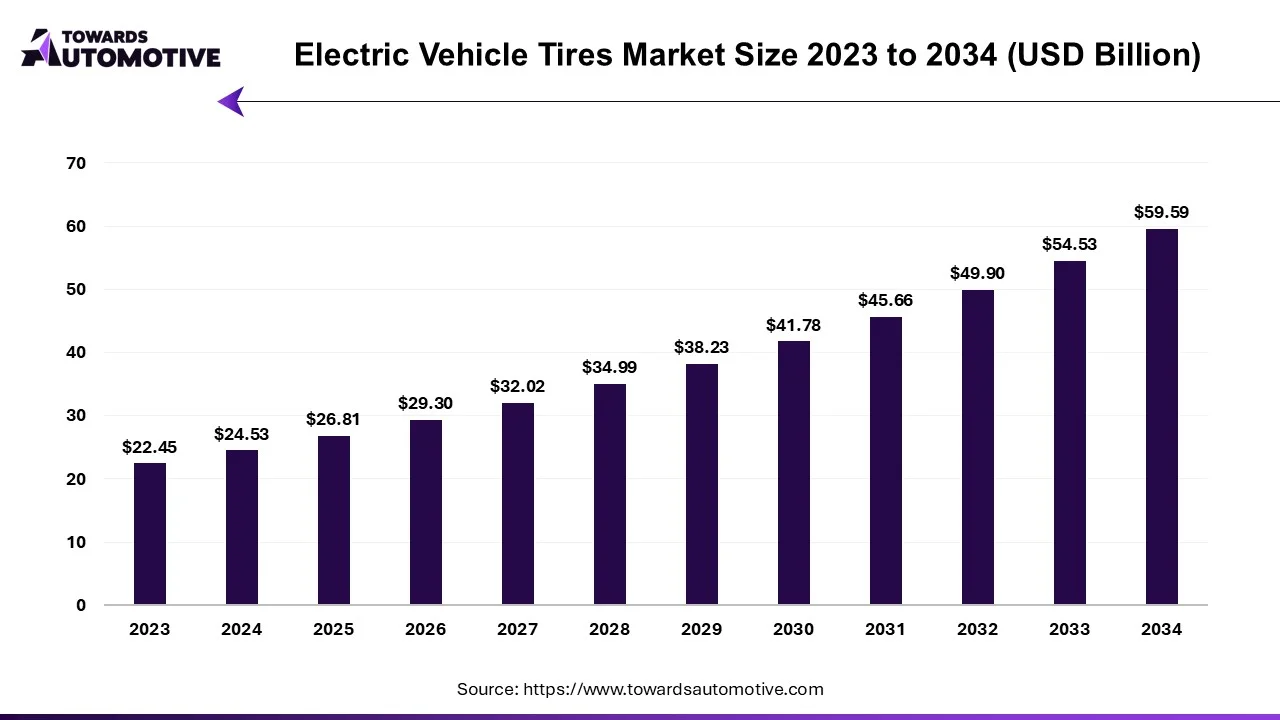
    The global electric vehicle (EV) tires market is experiencing significant expansion, with the market size projected to grow from USD 24.53 billion in 2024 to USD 59.59 billion by 2034, reflecting a compound annual growth rate (CAGR) of 9.28% over the forecast period. As the automotive industry embraces electric mobility, the demand for specialized tires designed to meet the unique requirements of electric vehicles continues to surge, making this market an important segment of the broader EV ecosystem.

    Electric Vehicle Tires Market Size 2023 to 2034 (USD Billion)

    Download statistics of this report @ https://www.towardsautomotive.com/download-statistics/1216

    Key Takeaways

    • Asia Pacific Dominates the Market: Asia Pacific is leading the electric vehicle tires market, driven by the rapid adoption of electric vehicles in countries like China and India.
    • Europe’s Growth Potential: Europe is expected to witness significant growth during the forecast period, with an emphasis on sustainable mobility and green technologies.
    • Battery Electric Vehicles (BEVs) Lead the Industry: The battery electric vehicle (BEV) segment holds the largest share, driven by increasing consumer preference for electric vehicles.
    • Passenger Cars Drive Demand: Passenger cars remain the dominant vehicle type in the EV tires market, accounting for a significant share of the demand for EV-specific tires.

    Introduction

    The electric vehicle tires market is becoming an integral part of the rapidly evolving automotive landscape. As more consumers and businesses opt for electric vehicles, the need for specialized tires tailored to the unique characteristics of these vehicles is growing. Electric vehicles, which are heavier due to their battery packs and require enhanced energy efficiency, demand tires that provide higher torque resistance, durability, and improved grip. EV tires are not just a necessity for safety and performance; they are crucial for optimizing the range and efficiency of electric vehicles.

    Innovation is at the forefront of the market, with advancements in tire design, materials, and manufacturing processes addressing the specific needs of electric vehicles. The rise of eco-friendly tires, made from renewable and recyclable materials, aligns with the broader sustainability goals of the electric vehicle industry. These innovations are further accelerating the growth of the electric vehicle tires market.

    The demand for EV-specific tires is largely driven by the increasing global sales of electric vehicles, government incentives for green mobility, and the drive for carbon neutrality. Leading tire manufacturers are investing heavily in research and development to produce tires that reduce rolling resistance, enhance durability, and offer superior grip, specifically designed for both passenger and commercial electric vehicles.

    The Role of Artificial Intelligence in the Electric Vehicle Tires Market

    Artificial intelligence (AI) is revolutionizing the electric vehicle tires market by facilitating innovation in tire design, manufacturing, and performance monitoring. AI-driven technologies are helping tire manufacturers optimize tire performance to meet the unique demands of electric vehicles, providing substantial improvements in various aspects of tire functionality.

    Enhancing Tire Design

    AI plays a pivotal role in tire development, enabling manufacturers to analyze vast amounts of data related to the specific requirements of EVs. Factors such as weight distribution, torque impact, and energy efficiency are all critical considerations when designing tires for electric vehicles. AI-driven algorithms analyze these variables to optimize rolling resistance, improve tire durability, and enhance grip. As a result, tire manufacturers can create products that not only meet the high-performance demands of electric vehicles but also contribute to the overall efficiency and safety of these vehicles.

    Streamlining Manufacturing Processes

    In tire manufacturing, AI technologies are being used to improve production efficiency. AI-powered systems allow for real-time monitoring and predictive analytics, enabling manufacturers to detect potential defects early, reduce material waste, and optimize production processes. These innovations not only help improve the quality of the tires but also reduce costs, accelerating the time-to-market for new products.

    AI also facilitates advanced simulations that test tire performance under a range of real-world conditions. By simulating various driving scenarios, tire manufacturers can ensure their products are capable of delivering optimal performance, even in challenging conditions, thus improving the tire’s reliability and longevity.

    Smart Tire Technology and Real-Time Monitoring

    AI is also making strides in smart tire technology. With the integration of embedded sensors in electric vehicle tires, AI systems can monitor key parameters such as tire pressure, temperature, and tread wear in real time. This data is transmitted to the vehicle’s onboard systems, which allows for proactive maintenance and enhanced safety features. Predictive maintenance powered by AI can help extend the lifespan of tires, reduce downtime, and lower maintenance costs for electric vehicle owners.

    Moreover, AI is revolutionizing the customer experience by providing personalized tire recommendations based on an individual’s driving habits and vehicle specifications. This ensures better compatibility between tires and vehicles, offering enhanced performance, safety, and fuel efficiency for EV owners.

    NEXEN Tire’s AI-Enabled Platform

    In October 2024, NEXEN Tire introduced an AI-powered platform designed to enhance tire manufacturing processes and improve the overall quality of tires. This platform uses AI to detect anomalies in tire production, helping manufacturers identify defects and improve the overall production process. With such advancements, tire manufacturers are poised to leverage AI technologies to create smarter, more efficient tires for the electric vehicle market.

    The Future of Electric Vehicle Tires

    As the electric vehicle ecosystem continues to evolve, the demand for specialized tires is set to grow exponentially. The market for EV tires is being driven by increasing adoption of electric vehicles globally, with Asia Pacific and Europe emerging as key regions in this expansion. Battery electric vehicles, particularly passenger cars, continue to dominate the market, while new technological innovations, including AI-driven solutions, are enhancing tire performance and sustainability.

    By 2034, the electric vehicle tires market is expected to reach USD 59.59 billion, with a substantial CAGR of 9.28%. With the integration of artificial intelligence into tire design, manufacturing, and performance monitoring, the future of the EV tires market looks poised for continued innovation and growth, offering enhanced safety, efficiency, and sustainability for the global electric vehicle industry.

    Buy the ready report now @ https://www.towardsautomotive.com/price/1216

    You can place an order or ask any questions, please feel free to contact us at sales@towardsautomotive.com

    Explore the comprehensive statistics and insights on automotive industry data and its associated segmentation: Get a Subscription 

    For Latest Update Follow Us: https://www.linkedin.com/company/towards-automotive
  • Regional Insights into the Reverse Logistics Market Size,Trends and Growth by Region

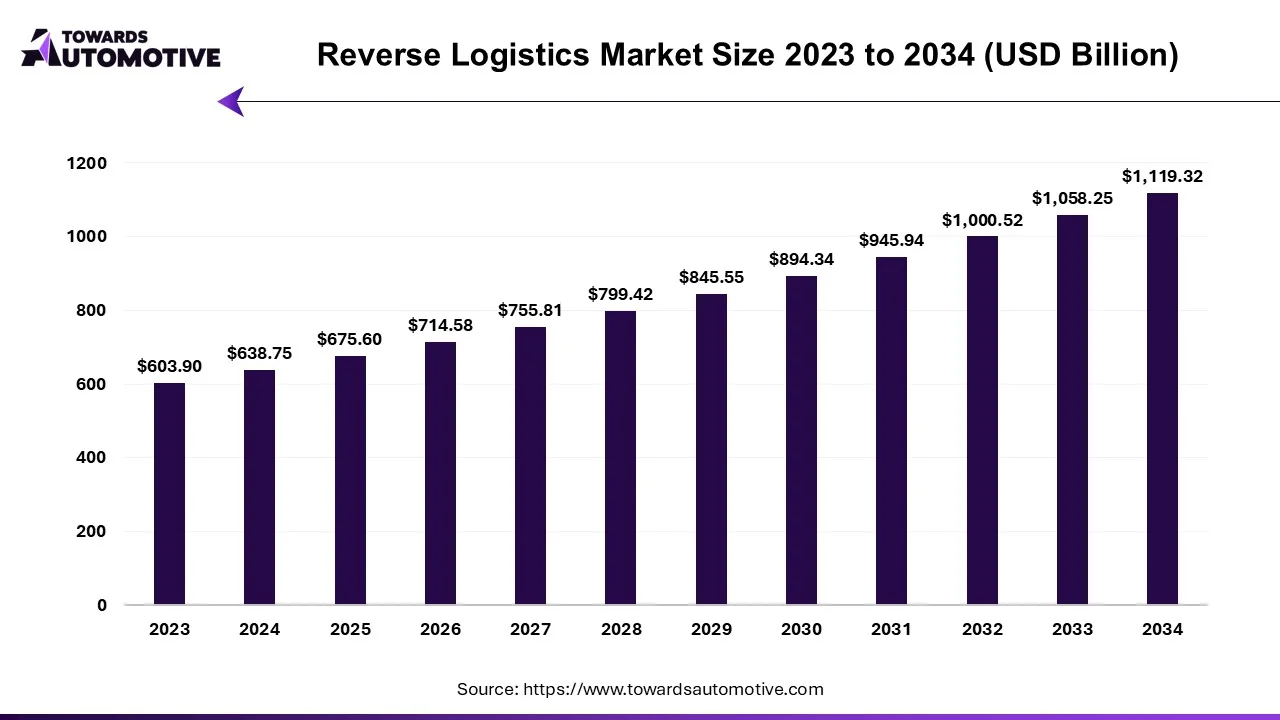
    The global reverse logistics market is experiencing significant growth, driven by evolving consumer behaviors, technological advancements, and sustainability initiatives. The market size is calculated at USD 638.75 billion in 2024 and is expected to be worth USD 1119.32 billion by 2034, expanding at a CAGR of 5.77% over the next decade. As businesses around the world focus on enhancing their supply chains, the demand for efficient reverse logistics systems is surging. Key regions—North America, Asia-Pacific (APAC), Europe, Latin America (LA), and the Middle East and Africa (MEA)—are seeing distinct trends and drivers that shape the market’s growth in these areas.

    Reverse Logistics Market Size 2023 to 2034 (USD Billion)

    Download statistics of this report @ https://www.towardsautomotive.com/download-statistics/1137

    North America: Market Leader in Reverse Logistics

    In 2023, North America dominated the reverse logistics market, fueled by the rapid growth of e-commerce, a focus on supply chain optimization, and increasingly consumer-centric return policies. The e-commerce boom, particularly in the United States and Canada, has led to a significant rise in product returns. Consumers now expect seamless, hassle-free return processes, which has reshaped how businesses approach reverse logistics. Offering smooth return experiences has become a critical factor in driving customer satisfaction and fostering long-term brand loyalty.

    The market in North America is also driven by businesses investing heavily in efficient reverse logistics systems to manage the large volume of returns. Companies are increasingly focused on supply chain optimization, aiming to recover value from returned goods by reselling, recycling, or refurbishing products. This not only helps improve cost efficiency but also aligns with the growing emphasis on sustainability, reducing waste across the supply chain. Flexible and lenient return policies further enhance customer loyalty by creating positive shopping experiences that encourage repeat business.

    With these factors continuing to evolve, reverse logistics has become an essential part of North America’s e-commerce and retail sectors. This combination of e-commerce growth, supply chain improvements, and customer-focused return strategies has firmly positioned North America as a leader in the reverse logistics market.

    Asia-Pacific: Highest Growth Potential

    The Asia-Pacific (APAC) region is expected to grow at the highest CAGR during the forecast period, driven by several key factors. Consumer expectations for convenient and hassle-free returns are rapidly evolving, particularly in e-commerce. As online shopping continues to surge across countries like China, India, and Japan, businesses are under pressure to enhance their reverse logistics capabilities to meet these new demands.

    The healthcare sector is also contributing significantly to the market’s growth in APAC. With a booming healthcare industry, there is a growing need for managing returns, recycling, and the disposal of medical devices, pharmaceuticals, and health-related products. As emerging economies in Asia, such as India and China, expand their healthcare sectors, proper reverse logistics practices will become increasingly important to ensure compliance with safety regulations and manage product recalls or expired products.

    Furthermore, regulatory compliance is pushing businesses in the region to adopt more sustainable and responsible reverse logistics practices. In countries like Japan, South Korea, and India, stringent regulations require companies to manage product returns and waste disposal in an environmentally friendly manner. This regulatory pressure, along with growing consumer demands and the healthcare sector’s specific needs, is driving substantial growth in the APAC reverse logistics market.

    Regional Comparison: Other Key Markets

    While North America and APAC dominate the reverse logistics landscape, Europe, Latin America (LA), and the Middle East and Africa (MEA) regions also play key roles in the market.

    • Europe is seeing steady growth, driven by the shift toward a circular economy where reverse logistics plays a critical role in recycling and product refurbishment. Stringent environmental regulations are encouraging businesses to adopt reverse logistics practices that reduce waste and promote sustainability.
    • Latin America (LA) is starting to experience increased demand for reverse logistics services as the e-commerce sector continues to grow. Urbanization, rising disposable income, and better access to online shopping are contributing to the need for more efficient return processes. Although not as advanced as North America and APAC, LA is witnessing a steady rise in reverse logistics adoption.
    • The Middle East and Africa (MEA) regions are seeing more gradual growth in reverse logistics adoption. While the demand for efficient return systems is rising, particularly due to the growth of e-commerce, the region is still in the early stages of embracing advanced reverse logistics solutions. As businesses focus on improving customer service and meeting sustainability goals, reverse logistics will continue to gain traction in MEA.

    Key Players Profiled in the Reverse Logistics Market

    • Ecom Express Limited (India)
    • DB Schenker (Germany)
    • FedEx Corporation (U.S.)
    • United Parcel Service, Inc. (U.S.)
    • Kuehne + Nagel International AG (Switzerland)
    • Yusen Logistics Co., Ltd. (Japan)
    • Kintetsu World Express Inc. (Japan)
    • Safexpress Pvt. Ltd. (India)
    • XPO Logistics, Inc. (U.S.)
    • DHL Express (Germany)

    Buy the ready report now @ https://www.towardsautomotive.com/price/1137

    You can place an order or ask any questions, please feel free to contact us at sales@towardsautomotive.com

    Explore the comprehensive statistics and insights on automotive industry data and its associated segmentation: Get a Subscription 

    For Latest Update Follow Us: https://www.linkedin.com/company/towards-automotive
  • Transforming Transportation Management Role of AI in Enhancing Efficiency and Optimization

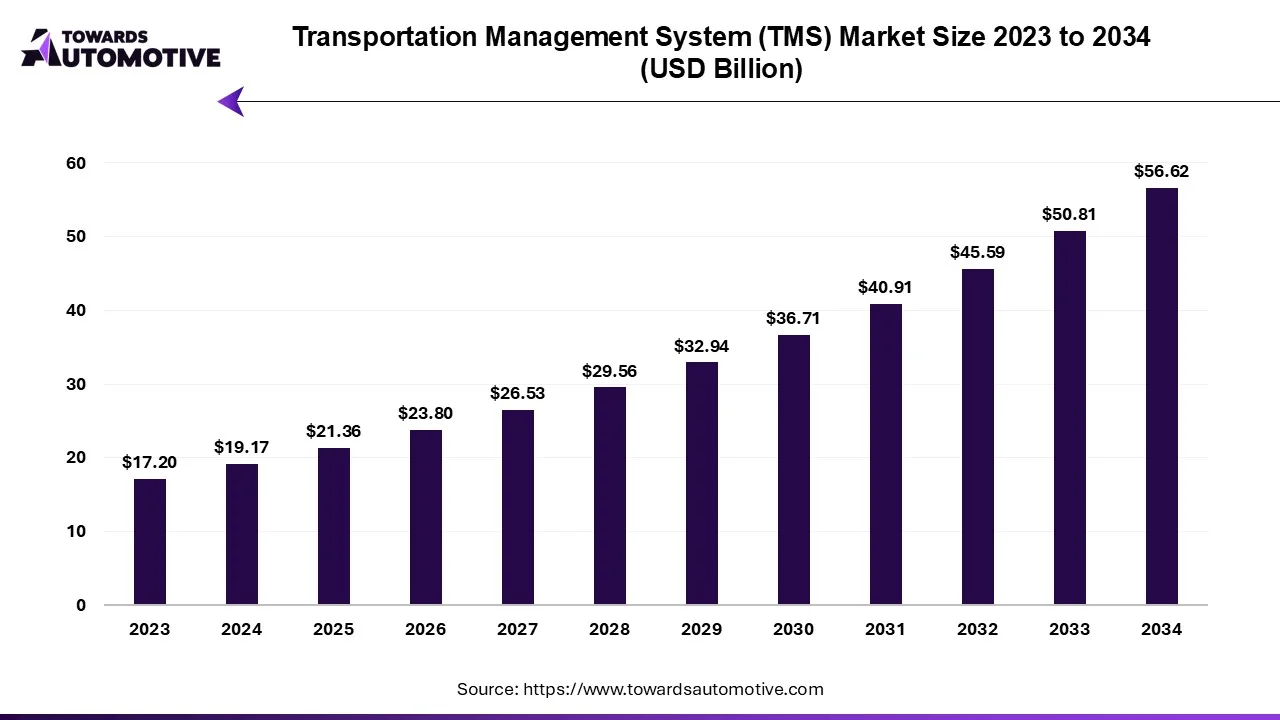
    The global transportation management system (TMS) market is witnessing significant growth, with the market size calculated at USD 19.17 billion in 2024. Experts predict this growth will continue at a robust pace, with the market expected to reach USD 56.62 billion by 2034, expanding at a compound annual growth rate (CAGR) of 11.44% from 2024 to 2034. This upward trajectory is fueled by the growing demand for supply chain optimization, technological advancements, and the increasing need for real-time data and analytics to improve transportation operations.

    Transportation management systems have become an essential component for businesses across various industries, helping them efficiently plan, execute, and optimize the movement of goods through different transportation modes. As industries increasingly recognize the value of streamlining logistics operations, TMS solutions are rising to meet these demands.

    Transportation Management System (TMS) Market Size 2023 to 2034 (USD Billion)

    Download statistics of this report @ https://www.towardsautomotive.com/download-statistics/1125

    Key Drivers of Market Growth

    Several key factors are driving the rapid expansion of the TMS market, making it a pivotal tool in modern supply chain management.

    1. Rising Demand for Supply Chain Optimization: Businesses today are under constant pressure to enhance operational efficiency and reduce costs. TMS solutions enable organizations to gain control over their logistics networks, optimize routes, and improve delivery schedules, directly contributing to cost savings and operational efficiency.
    2. Technological Advancements: With innovations like cloud computing, artificial intelligence (AI), and machine learning (ML), TMS solutions are becoming more sophisticated. These advancements allow businesses to leverage real-time data, predictive analytics, and automation to enhance decision-making and further improve logistics management.
    3. E-commerce Growth: The rapid growth of e-commerce has revolutionized consumer shopping habits, placing significant pressure on businesses to offer faster and more reliable delivery services. TMS plays a crucial role in helping companies meet these demands by ensuring the timely and cost-effective movement of goods from manufacturers to end consumers.
    4. Government Regulations and Sustainability: Governments worldwide are introducing regulations related to environmental sustainability and emissions in the logistics sector. Businesses are increasingly turning to TMS solutions to not only comply with these regulations but also to optimize their operations in an eco-friendly manner. By improving route planning and fleet management, TMS systems help reduce fuel consumption, emissions, and operational waste.

    Regional Insights

    The TMS market is expanding across all regions, with North America, Europe, and Asia Pacific anticipated to be key drivers of growth. North America is expected to dominate the market due to the strong presence of major logistics players and a high level of technological adoption in transportation management. Furthermore, the increasing emphasis on efficiency and real-time tracking systems across the region is contributing to the market’s robust growth.

    Asia Pacific is also set to see substantial growth in the coming years, driven by the rise of e-commerce and the expanding manufacturing sector, particularly in countries like China and India. The rapid development of infrastructure in these regions is making TMS adoption more accessible and beneficial for businesses looking to optimize their logistics networks.

    The Role of AI in the Transportation Management System Market

    Artificial Intelligence (AI) is revolutionizing the transportation management system (TMS) market by enhancing efficiency, optimization, and decision-making capabilities within logistics operations. As AI technology continues to evolve, its integration into TMS platforms is helping businesses streamline their transportation processes, reduce costs, and gain a competitive advantage. From route optimization and predictive analytics to fleet management and real-time decision-making, AI is reshaping the way companies manage their logistics and supply chains.

    AI-Powered Route Optimization

    One of the most significant contributions of AI to the TMS market is in route optimization. AI algorithms analyze large amounts of data, including historical trends, real-time traffic patterns, weather conditions, and other variables to recommend the most efficient delivery routes. This process not only helps reduce transportation costs but also speeds up deliveries, leading to higher customer satisfaction.

    What sets AI-powered route optimization apart is its ability to adapt to changing conditions. By continuously learning from real-time data, AI systems can modify delivery routes on the fly, responding to factors like road closures, traffic congestion, or weather disruptions. This level of adaptability ensures that businesses are always using the best possible route, even in the face of unforeseen challenges, making AI a critical asset for logistics operations.

    Predictive Analytics for Demand Forecasting

    AI is also enhancing the predictive analytics capabilities of TMS solutions. By analyzing historical shipment data, customer orders, and external factors, AI can forecast demand more accurately. This predictive ability allows businesses to plan for capacity needs, allocate resources efficiently, and avoid bottlenecks in the supply chain.

    For instance, AI can predict peak shipping periods, allowing companies to adjust logistics strategies ahead of time—whether by scaling up fleets, rerouting shipments, or adjusting staffing levels. This proactive approach ensures that businesses are prepared for fluctuations in demand, optimizing their operations to minimize delays and reduce the risk of costly disruptions.

    Enhanced Fleet Management with Predictive Maintenance

    Fleet management is another area where AI is making a significant impact. AI-powered systems enable predictive maintenance by continuously monitoring the condition of vehicles in a fleet. By analyzing vehicle performance data, AI can predict when a vehicle is likely to require maintenance or experience a breakdown. This allows businesses to schedule maintenance proactively, reducing downtime and ensuring that vehicles are always in optimal working condition.

    By preventing unplanned breakdowns and improving fleet reliability, predictive maintenance helps companies reduce costly repairs and extend the life of their assets. This results in more efficient transportation operations and better management of fleet resources, which ultimately improves the overall supply chain.

    Case Study: Rygen Technologies’ Corsair

    A notable example of AI integration in the TMS market is the launch of Corsair by Rygen Technologies in June 2024. Corsair is a transportation management system that utilizes AI to enhance various aspects of transportation procedures. Through AI-powered features, Corsair automates route planning, forecasts demand, and optimizes fleet management. This launch signifies a major step forward in the TMS market, where AI is being harnessed to create smarter, more efficient transportation solutions that meet the demands of modern logistics.

    With Corsair, businesses can streamline their operations, reduce costs, and gain deeper insights into their transportation networks. The system’s ability to adjust dynamically to real-time data ensures that companies can stay ahead of the curve, improving overall efficiency and customer satisfaction.

    Buy the ready report now @ https://www.towardsautomotive.com/price/1125

    You can place an order or ask any questions, please feel free to contact us at sales@towardsautomotive.com

    Explore the comprehensive statistics and insights on automotive industry data and its associated segmentation: Get a Subscription 

    For Latest Update Follow Us: https://www.linkedin.com/company/towards-automotive
  • AI Transforming Car Security Systems: A New Era of Safety and Efficiency

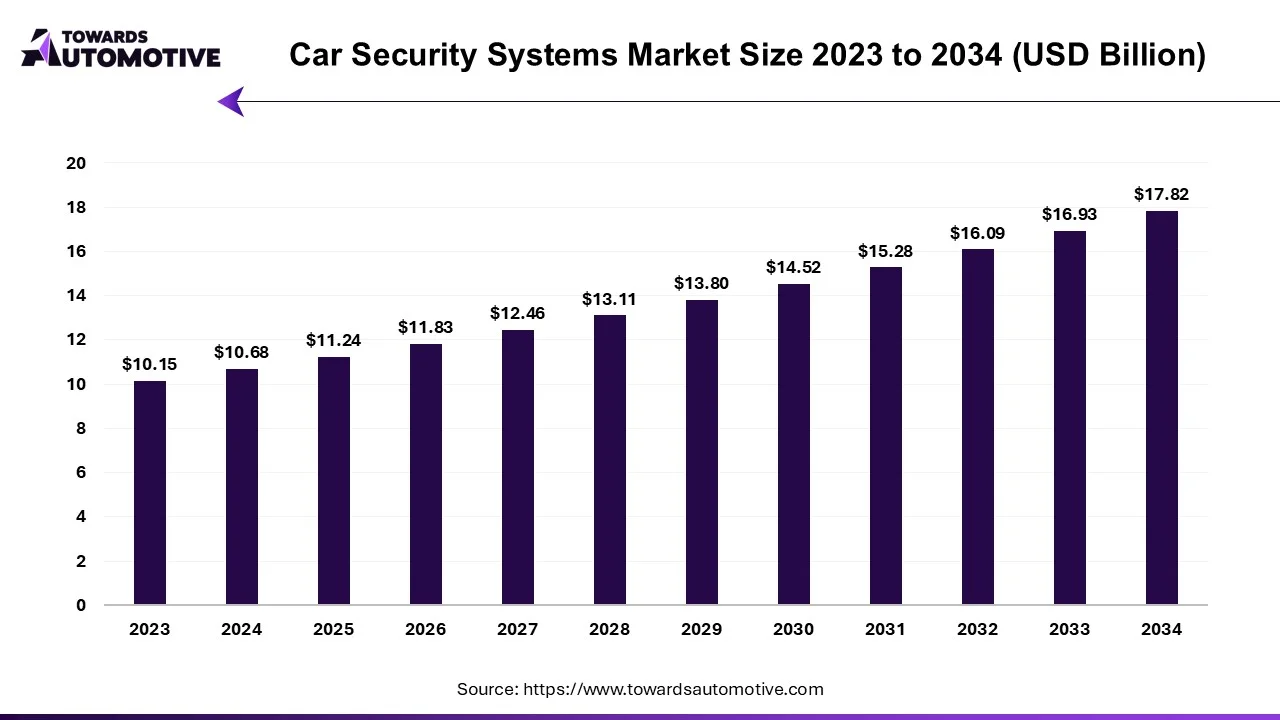
    The integration of Artificial Intelligence (AI) into car security systems is reshaping the way vehicles are protected from theft, unauthorized access, and cyber threats. By enhancing the efficiency, reliability, and adaptability of modern security technologies, AI is playing a transformative role in the evolution of vehicle safety. The global car security systems market, valued at USD 10.68 billion in 2024, is expected to grow to USD 17.82 billion by 2034, expanding at a compound annual growth rate (CAGR) of 5.25% over the next decade. As this market grows, the role of AI will only become more significant in making car security smarter and more efficient.

    Car Security Systems Market Size 2023 to 2034 (USD Billion)

    Download statistics of this report @ https://www.towardsautomotive.com/download-statistics/1090

    Real-Time Threat Detection and Response

    One of the most significant contributions of AI in the car security market is its ability to enable real-time threat detection and response. AI-powered security systems leverage machine learning and predictive analytics to process vast amounts of data from various sensors, cameras, and connected devices installed in vehicles. This continuous stream of information allows these systems to identify potential threats, such as attempted theft or unauthorized access, and respond accordingly.

    For instance, when a threat is detected, the AI system can trigger a range of automated actions, including locking the doors, immobilizing the engine, or alerting the vehicle owner and authorities. This swift and proactive response ensures timely intervention, helping to prevent or mitigate potential damage or loss. As the market for car security systems expands, real-time responses like these are becoming the backbone of modern vehicle protection strategies.

    Biometric Authentication: Facial and Voice Recognition

    AI has also revolutionized access control in car security through facial and voice recognition technologies. These advanced biometric authentication methods allow for keyless entry and engine start, significantly reducing the risk of theft and unauthorized use. AI-driven recognition systems can distinguish between authorized users and intruders with remarkable accuracy, making vehicles more secure and convenient for owners.

    These features not only improve safety but also add a layer of personalization to the vehicle’s security system. As users interact with the system, AI continuously learns and adapts, ensuring that it recognizes individual patterns and preferences, making the vehicle even more secure over time.

    AI-Powered Cybersecurity Features

    As vehicles become more connected, the importance of safeguarding them from cyber threats has grown exponentially. AI plays a crucial role in protecting connected cars from hacking attempts. By monitoring network activity, AI-powered systems can detect unusual patterns or unauthorized access attempts and deploy countermeasures to defend the vehicle’s systems and user data.

    This enhanced cybersecurity ensures that car owners’ personal information, such as location data, payment information, and communication systems, are kept secure from potential breaches. As the automotive industry continues to integrate more digital technologies, AI’s role in safeguarding against cyberattacks becomes increasingly vital.

    GPS Tracking and Geo-Fencing Capabilities

    AI also enhances traditional car security features such as GPS tracking and geo-fencing. With AI-driven tracking systems, vehicle owners can monitor their cars’ locations in real-time. Furthermore, geo-fencing allows owners to set up virtual boundaries, receiving immediate alerts if their vehicles exit designated safe zones. This feature is particularly useful in preventing theft, as it can trigger automatic actions when the vehicle is taken outside the predefined area.

    AI’s continuous learning algorithms can also adapt and improve the vehicle’s security features based on user behavior and evolving threats. These systems not only respond to immediate security concerns but also anticipate potential risks, offering a level of protection that evolves with time and technology.

    A Step Forward Motive’s AI-Based Security System

    In September 2024, Motive, a leader in vehicle technology, launched an AI-based security system designed to further reduce theft-related issues and enhance security in modern cars. This new system integrates many of the AI-driven features mentioned above, such as real-time threat detection, biometric authentication, and enhanced GPS tracking, providing an all-encompassing security solution for vehicle owners.

    By combining AI’s predictive capabilities with advanced security features, Motive’s system offers an intelligent approach to vehicle protection, ensuring that owners can have peace of mind knowing that their vehicles are better equipped to handle modern security challenges.

    Buy the ready report now @ https://www.towardsautomotive.com/price/1090

    You can place an order or ask any questions, please feel free to contact us at sales@towardsautomotive.com

    Explore the comprehensive statistics and insights on automotive industry data and its associated segmentation: Get a Subscription 

    For Latest Update Follow Us: https://www.linkedin.com/company/towards-automotive
  • Global Heavyweight Motorcycles Market Evolving Trends and Growth Opportunities

    The Growing Heavyweight Motorcycles Market Trends, Opportunities and the Role of AI

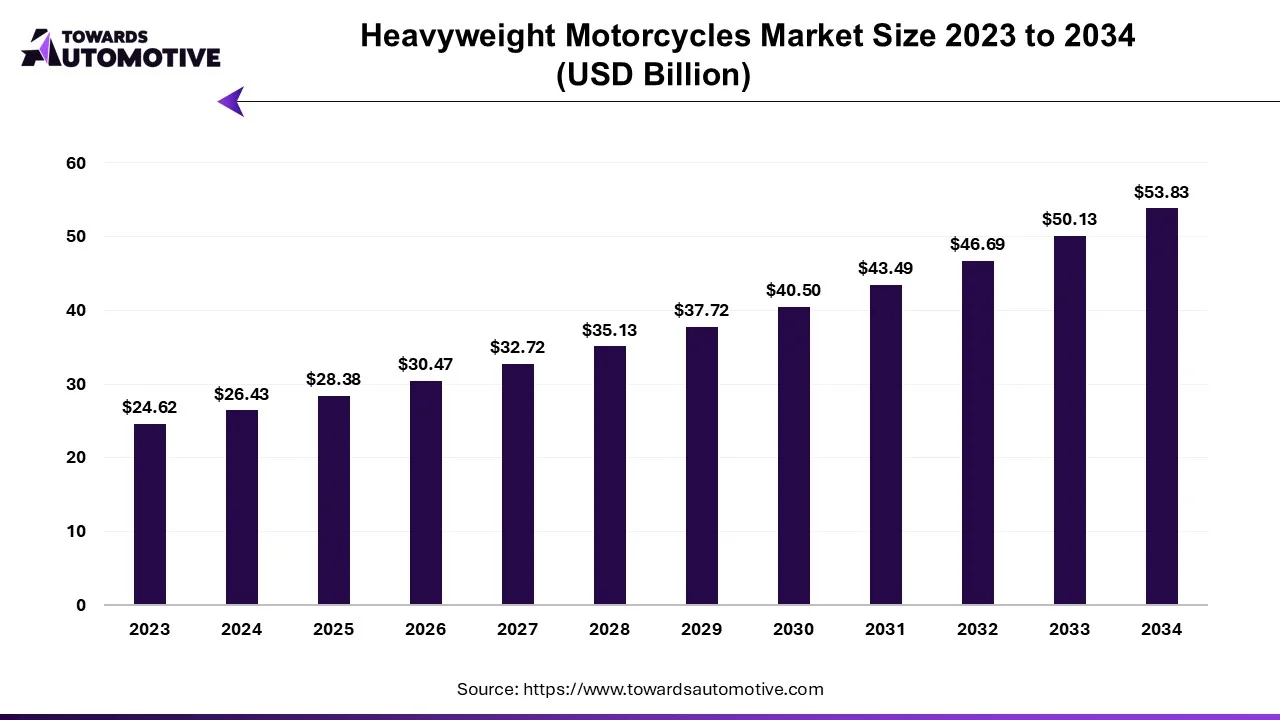
    The global heavyweight motorcycles market is valued at approximately USD 26.43 billion in 2024 and is projected to reach USD 53.83 billion by 2034, with a compound annual growth rate (CAGR) of 7.37% from 2024 to 2034.

    Heavyweight Motorcycles Market Size 2023 to 2034 (USD Billion)

    Download statistics of this report @ https://www.towardsautomotive.com/download-statistics/1269

    Key Insights

    • North America leads the heavyweight motorcycles market.
    • The Asia Pacific region is expected to experience substantial growth during the forecast period.
    • Fleet operators are the largest customer segment in the market.
    • The sport motorcycles category holds the largest share of the market.

    Overview

    The heavyweight motorcycles market is a growing sector of the global automotive industry, driven by increasing demand for powerful, high-performance bikes. These motorcycles, typically with engine capacities above 500cc, are popular among enthusiasts due to their strong performance, advanced features, and long-lasting durability. The market is especially strong in developed regions like North America and Europe, where these bikes are commonly used for leisure rides, long-distance touring, and as lifestyle choices. In emerging markets such as Asia Pacific and Latin America, rising disposable incomes, growing urbanization, and a burgeoning interest in premium vehicles are contributing to the market’s rapid growth.

    Technological innovations are further boosting the appeal of heavyweight motorcycles. Features like smart connectivity, navigation systems, and advanced safety technologies are becoming more common. Additionally, the rise of electric heavyweight motorcycles is gaining attention as part of the industry’s move toward sustainability. The increasing participation in motorsports, the growth of motorcycle clubs, and consumer demand for unique designs and customization options are also pushing the market forward.

    However, the market faces challenges such as high costs, strict emission standards, and the constant need for innovation, which could impact future growth. Despite these obstacles, the heavyweight motorcycles market remains strong, attracting a wide range of consumers and paving the way for a more advanced and eco-friendly future.

    How AI is Transforming the Heavyweight Motorcycles Market

    Artificial Intelligence (AI) is having a significant impact on the heavyweight motorcycles market, driving innovations that enhance safety, performance, and overall user experience. AI-powered technologies are being incorporated into motorcycles to make them safer and more user-friendly. For example, advanced rider-assistance systems (ARAS), powered by AI, offer features such as collision detection, adaptive cruise control, and lane-keeping assistance, all of which significantly improve rider safety.

    AI also plays a role in predictive maintenance by analyzing real-time data to identify potential problems before they become costly repairs, helping to extend the lifespan of the motorcycles. Furthermore, AI technologies are enhancing the rider experience through features like voice recognition systems and virtual assistants, allowing riders to control navigation, communication, and entertainment systems without taking their hands off the handlebars.

    In electric heavyweight motorcycles, AI is essential for optimizing battery performance and managing charging cycles to improve energy efficiency. Additionally, AI is shaping the design and manufacturing processes, using predictive analytics to tailor motorcycles to consumer preferences and employing automation to reduce production costs and ensure precision.

    As AI technology continues to evolve, its integration into heavyweight motorcycles will reshape the industry, offering both traditional and modern riders a more advanced and personalized experience. For instance, Verge Motorcycles introduced Starmatter software in November 2023, which is an AI-driven software for superbikes, highlighting how AI is becoming an essential component in the development of cutting-edge motorcycles.

    • Rising Popularity of Cruiser and Touring Bikes: There’s a growing demand for heavyweight cruiser and touring motorcycles, particularly in North America and Europe. These bikes offer comfort, long-distance touring capabilities, and advanced features, attracting older and more affluent riders.
    • Technological Advancements: Manufacturers are integrating modern technology into heavyweight motorcycles, including advanced electronics, ride modes, traction control, anti-lock braking systems (ABS), and connected features such as Bluetooth integration and real-time diagnostics.
    • Electric Heavyweight Motorcycles: The emergence of electric heavyweight motorcycles is gaining traction. As the global shift towards sustainability continues, electric versions of heavyweight bikes offer zero emissions, quiet operations, and reduced maintenance needs, with leading companies developing high-performance e-motorcycles.
    • Customization and Personalization: Consumers are increasingly looking for customization options, including unique paint jobs, accessories, and performance modifications. Manufacturers are offering more flexible configurations to cater to individual preferences.
    • Focus on Comfort and Ergonomics: There is a significant push towards improving the comfort and ergonomics of heavyweight motorcycles. Features like heated grips, adjustable seats, and more refined suspension systems are becoming standard to enhance long-ride comfort.
    • Premium Motorcycles and Luxury Market: The premium motorcycle segment is expanding, driven by high-net-worth individuals seeking exclusive models with superior performance, design, and features. These bikes often come with higher price tags and more advanced technologies.
    • Environmental and Regulatory Pressure: With increasing environmental concerns, there is growing scrutiny on emissions from heavyweight motorcycles. In response, manufacturers are focusing on developing cleaner engines and meeting stricter emission standards, particularly in regions like Europe and California.
    • Growth in Emerging Markets: Countries in Asia Pacific and Latin America are witnessing a surge in demand for heavyweight motorcycles as economic conditions improve, and more consumers are moving towards premium two-wheelers for leisure and recreation.
    • Motorcycle Clubs and Events: The social aspect of heavyweight motorcycles remains strong. Motorcycle clubs and events like rallies and tours continue to play a vital role in promoting these bikes, especially in markets like the U.S. and Europe.

    Buy the ready report now @ https://www.towardsautomotive.com/price/1269

    You can place an order or ask any questions, please feel free to contact us at sales@towardsautomotive.com

    Explore the comprehensive statistics and insights on automotive industry data and its associated segmentation: Get a Subscription 

    For Latest Update Follow Us: https://www.linkedin.com/company/towards-automotive
  • Premium Electric Motorcycle Market Recent Developments and Key Players

    Rising Demand and Technological Innovation in the Premium Electric Motorcycle Market

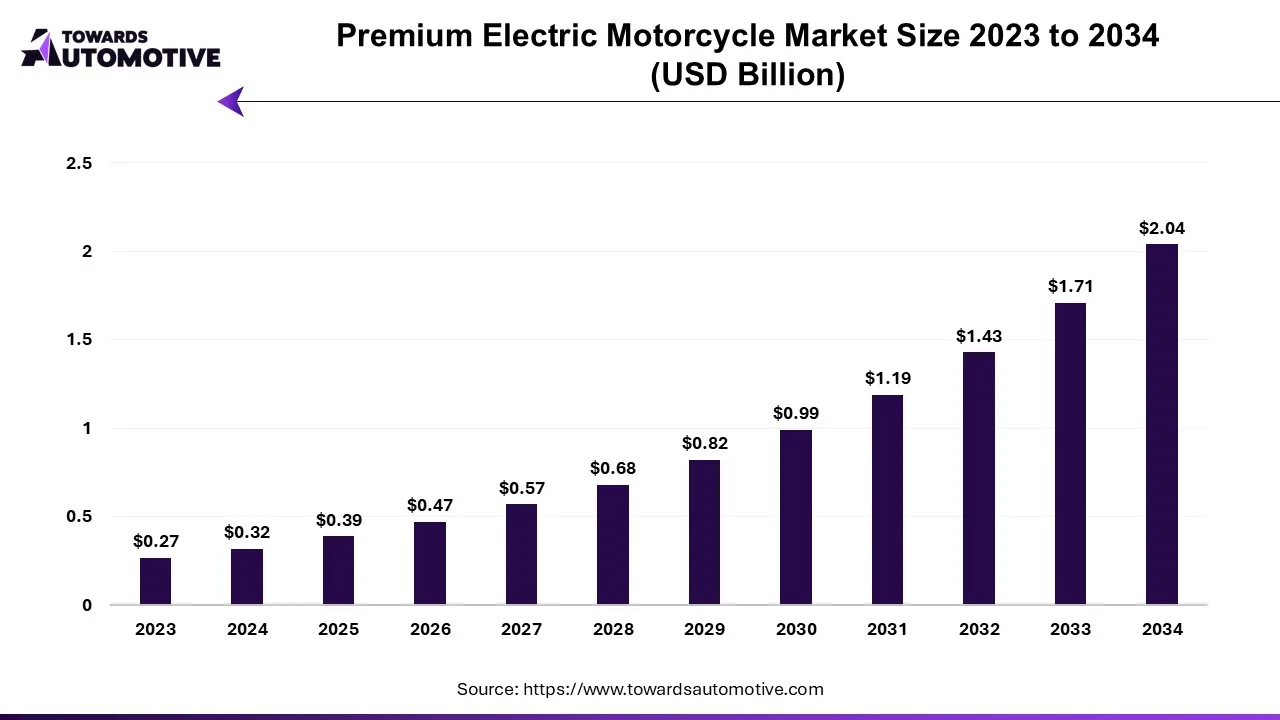
    The global premium electric motorcycle market, valued at approximately USD 0.32 billion in 2024, is projected to reach USD 2.04 billion by 2034. This growth represents a remarkable compound annual growth rate (CAGR) of 20.46% over the next decade.

    Premium Electric Motorcycle Market Size 2023 to 2034 (USD Billion)

    Download statistics of this report @ https://www.towardsautomotive.com/download-statistics/1236

    Key Insights:

    • Europe is currently the largest market for premium electric motorcycles.
    • North America is expected to witness significant growth during the forecast period.
    • The 10-15 kWh battery segment is the most dominant in the market.
    • Sports motorcycles lead the premium segment in terms of product popularity.

    Market Overview

    The premium electric motorcycle market is rapidly evolving, becoming a key player in the global automotive sector due to its combination of performance, sustainability, and innovation. These high-end motorcycles cater to environmentally conscious consumers who seek both luxury and cutting-edge technology. They offer features like immediate torque, quiet operation, advanced battery solutions, and smart connectivity, which set them apart from traditional motorcycles.

    Several factors are contributing to the market’s growth. Stringent environmental policies, government support for electric vehicles, and increasing fuel prices are all driving consumers toward electric mobility. As people become more aware of their carbon footprints, the demand for eco-friendly vehicles is rising, encouraging the adoption of premium electric motorcycles. Industry leaders are investing significantly in research and development to improve battery technology, increase range, and incorporate smart features such as AI-driven diagnostics and rider-assistance systems.

    Furthermore, the premium electric motorcycle market is benefitting from the increasing demand for high-performance vehicles. These motorcycles, equipped with powerful electric motors, deliver impressive acceleration and top speeds, rivaling those of traditional high-end motorcycles. As charging infrastructure improves globally, the market for these premium electric motorcycles is poised for continued growth.

    The Impact of AI on Premium Electric Motorcycles

    Artificial intelligence (AI) is transforming the premium electric motorcycle market by enhancing performance, safety, and user experience. Manufacturers are leveraging AI to create smarter motorcycles that offer improved functionality and more personalized riding experiences.

    AI is being used for predictive maintenance, analyzing data from onboard sensors to anticipate potential issues and reduce downtime. It also optimizes battery management, helping to extend range and improve energy efficiency by dynamically adjusting power delivery based on riding habits.

    In terms of safety, AI plays a vital role by powering advanced rider-assistance systems (ARAS). These systems offer features like collision warnings, adaptive cruise control, and lane-keeping assistance, all of which enhance rider safety and confidence. Additionally, AI-enabled helmets and connectivity solutions provide real-time navigation, weather updates, and communication between vehicles and infrastructure, further enhancing safety.

    AI also contributes to the customization of the riding experience, allowing riders to fine-tune performance settings such as torque delivery and suspension adjustments according to their preferences and riding conditions.

    As AI technology continues to evolve, its integration into premium electric motorcycles will lead to smarter, safer, and more efficient mobility solutions, driving further growth in the market.

    In July 2024, SRIVARU Holding Limited launched an AI-driven platform for managing daily inquiries related to online bookings for their PRANA 2.0 model, further demonstrating the growing role of AI in the sector.

    Recent Developments in the Premium Electric Motorcycle Market

    • December 2024: Ultraviolette Automotive revealed plans to launch a new series of premium electric motorcycles. The first model will debut in Turkey, followed by launches in Germany and Spain.
    • November 2024: Hero MotoCorp entered into a partnership with Zero Motorcycles to co-develop a premium electric motorcycle, marking a significant move in the electric two-wheeler sector.
    • April 2024: Okaya introduced the Ferrato Disruptor, a premium electric motorcycle featuring a 3.97 kWh LFP battery pack. This model offers a riding range of approximately 129 kilometers on a single charge, showcasing advanced battery technology.

    Key Companies in the Premium Electric Motorcycle Market

    • Arc Vehicle Ltd.
    • Emflux Motors
    • Energica Motor Company S.p.A.
    • Harley Davidson, Inc.
    • KTM Sportmotorcycle GmbH
    • TACITA Srl
    • Zero Motorcycles
    • Evoke Motorcycles
    • Hadin Motorcycles

    Buy the ready report now @ https://www.towardsautomotive.com/price/1236

    You can place an order or ask any questions, please feel free to contact us at sales@towardsautomotive.com

    Explore the comprehensive statistics and insights on automotive industry data and its associated segmentation: Get a Subscription 

    For Latest Update Follow Us: https://www.linkedin.com/company/towards-automotive