Blog

  • Recreational Vehicle Market Size, Growth and Trends

    Recreational Vehicle Market Overview Trends, Growth and Future Outlook

    The global recreational vehicle (RV) market was valued at approximately USD 56.79 billion in 2024 and is projected to grow to USD 96.09 billion by 2034, with a compound annual growth rate (CAGR) of 5.40% from 2025 to 2034.
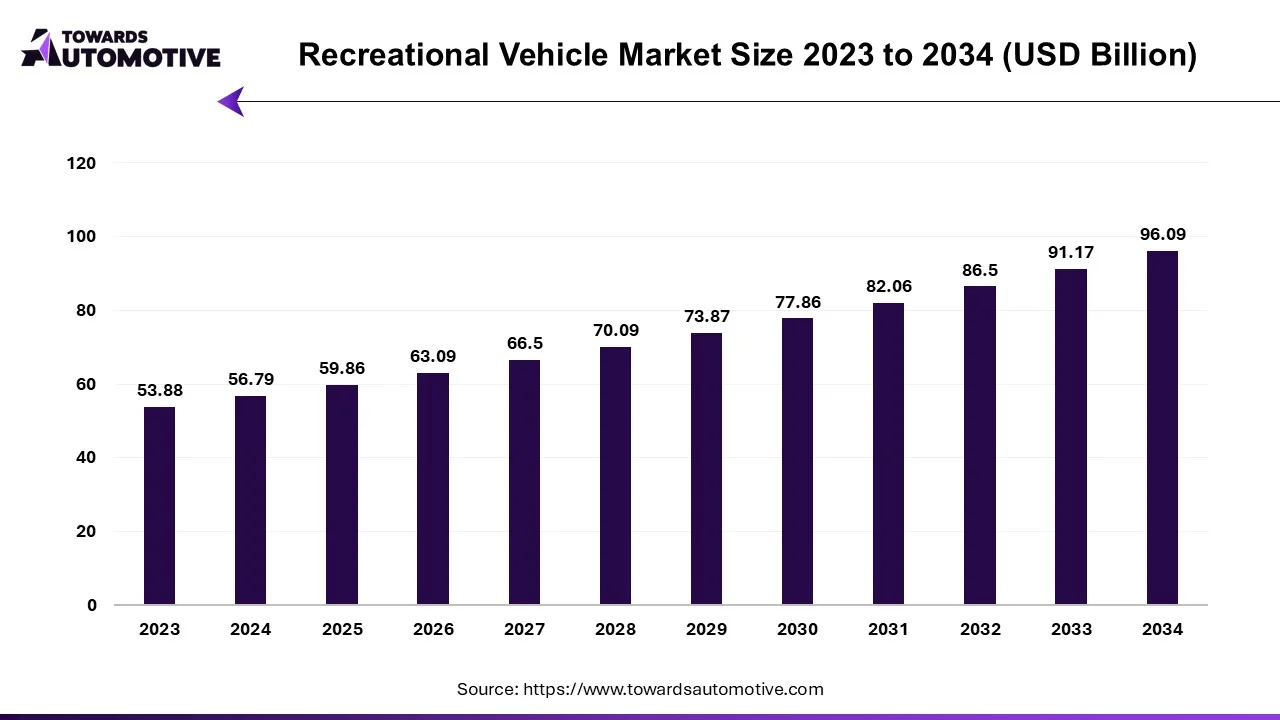
    Recreational Vehicle Market Size 2023 - 2034

    Download statistics of this report @ https://www.towardsautomotive.com/download-statistics/1176

    Key Insights

    • North America currently holds the largest share of the RV market.
    • Europe is expected to experience the fastest growth during the forecast period.
    • Towable RVs are the leading segment in terms of market share.
    • The personal use application segment dominates the market.

    Recreational Vehicle Market: Growth, Trends, and Opportunities

    The recreational vehicle (RV) market has quickly become a thriving industry, fueled by increasing consumer interest in travel, adventure, and outdoor living. RVs—such as motorhomes, travel trailers, and campervans—provide a unique combination of mobility and comfort, allowing people to explore new destinations while enjoying the amenities of home. As disposable incomes rise, vacation preferences shift, and eco-conscious travel options become more popular, the RV market is experiencing substantial growth around the world. From retirees seeking leisurely road trips to younger generations embracing remote work and digital nomadism, RVs are gaining traction across a diverse range of consumers.

    Technological innovations are playing a crucial role in shaping the RV market. Today’s RVs boast smart connectivity, energy-efficient features, and sleek designs. With additions like solar panels, advanced safety systems, and improved navigation tools, modern RVs are becoming more appealing and accessible to a broader audience. Moreover, the growing interest in off-grid, eco-friendly travel is driving demand for RVs equipped with sustainable technologies. Additionally, platforms allowing peer-to-peer RV rentals are making RV travel more accessible for those who may not be ready for ownership, further expanding the market.

    In regions like North America, Europe, and Asia-Pacific, government support for tourism and ongoing infrastructure improvements have fostered a positive environment for RV growth. Emerging trends like luxury RVs and customizable interiors reflect changing consumer desires and are opening new doors for growth. As people continue to prioritize flexibility and personalization in their travel and leisure experiences, the RV market is set to keep expanding, helping to reshape the future of tourism.

    How AI is Shaping the Recreational Vehicle Market

    Artificial intelligence (AI) is playing a transformative role in the RV industry, revolutionizing aspects like design, manufacturing, maintenance, and customer experience. One of the most significant applications of AI is in the development of smart RVs, which are equipped with features that improve convenience, safety, and energy efficiency. AI systems allow users to control and monitor key functions—like climate, lighting, and security—through mobile apps or voice-activated assistants, making RVs more user-friendly and in line with modern travel preferences.

    In the manufacturing process, AI is helping streamline operations, reduce waste, and enhance quality by using predictive analytics and machine learning. AI-driven tools also assist in designing RV interiors to maximize space and function, while enabling manufacturers to customize features based on individual consumer preferences. This level of personalization is becoming crucial in attracting a wider range of consumers to the RV market.

    Additionally, AI is improving maintenance and customer service. Predictive maintenance systems powered by AI can monitor the health of RVs, detect issues early, and provide owners with alerts, reducing downtime and repair costs. These systems help enhance reliability and strengthen consumer trust in RV brands.

    AI is also benefiting RV dealerships and rental platforms by improving customer engagement. For example, AI-driven recommendation tools suggest the best RV models or travel packages based on customer preferences. AI chatbots and virtual assistants provide immediate support, offering personalized guidance to consumers.

    By integrating AI into RV design, operation, and customer engagement, the RV market is not only meeting the needs of tech-savvy travelers but also driving innovation and efficiency in the industry.

    In April 2024, Roadtripper launched an AI-powered platform that personalizes trip recommendations based on user preferences and vehicle specifications, further enhancing the RV travel experience.

    Tourism Growth Fuels RV Market Expansion

    The booming tourism sector is playing a key role in the growth of the recreational vehicle market. As travelers seek more flexible, cost-effective, and unique ways to explore, the demand for RVs has surged. The rise in road-based travel, especially in countries with extensive highway networks, has made RVs a popular choice for those looking to enjoy scenic drives and outdoor adventures. The flexibility to travel at one’s own pace, without the need for fixed accommodations, makes RVs especially attractive to people seeking personalized and immersive experiences.

    Eco-tourism and nature-based travel are also driving RV adoption, as RVs provide an ideal mode of transport for reaching remote or less-accessible areas. With both accommodation and transportation in one vehicle, RVs are perfect for exploring national parks, coastal areas, and other natural attractions while maintaining comfort and privacy.

    As the tourism industry grows and becomes more focused on outdoor activities, manufacturers are responding by creating a wider variety of RVs, from compact, fuel-efficient models to luxury motorhomes. The continued expansion of tourism infrastructure is helping the RV market thrive, creating new opportunities for growth.

    Challenges in the RV Market: High Costs and Fuel Price Volatility

    Despite the many opportunities in the RV market, there are also challenges that may limit its growth. High initial costs, along with ongoing maintenance and operational expenses, can make RV ownership a financial strain for some buyers. Fluctuating fuel prices also impact the affordability of RV travel, particularly for budget-conscious consumers. Additionally, parking and storage requirements for larger RVs, along with the difficulty of navigating big vehicles, can deter some potential buyers.

    Environmental concerns are also driving the need for cleaner, more sustainable RVs, creating pressure for manufacturers to develop more eco-friendly alternatives.

    The Rise of Electric RVs

    The advent of electric RVs is one of the most promising developments in the industry, offering a sustainable alternative to traditional fuel-powered vehicles. Electric RVs, which rely on advanced battery technology, are becoming increasingly popular as consumers seek eco-friendly travel options. These vehicles help reduce carbon emissions and lower operating costs, appealing to environmentally-conscious travelers.

    With improvements in battery capacity and the expansion of electric vehicle (EV) charging infrastructure, electric RVs are becoming more practical for long-distance travel. The growth of EV charging stations along highways and in remote areas makes it easier for RV owners to charge their vehicles on the go, boosting the adoption of electric RVs.

    Electric RVs also appeal to tech-savvy consumers, offering smart features like energy-efficient appliances, solar panels, and connectivity tools that enhance the overall travel experience. Additionally, the lower operational costs and potential tax benefits associated with electric vehicles make them an attractive option for cost-conscious buyers.

    The shift toward electric RVs represents a significant opportunity for growth in the market, helping to meet growing demand for sustainable travel options while pushing the industry toward innovation.

    Towable RVs: Leading the Market

    Towable RVs dominate the market, driven by their affordability, versatility, and broad appeal to a variety of consumers. Unlike motorized RVs, towable models—such as travel trailers, fifth wheels, and pop-up campers—provide a more affordable entry point for first-time RV buyers and outdoor enthusiasts. They offer flexibility, allowing travelers to use their regular vehicles for towing, which keeps costs down while providing the freedom to explore.

    Towable RVs are also popular due to their lightweight designs and the variety of options available. Many models can be towed by SUVs or pickup trucks, making them suitable for a wide range of consumers. Additionally, their ability to detach from the tow vehicle at campsites makes them convenient for travelers who want to explore the area without moving their entire RV.

    These RVs cater to a variety of needs, with options ranging from compact, minimalist designs to larger, more luxurious setups. Towable RVs are further enhanced by advancements in materials and energy-efficient features, making them more fuel-efficient and practical for everyday use.

    Personal Use Drives Growth

    The personal use segment is a major driver of growth in the RV market, as more individuals and families seek customized, flexible travel experiences. This segment includes RVs purchased for personal use, giving owners the freedom to explore new destinations without the constraints of hotels or traditional travel schedules. Road trips, camping, and adventure travel are particularly popular, especially among millennials and families looking for cost-effective and unique vacation options.

    The rise in “staycations” and domestic travel is also fueling the growth of personal RV ownership. With many regions offering beautiful landscapes and extensive road networks, RVs provide the perfect way to explore local destinations in comfort. Personalized amenities like kitchens, sleeping areas, and entertainment systems make RV ownership even more appealing.

    Top Companies in the Recreational Vehicle Market

    • ALINER (Columbia Northwest, Inc.)
    • Swift Group Limited
    • Thor Industries Inc.
    • Trigona SA
    • Winnebago Industries Inc.
    • Dethleffs GmbH & Co. KG
    • Forest River Inc.
    • Gulf Stream Coach, Inc.
    • Hymer GmbH & Co. KG
    • Northwood Manufacturing
    • REV Recreation Group

    Buy the ready report now @  https://www.towardsautomotive.com/price/1176

    You can place an order or ask any questions, please feel free to contact us at sales@towardsautomotive.com

    About Us

    Towards Automotive is a premier research firm specializing in the automotive industry. Our experienced team provides comprehensive reports on market trends, technology, and consumer behaviour. We offer tailored research services for global corporations and start-ups, helping them navigate the complex automotive landscape. With a focus on accuracy and integrity, we empower clients with data-driven insights to make informed decisions and stay competitive. Join us on this revolutionary journey as we work together as a strategic partner to reinvent your success in this ever-changing automotive world.

    Explore the comprehensive statistics and insights on automotive industry data and its associated segmentation: Get a Subscription 

    For Latest Update Follow Us: https://www.linkedin.com/company/towards-automotive
  • Outboard Engine Market Recent Developments and Innovations

    Outboard Engine Market Overview Growth Prospects, Trends, and Regional Insights

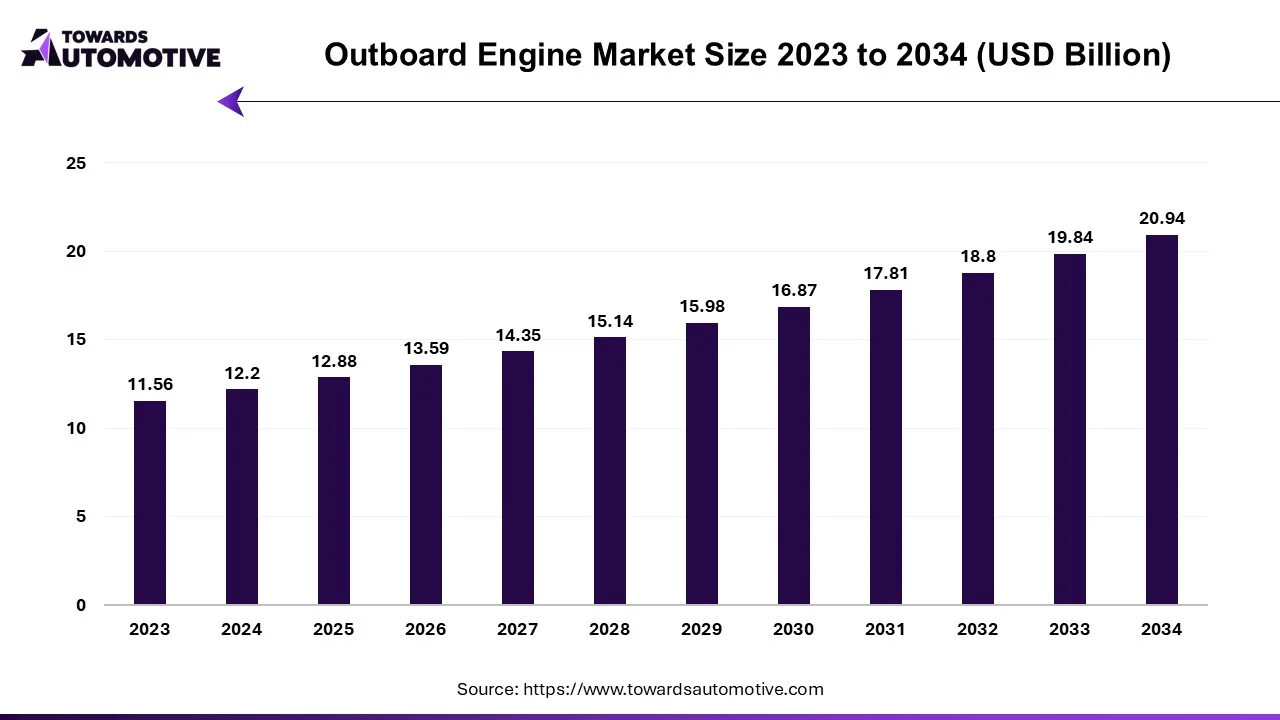
    The global outboard engine market was valued at approximately USD 12.2 billion in 2024 and is expected to grow significantly, reaching around USD 20.94 billion by 2034. This growth reflects a steady compound annual growth rate (CAGR) of 5.55% from 2025 to 2034.

    Outboard Engine Market Size 2023 - 2034

    Download statistics of this report @ https://www.towardsautomotive.com/download-statistics/1163

    Key Highlights

    • North America currently holds the largest share of the outboard engine market.
    • The Asia Pacific region is predicted to experience the highest growth rate during the forecast period.
    • The 2-stroke engine segment continues to lead the market by engine type.
    • Electric ignition systems are currently dominating the market in terms of ignition technology.

    The Growing Role of AI in the Onboard Engines Market

    Artificial Intelligence (AI) is becoming increasingly influential in transforming the onboard engines market, bringing about advancements that enhance engine performance, safety, and efficiency. One of the primary ways AI is making an impact is through predictive maintenance. By analyzing data collected from onboard sensors and past performance data, AI can forecast when parts of an engine are likely to fail or need servicing. This proactive approach to maintenance helps operators avoid unexpected breakdowns, reduce costly repairs, and minimize downtime. With AI, maintenance schedules can be optimized to keep engines running smoothly, ensuring that they perform at their best and saving money in the long run.

    AI also contributes significantly to fuel efficiency and overall operational performance. Through the use of intelligent control systems, AI is able to adjust engine settings in real-time based on various factors like load, weather, and fuel type. This ensures that the engine uses fuel in the most efficient way possible, leading to lower fuel consumption and fewer emissions. With the increasing pressure to meet stricter environmental regulations, the ability to optimize fuel efficiency is more important than ever, making AI a key player in the push for greener and more sustainable maritime transportation.

    In addition to improving individual engine performance, AI also plays a crucial role in fleet management. By leveraging data analytics and machine learning, AI can monitor the performance of entire fleets, helping operators streamline logistics, reduce fuel use, and enhance overall operational efficiency. This data-driven approach allows for smarter decision-making and more effective fleet management.

    AI’s capabilities also extend to the realm of autonomous vessels. With AI at the helm, various aspects of navigation and engine control can be automated, reducing the reliance on human intervention and improving safety. As the technology continues to advance, AI is expected to play an even more prominent role in shaping the future of onboard engines, driving innovation, and elevating operational outcomes across the maritime industry.

    Recent Developments in the Onboard Engines Market

    In February 2024, Yamaha introduced a hydrogen-powered outboard engine, marking a significant step forward in sustainable boating. This innovative engine is designed to improve the performance and environmental impact of recreational boats, offering a cleaner, greener alternative to traditional fuel-powered engines.

    In November 2023, Caudwell Marine unveiled a turbocharged V6 diesel outboard engine that delivers 590Nm of torque at 2,200 RPM. This powerful engine is built to provide superior performance for demanding boating applications, ensuring a smooth and efficient experience on the water.

    In September 2023, Honda launched the BF350, a V8 engine engineered to elevate the boating experience. With its advanced design, the BF350 promises enhanced power and reliability, making it an exciting option for boat enthusiasts seeking top-tier performance.

    These recent advancements highlight the growing focus on innovation and performance in the onboard engines market, with companies pushing the boundaries to meet the needs of both recreational and professional boaters.

    Buy the ready report now @ https://www.towardsautomotive.com/price/1163

    You can place an order or ask any questions, please feel free to contact us at sales@towardsautomotive.com

    About Us

    Towards Automotive is a premier research firm specializing in the automotive industry. Our experienced team provides comprehensive reports on market trends, technology, and consumer behaviour. We offer tailored research services for global corporations and start-ups, helping them navigate the complex automotive landscape. With a focus on accuracy and integrity, we empower clients with data-driven insights to make informed decisions and stay competitive. Join us on this revolutionary journey as we work together as a strategic partner to reinvent your success in this ever-changing automotive world.

    Explore the comprehensive statistics and insights on automotive industry data and its associated segmentation: Get a Subscription 

    For Latest Update Follow Us: https://www.linkedin.com/company/towards-automotive
  • Road Haulage Market Growth Driven by E-Commerce Expansion and Technological Advancements

    Growth and Trends in the Road Haulage Market

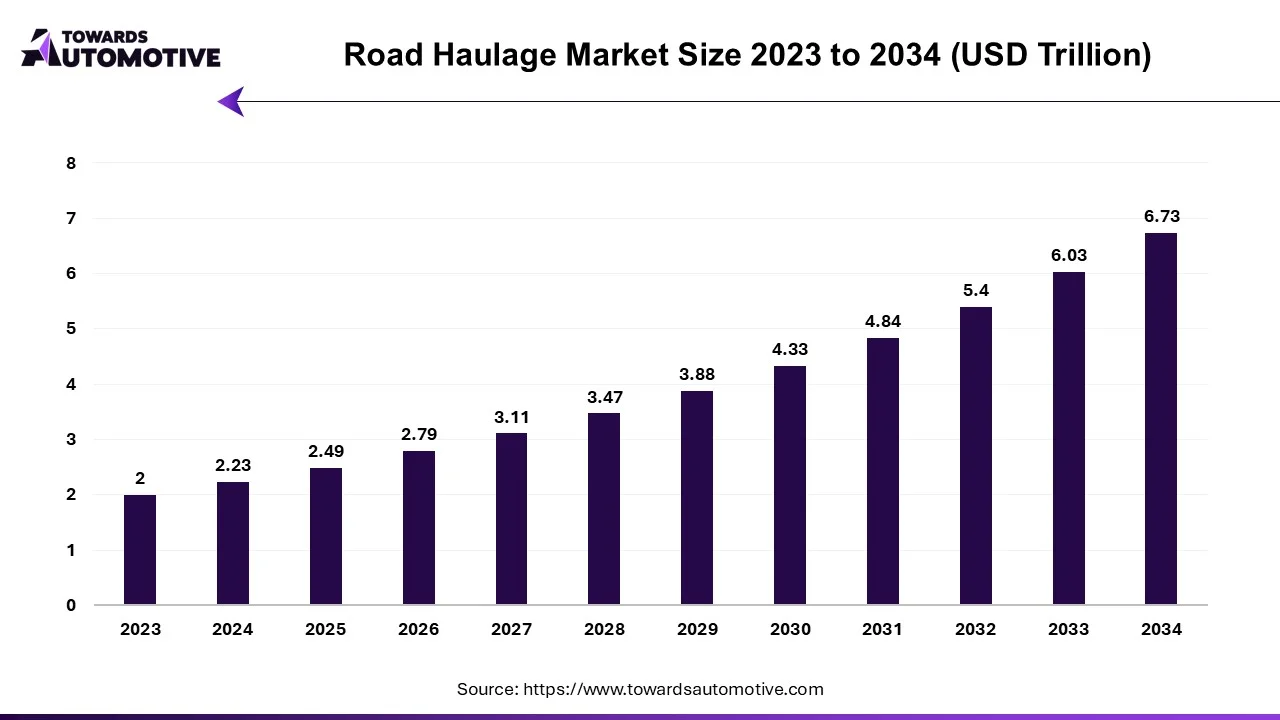
    The road haulage industry is valued at USD 2.23 trillion in 2024 and is projected to expand to approximately USD 6.73 trillion by 2034, with an annual growth rate of 11.67% between 2025 and 2034.

    Road Haulage Market Size 2023 - 2034

    Download statistics of this report @ https://www.towardsautomotive.com/download-statistics/1133

    Key Insights

    • Asia Pacific is the leading region in the road haulage market.
    • North America is expected to experience robust growth during the forecast period.
    • The domestic road haulage segment holds the largest market share.
    • The food & beverage sector is the leading application within the market.

    Overview

    The road haulage market is crucial to global trade, enabling the transportation of goods across regions and industries. It includes the movement of freight via roadways, offering businesses the flexibility, reliability, and affordability needed for smooth operations. Key players in this market include logistics firms, fleet operators, and third-party transport providers that ensure the efficient delivery of products, from perishable goods to industrial materials.

    The market has experienced substantial growth in recent years, driven by factors such as the boom in e-commerce, urbanization, and the need for more efficient supply chains. Technological advancements like telematics, route optimization, and fleet management systems have greatly improved operational efficiency, allowing for real-time tracking and shorter transit times. As sustainability becomes a priority, the use of electric and alternative fuel vehicles is growing to reduce carbon emissions.

    Regional trends are a key factor in shaping the market, with developed regions focusing on infrastructure improvements and emerging markets benefiting from industrial growth and better road networks. The road haulage sector is expected to continue evolving, embracing new technologies to meet changing consumer needs and global logistical challenges.

    How AI is Revolutionizing the Road Haulage Industry

    Artificial Intelligence (AI) is playing a transformative role in the road haulage market by optimizing operations, enhancing efficiency, and addressing challenges such as cost management, environmental impact, and customer demands. AI-based solutions enable fleet operators and logistics providers to streamline their processes, make data-driven decisions, and boost overall performance.

    AI’s impact is most notable in route optimization. By analyzing factors such as traffic, weather, and delivery schedules, AI systems suggest the most efficient routes, reducing fuel use and travel time. This not only improves cost-efficiency but also contributes to sustainability by lowering carbon emissions. Predictive maintenance, powered by AI, also helps prevent vehicle breakdowns by monitoring vehicle health through IoT sensors and identifying issues before they cause disruptions, which reduces downtime and maintenance costs.

    Additionally, AI aids in demand forecasting, allowing companies to predict market fluctuations and allocate resources more effectively. Real-time tracking systems powered by AI improve communication with customers, ensuring transparency and better service. Autonomous vehicles, driven by AI, are also beginning to be integrated into the road haulage industry, offering the potential to reduce labor costs and enhance safety.

    In December 2023, Solvento introduced Audita, an AI-driven software designed to enhance the capabilities of the on-road freight industry.

    E-Commerce Growth Fuels Expansion of the Road Haulage Market

    The rapid rise of e-commerce is playing a major role in the growth of the road haulage market, as it creates a need for more efficient logistics and transportation to keep up with the increasing demand for fast product delivery. With the growth of online shopping, driven by wider internet access, smartphone use, and consumers’ desire for convenience, the retail industry has undergone a transformation, putting significant pressure on supply chains. Road haulage services are a key part of e-commerce operations, helping transport goods from warehouses to distribution centers and, eventually, to customers’ homes through last-mile delivery.

    E-commerce platforms are focused on providing fast and reliable delivery to improve customer satisfaction, prompting logistics companies to expand their fleets and enhance their operations. Technologies like GPS tracking, real-time delivery updates, and route optimization tools have become essential for ensuring on-time deliveries while also cutting costs. The growing demand for same-day and next-day delivery, especially in urban and suburban areas, has further highlighted the need for efficient road haulage services.

    Additionally, the e-commerce sector helps small and medium-sized businesses (SMEs) by offering affordable logistics solutions that allow them to expand their reach. As e-commerce continues to grow globally, the demand for road haulage services is expected to increase, solidifying its crucial role in supporting this rapidly evolving industry.

    Top Companies in the Automotive Interior Trim Market

    • CONCOR
    • AM Cargo
    • Gosselin
    • Kindersley Transport Ltd.
    • SLH Transport, LLC
    • UK Haulier
    • Woodside Logistics Group
    • LKW WALTER
    • Manitoulin Transport Inc.
    • Monarch Transport

    Buy the ready report now @ https://www.towardsautomotive.com/price/1133

    You can place an order or ask any questions, please feel free to contact us at sales@towardsautomotive.com

    About Us

    Towards Automotive is a premier research firm specializing in the automotive industry. Our experienced team provides comprehensive reports on market trends, technology, and consumer behaviour. We offer tailored research services for global corporations and start-ups, helping them navigate the complex automotive landscape. With a focus on accuracy and integrity, we empower clients with data-driven insights to make informed decisions and stay competitive. Join us on this revolutionary journey as we work together as a strategic partner to reinvent your success in this ever-changing automotive world.

    Explore the comprehensive statistics and insights on automotive industry data and its associated segmentation: Get a Subscription 

    For Latest Update Follow Us: https://www.linkedin.com/company/towards-automotive
  • Aerostat System Market Trends, Growth and Future Outlook (2024-2034)

    Aerostat System Market Growth and Trends

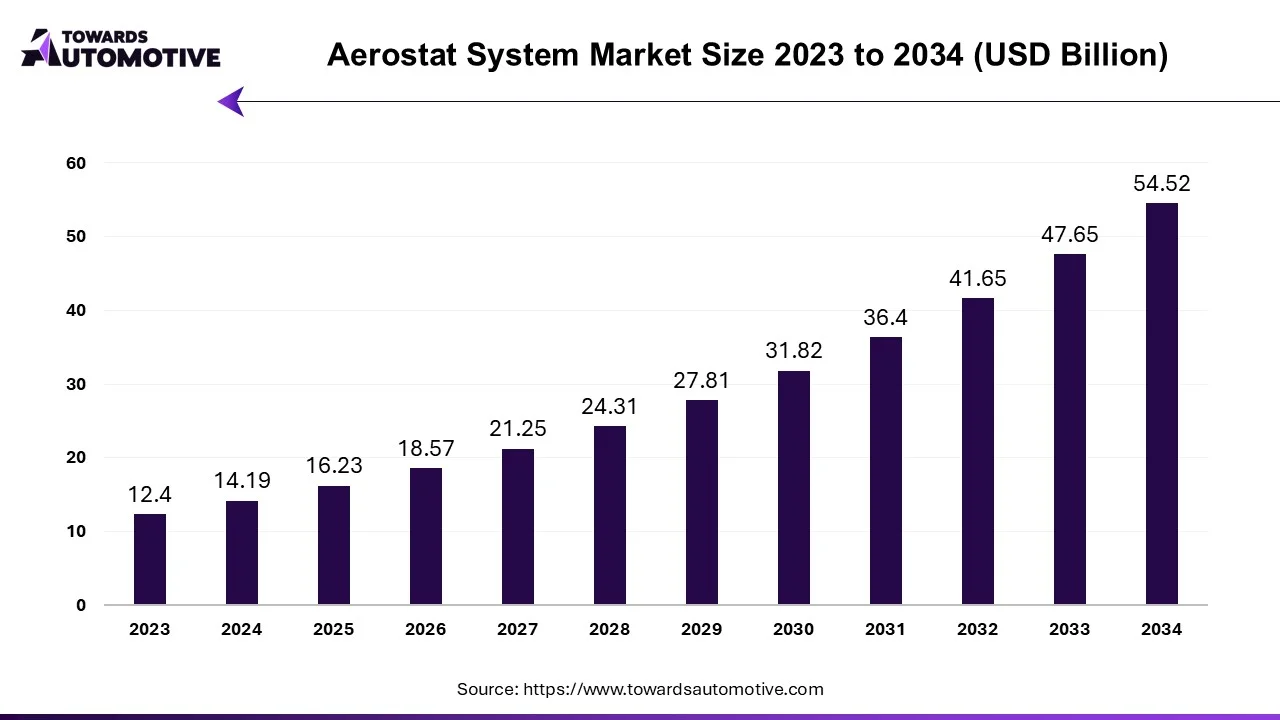
    The aerostat system market, valued at USD 14.19 billion in 2024, is projected to reach USD 54.52 billion by 2034, growing at a CAGR of 14.41% from 2025 to 2034.

    Aerostat System Market Size 2023 - 2034

    Download statistics of this report @ https://www.towardsautomotive.com/download-statistics/1480

    Key Insights:

    • North America leads the market, with significant growth expected in Europe.
    • Airships dominate the product segment.
    • The large-sized class holds the largest market share.

    Introduction

    The aerostat system market is growing rapidly, driven by increasing demand for surveillance, monitoring, and communication solutions across industries like defense, homeland security, telecommunications, and environmental monitoring. Aerostats—also known as tethered balloons or airships—offer a cost-effective alternative to satellites and traditional aircraft for wide-area surveillance. These systems can carry cameras, sensors, communication devices, and radar, providing continuous coverage over large areas at high altitudes. The primary drivers of this market are the need for improved security and situational awareness, especially in defense and military applications like border patrol, reconnaissance, and intelligence gathering.

    Aerostats also serve the telecommunications sector by providing temporary communication networks in remote or disaster-affected regions where traditional infrastructure is lacking. Environmental monitoring, such as weather observation and wildlife tracking, is another growing use. Advances in materials, lighter tethering systems, and improved payload capabilities are further fueling market growth. With increasing demand for cost-effective and versatile aerial surveillance, the aerostat system market is expected to expand rapidly, offering solutions for both government and commercial sectors.

    The Role of AI in the Aerostat System Market

    Artificial intelligence (AI) is significantly enhancing the performance of aerostat systems by enabling real-time data analysis, autonomous operations, and better decision-making. Aerostats are widely used for surveillance, monitoring, and communications, and integrating AI into these systems makes them more efficient and functional. AI algorithms can process data from onboard sensors, cameras, and radars to detect and track objects, identify patterns, and provide actionable insights in real time. This reduces the need for constant human intervention, allowing aerostats to monitor large areas more effectively.

    In defense and security, AI allows for autonomous flight control, enabling aerostats to adjust to environmental changes, avoid obstacles, and optimize flight paths for surveillance. AI-powered predictive maintenance tools also help identify potential system failures before they occur, minimizing downtime and operational costs.

    Moreover, AI can improve communication networks deployed by aerostats, optimizing signal routing and data transmission, especially in remote or disaster-stricken areas. As AI continues to evolve, its integration into aerostat systems will transform the market, making these systems smarter, more autonomous, and more efficient in various sectors like defense, telecommunications, and environmental monitoring.

    In April 2024, Honeywell launched an AI-driven platform aimed at enhancing maintenance, repair, and overhaul (MRO) capabilities in the aerospace sector, highlighting the growing importance of AI in this industry.

    Growing Demand for Economical Surveillance Solutions

    The shift toward cost-effective surveillance solutions is driving growth in the aerostat system market. Aerostats provide an affordable alternative to traditional surveillance technologies like satellites and manned aircraft. They can remain in the air for extended periods, covering large areas at a fraction of the cost of other platforms. This makes them particularly attractive for both defense and commercial applications, where budget constraints often limit the use of more expensive technologies.

    In defense and border security, aerostats offer long-duration surveillance without the need for constant refueling or repositioning, reducing operational costs and increasing efficiency. Their ability to carry advanced sensors and radar systems allows them to monitor vast areas in real time, eliminating the need for multiple aircraft or satellites. Additionally, their quick deployment makes aerostats invaluable in remote or disaster-affected regions for emergency response and situational awareness.

    In commercial sectors like environmental monitoring, telecommunications, and infrastructure surveillance, aerostats are increasingly used as affordable solutions for monitoring vast territories or providing temporary communication networks. The demand for cost-effective surveillance across various industries is a key factor driving the aerostat system market’s expansion.

    Challenges to Market Growth

    Despite the growth, the aerostat system market faces several challenges. Weather conditions, such as strong winds and storms, can impact the stability and operation of aerostats. Additionally, the high initial costs and ongoing maintenance requirements can be a barrier to adoption, especially in developing regions. Regulatory restrictions and varying airspace regulations across regions can also complicate operations. Competition from alternative surveillance technologies, like drones and satellites, may further impact market growth.

    Buy the ready report now @ https://www.towardsautomotive.com/price/1480

    You can place an order or ask any questions, please feel free to contact us at sales@towardsautomotive.com

    About Us

    Towards Automotive is a premier research firm specializing in the automotive industry. Our experienced team provides comprehensive reports on market trends, technology, and consumer behaviour. We offer tailored research services for global corporations and start-ups, helping them navigate the complex automotive landscape. With a focus on accuracy and integrity, we empower clients with data-driven insights to make informed decisions and stay competitive. Join us on this revolutionary journey as we work together as a strategic partner to reinvent your success in this ever-changing automotive world.

    Explore the comprehensive statistics and insights on automotive industry data and its associated segmentation: Get a Subscription 

    For Latest Update Follow Us: https://www.linkedin.com/company/towards-automotive
  • Automotive HVAC System Market Size, Trends and Key Players

    Transforming Comfort Insights into the Automotive HVAC System Market

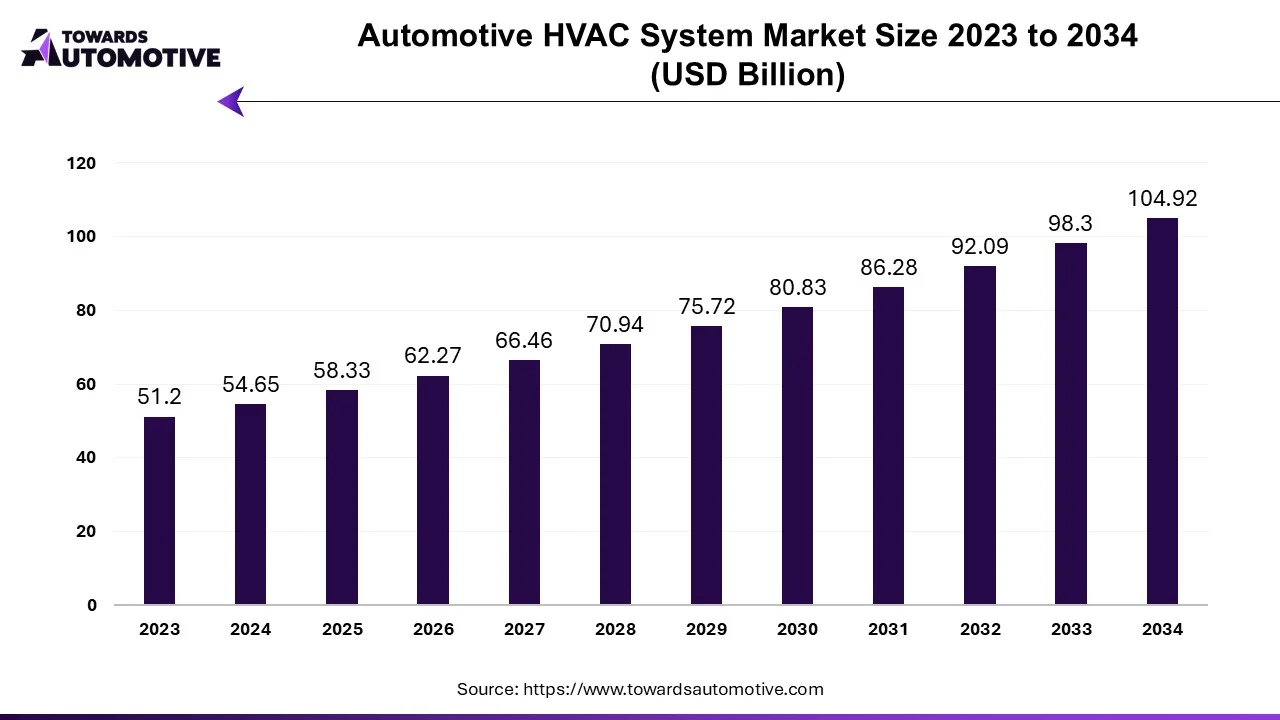
    The global automotive HVAC (Heating, Ventilation, and Air Conditioning) system market is projected to grow substantially, starting from an estimated size of USD 54.65 billion in 2024 to a remarkable USD 104.92 billion by 2034, with a compound annual growth rate (CAGR) of 6.74% from 2025 to 2034.

    Automotive HVAC System Market Size 2023 - 2034

    Download statistics of this report @ https://www.towardsautomotive.com/download-statistics/1479

    Key Highlights

    • Asia Pacific leads the market, dominating with a substantial share.
    • Europe is set to experience significant growth, driven by advancements and evolving automotive technologies.
    • Passenger cars represent the largest market segment by vehicle type.
    • Automatic HVAC systems emerge as a dominant technology segment, reflecting consumer preferences for smarter solutions.

    Introduction

    The automotive HVAC system market has become a pivotal segment of the automotive industry, playing a key role in enhancing passenger comfort and vehicle air quality. With advancements in technology and increasing consumer expectations, HVAC systems have evolved to provide greater energy efficiency, environmental sustainability, and personalized comfort.

    These systems ensure optimal temperature control and air circulation, creating a comfortable and safe environment for drivers and passengers alike. Key market drivers include:

    • Rising demand for luxury vehicles
    • Stricter emissions regulations
    • Growing emphasis on energy-efficient and eco-friendly solutions
    • Enhanced consumer demand for comfort and convenience

    Recent Developments in the Automotive HVAC System Market

    • November 2024: Halifax Group announced an investment in the development of high-quality air-conditioning systems tailored for passenger cars, marking a strategic move to enhance comfort and efficiency in the segment.
    • August 2024: Kia partnered with Hyundai to collaborate on innovative temperature control technologies for vehicles, highlighting a joint effort to push the boundaries of climate control solutions.
    • September 2023: Denso Corporation introduced an advanced air-conditioning system specifically designed for commercial vehicles, emphasizing its focus on meeting the unique needs of heavy-duty applications.

    Leading Companies in the Automotive HVAC System Market

    The automotive HVAC system market features prominent players driving innovation and growth through advanced technologies and strategic initiatives:

    • Denso Corporation: A global leader in automotive components, known for cutting-edge HVAC solutions tailored for both passenger and commercial vehicles.
    • Valeo: Renowned for its energy-efficient and eco-friendly climate control systems, addressing the rising demand for sustainable technologies.
    • Brose Fahrzeugteile: Specializes in providing advanced HVAC modules, enhancing vehicle comfort and energy optimization.
    • Eberspächer Gruppe: Focuses on heating and cooling solutions, particularly for electric and hybrid vehicles.
    • MAHLE GmbH: Offers a comprehensive range of HVAC systems, integrating smart technologies for improved performance and user experience.
    • Hanon Systems: Pioneers in climate solutions, delivering innovative HVAC systems for electric and internal combustion vehicles.
    • Sanden Holdings Corporation: Expert in air-conditioning technologies, known for its robust and efficient designs.
    • Calsonic Kansei Corporation: Combines innovation with reliability, offering high-quality HVAC systems across vehicle segments.
    • Keihin Corporation: Provides advanced thermal management solutions, ensuring optimal climate control in diverse automotive applications.
    • Mitsubishi Heavy Industries: Known for its expertise in industrial and automotive HVAC technologies, delivering highly efficient systems for modern vehicles.

    Buy the ready report now @ https://www.towardsautomotive.com/price/1479

    You can place an order or ask any questions, please feel free to contact us at sales@towardsautomotive.com

    About Us

    Towards Automotive is a premier research firm specializing in the automotive industry. Our experienced team provides comprehensive reports on market trends, technology, and consumer behaviour. We offer tailored research services for global corporations and start-ups, helping them navigate the complex automotive landscape. With a focus on accuracy and integrity, we empower clients with data-driven insights to make informed decisions and stay competitive. Join us on this revolutionary journey as we work together as a strategic partner to reinvent your success in this ever-changing automotive world.

    Explore the comprehensive statistics and insights on automotive industry data and its associated segmentation: Get a Subscription 

    For Latest Update Follow Us: https://www.linkedin.com/company/towards-automotive
  • General Aviation Market Size, Trends and Growth Insights

    Exploring the General Aviation Market Growth, Trends, and Key Players

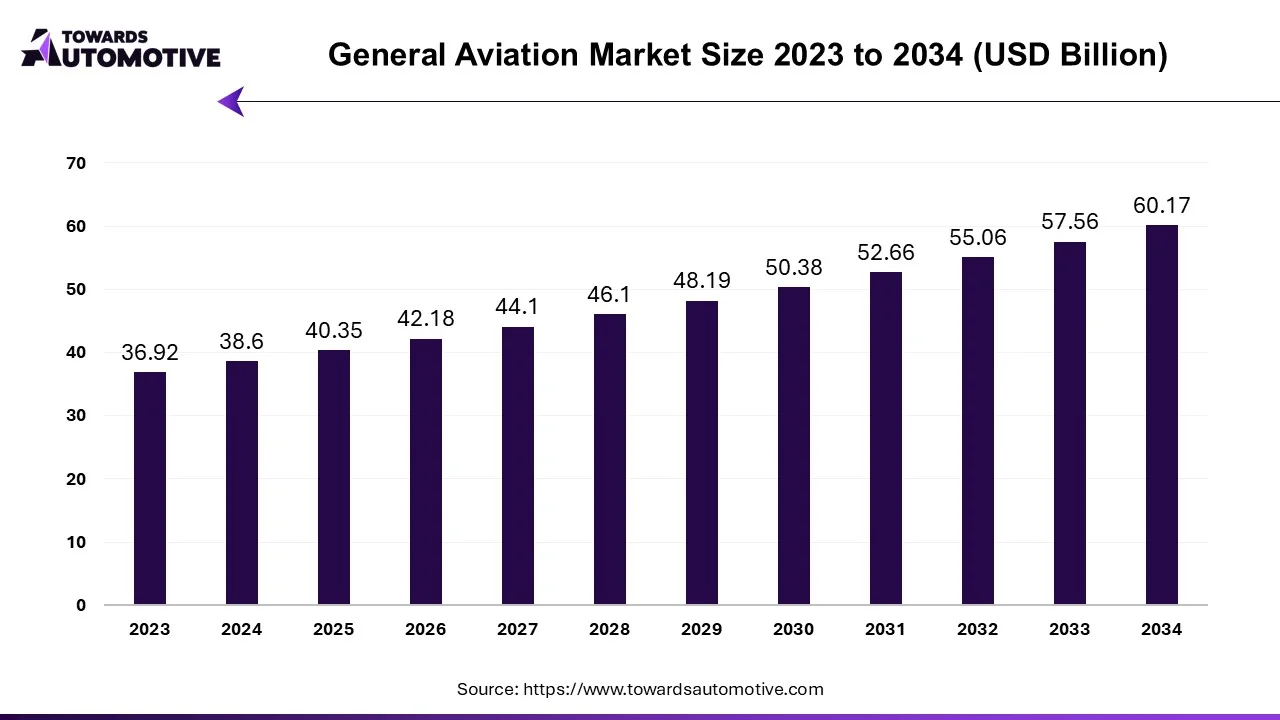
    The general aviation market is valued at approximately USD 38.6 billion in 2024 and is projected to grow steadily, reaching around USD 60.17 billion by 2034. This growth represents a compound annual growth rate (CAGR) of 4.54% between 2025 and 2034.

    General Aviation Market Size 2023 - 2034

    Download statistics of this report @ https://www.towardsautomotive.com/download-statistics/1478

    Key Highlights

    • North America leads the market with the largest share.
    • Europe is expected to exhibit the fastest growth rate during the forecast period.
    • Among aircraft types, the piston fixed-wing segment commands a significant portion of the market.
    • Helicopters are anticipated to grow at a remarkable pace, reflecting rising demand in various applications.

    The Role of AI in the General Aviation Market

    Artificial intelligence (AI) is revolutionizing the general aviation market by improving aircraft performance, safety, and operational efficiency. Its integration into aviation systems is driving innovations in flight operations, maintenance, and the overall passenger experience.

    AI-powered tools enhance safety by improving navigation, collision avoidance, and weather forecasting. By analyzing vast amounts of real-time data from sensors and other sources, AI predicts potential hazards, adjusts flight paths, and provides early warnings to pilots about weather changes or obstacles. These advancements significantly reduce the risk of accidents.

    In maintenance, AI-driven predictive technologies are transforming how aircraft are serviced. Machine learning algorithms analyze sensor data and maintenance histories to anticipate equipment failures before they occur, minimizing downtime and reducing repair costs. This ensures better aircraft reliability and streamlines maintenance operations.

    AI is also paving the way for autonomous and semi-autonomous flight capabilities, which have the potential to reshape general aviation. These systems can handle certain flight functions, reducing pilot workload while improving efficiency and safety.

    For passengers, AI enhances the flying experience by offering personalized services such as optimized scheduling, automated check-ins, and improved communication through AI-powered chatbots. For example, in July 2024, Veryon introduced an AI-enabled chatbot to assist aircraft maintenance professionals, showcasing how AI can streamline operations across the industry.

    Boosted by Investments, the General Aviation Market is Thriving

    Rising investments in the aviation sector are fueling growth by fostering innovation, expanding infrastructure, and increasing market accessibility. Funding from both private and public sectors has accelerated the development of advanced aircraft, cutting-edge avionics, and sustainable propulsion systems like electric and hybrid technologies. These advancements appeal to environmentally conscious consumers and meet growing demands for sustainable solutions.

    Infrastructure improvements, such as expanded regional airports, upgraded maintenance facilities, and dedicated terminals for private aviation, make flying more convenient and accessible. These developments also help reduce congestion at commercial airports, enhancing overall aviation efficiency.

    Additionally, investments are supporting emerging services like air taxis, on-demand charter flights, and unmanned aerial vehicle (UAV) operations. These innovations are expanding the scope of general aviation, providing flexible, cost-effective options for various user needs.

    Challenges in the General Aviation Market

    Despite its growth, the general aviation market faces challenges that could hinder expansion. High operational and maintenance costs, including fuel, insurance, and upkeep, remain barriers for many users. Regulatory hurdles, such as stringent safety standards and airspace restrictions, add complexity for operators.

    A shortage of qualified pilots and technicians, coupled with the high cost of pilot training, further limits growth. Additionally, economic fluctuations and concerns about environmental emissions may impact the market’s long-term demand.

    Buy the ready report now @ https://www.towardsautomotive.com/price/1478

    You can place an order or ask any questions, please feel free to contact us at sales@towardsautomotive.com

    About Us

    Towards Automotive is a premier research firm specializing in the automotive industry. Our experienced team provides comprehensive reports on market trends, technology, and consumer behaviour. We offer tailored research services for global corporations and start-ups, helping them navigate the complex automotive landscape. With a focus on accuracy and integrity, we empower clients with data-driven insights to make informed decisions and stay competitive. Join us on this revolutionary journey as we work together as a strategic partner to reinvent your success in this ever-changing automotive world.

    Explore the comprehensive statistics and insights on automotive industry data and its associated segmentation: Get a Subscription 

    For Latest Update Follow Us: https://www.linkedin.com/company/towards-automotive
  • Automatic Tire Inflation System Market Overview (2024 – 2034)

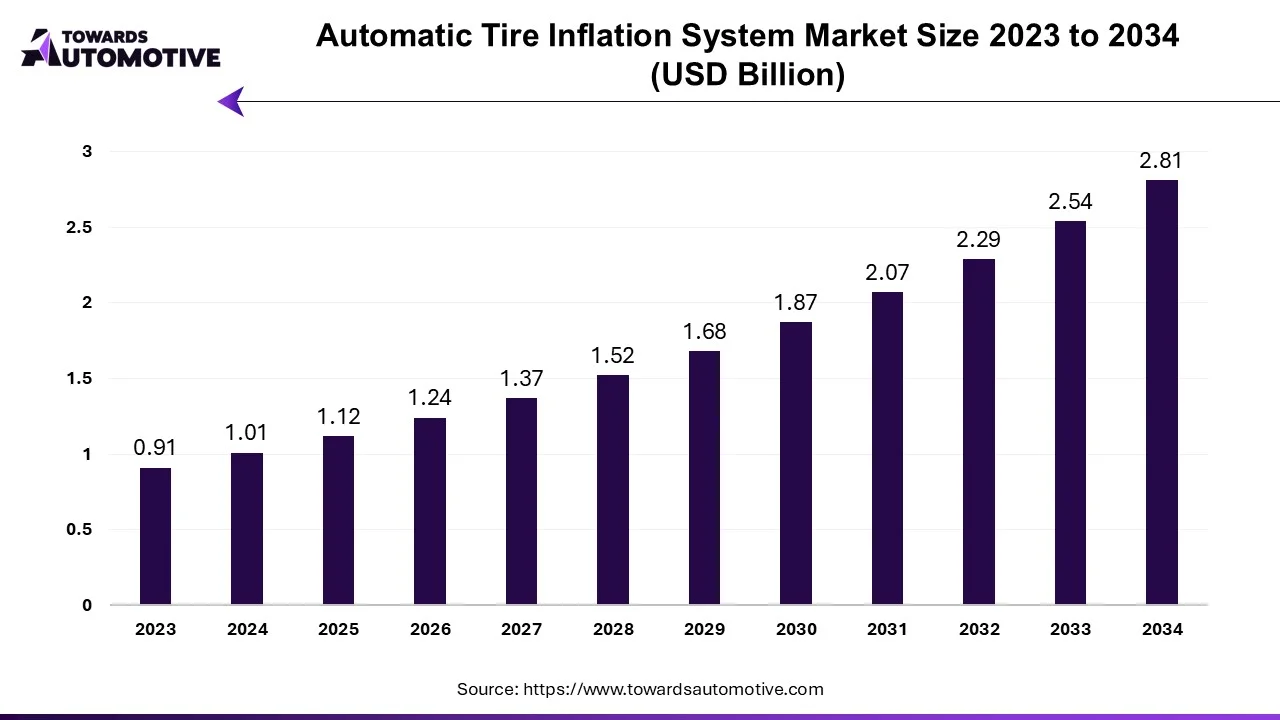
    Market Overview of the Automatic Tire Inflation System Trends, Growth, and Key PlayersThe automatic tire inflation system (ATIS) market was valued at USD 1.01 billion in 2024 and is projected to grow to approximately USD 2.81 billion by 2034. This growth represents a compound annual growth rate (CAGR) of 10.8% from 2025 to 2034.

    Automatic Tire Inflation System Market 2023 - 2034

    Download statistics of this report @ https://www.towardsautomotive.com/download-statistics/1301

    Key Insights

    • North America currently leads the global market for automatic tire inflation systems.
    • The Asia Pacific region is expected to experience the fastest growth rate during the forecast period.
    • Among the different system types, the central tire inflation system holds the largest market share.
    • The on-highway vehicle segment is the dominant category in terms of vehicle type.

    How AI is Shaping the Automatic Tire Inflation System Market

    Artificial Intelligence (AI) is revolutionizing the automatic tire inflation system (ATIS) market by improving the efficiency, precision, and capabilities of tire inflation technologies. AI is being integrated into these systems to enable real-time monitoring, predictive analytics, and smarter decision-making.

    AI-driven sensors and algorithms constantly monitor tire pressure and provide real-time data to drivers or fleet managers. These AI systems analyze a range of tire data, including pressure, temperature, and wear patterns, making immediate adjustments when needed. By using machine learning, AI can detect tire pressure issues much earlier than traditional systems, ensuring quicker and more accurate inflation corrections.

    AI also boosts predictive maintenance by analyzing historical tire data to identify wear and tear trends. This allows for the early detection of potential issues like leaks or damage, helping to prevent tire failures before they happen. By predicting when maintenance or inflation adjustments are required, AI not only extends tire life but also reduces vehicle downtime and enhances fleet efficiency, especially for commercial fleets.

    Additionally, AI optimizes tire inflation by considering real-time driving conditions. It can adjust tire pressure based on factors such as vehicle load, speed, and road surface, ensuring the best performance for fuel efficiency, safety, and tire longevity. These dynamic adjustments help lower fuel consumption, reduce tire wear, and decrease the likelihood of accidents caused by incorrect tire pressure.

    Recent Developments in the Automatic Tire Inflation System Market

    • In October 2024, Xiaomi introduced the Portable Electric Air Compressor 2 Pro, which can inflate tires in just 45 seconds.
    • In June 2024, WOLFBOX launched the Megaflow24 Pro air compressor, an advanced system that automatically inflates vehicle tires.
    • In April 2024, Aperia unveiled the Halo Connect i3, an automatic tire inflation system that monitors all tires on a vehicle and inflates them automatically as needed.

    Leading Companies in the Automatic Tire Inflation System Market

    • Aperia Technologies Inc.
    • Dana Limited
    • Continental AG
    • Parker Hannifin Corporation
    • ti. systems GmbH
    • SAF-HOLLAND SE
    • Bigfoot Equipment LTD
    • Goodyear Tire & Rubber Company
    • Cummins Inc.
    • Denso Corporation

    Buy the ready report now @ https://www.towardsautomotive.com/price/1301

    You can place an order or ask any questions, please feel free to contact us at sales@towardsautomotive.com

    About Us

    Towards Automotive is a premier research firm specializing in the automotive industry. Our experienced team provides comprehensive reports on market trends, technology, and consumer behaviour. We offer tailored research services for global corporations and start-ups, helping them navigate the complex automotive landscape. With a focus on accuracy and integrity, we empower clients with data-driven insights to make informed decisions and stay competitive. Join us on this revolutionary journey as we work together as a strategic partner to reinvent your success in this ever-changing automotive world.

    Explore the comprehensive statistics and insights on automotive industry data and its associated segmentation: Get a Subscription 

    For Latest Update Follow Us: https://www.linkedin.com/company/towards-automotive
  • Terminal Tractor Market Report Growth, Trends and Regional Insights (2024 – 2034)

    Growth and Trends in the Terminal Tractor Market Key Insights and Regional Outlook (2024 – 2034)

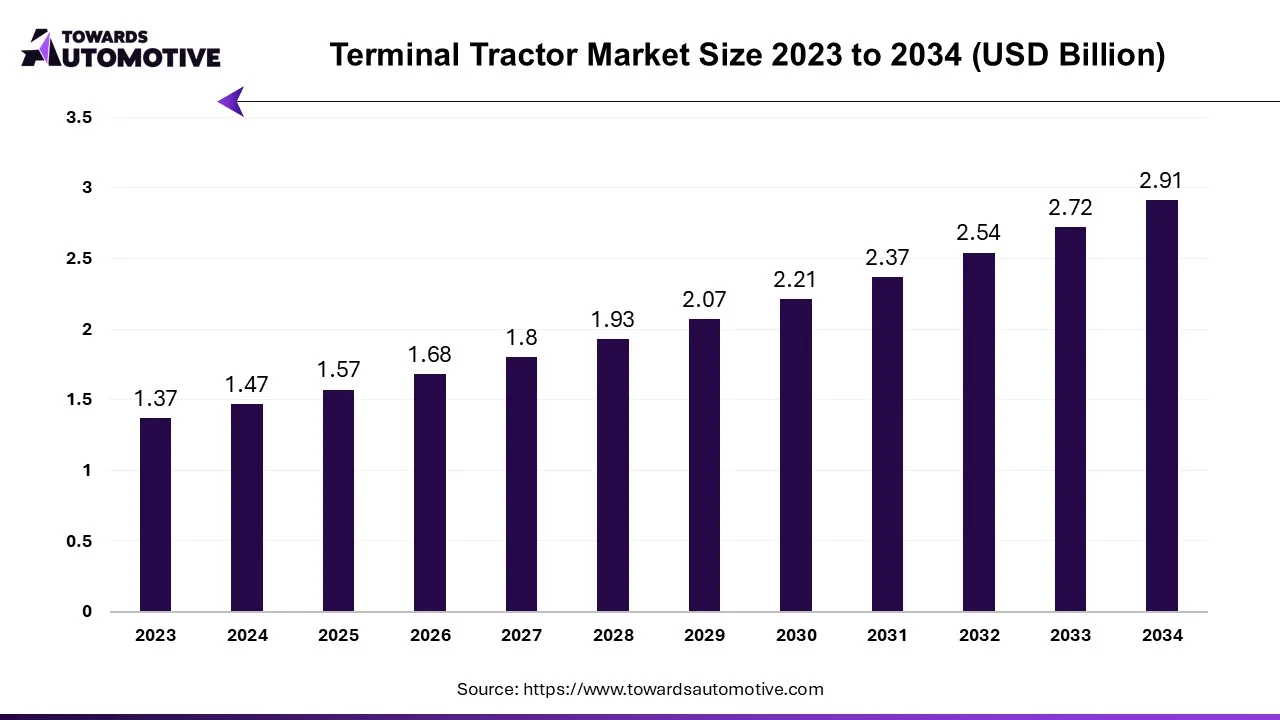
    The terminal tractor market, valued at approximately USD 1.47 billion in 2024, is projected to reach about USD 2.91 billion by 2034, growing at a compound annual growth rate (CAGR) of 7.09% from 2025 to 2034.

    Terminal Tractor Market Size 2023 - 2034

    Download statistics of this report @ https://www.towardsautomotive.com/download-statistics/1299

    Key Insights:

    • North America currently holds the largest share of the terminal tractor market.
    • Asia-Pacific is expected to experience the fastest growth during the forecast period.
    • Port terminals are the largest application segment in the market.
    • Manual terminal tractors lead in terms of vehicle type.

    Market Overview:

    The terminal tractor market has experienced significant growth due to the rising need for specialized vehicles in logistics and freight management. Terminal tractors, also known as yard trucks or shunt trucks, are crucial for moving containers and trailers within confined areas such as ports, rail yards, and warehouses. These vehicles help reduce congestion, increase the efficiency of cargo handling, and support faster operations, which is increasingly important in global trade.

    The surge in e-commerce, expanding port infrastructure, and a growing focus on automated, fuel-efficient, and environmentally friendly solutions have all contributed to the demand for terminal tractors. Technological advancements, particularly in electric and hybrid models, alongside automation features, are improving operational efficiency and reducing costs. Furthermore, emerging economies, especially in Asia-Pacific and Latin America, are modernizing their logistics infrastructure, which is driving the demand for these vehicles.

    Terminal Tractor Market: Key Insights, Growth Drivers, and Regional Trends (2024 – 2034)

    The terminal tractor market has experienced notable growth due to the rising demand for efficient vehicles in logistics and freight operations. Terminal tractors, also referred to as yard trucks, hostlers, or shunt trucks, are critical for moving containers and trailers within confined spaces such as ports, rail yards, distribution centers, and warehouses. These vehicles streamline the movement of goods, reduce congestion, and speed up cargo handling—crucial in today’s fast-paced global trade environment.

    The expansion of e-commerce, improvements in port infrastructure, and the growing need for automated, fuel-efficient, and eco-friendly solutions have further driven the demand for terminal tractors. Innovations such as electric and hybrid terminal tractors and automation systems are helping reduce operational costs and boost sustainability. Additionally, emerging economies, especially in Asia-Pacific and Latin America, are investing in modernizing their logistics and transportation infrastructure, creating a significant demand for these vehicles.

    Role of AI in the Terminal Tractor Market

    Artificial Intelligence (AI) is revolutionizing the terminal tractor market by improving efficiency, safety, and automation. AI technologies are being integrated into terminal tractors to enhance performance and streamline operations at ports, distribution centers, and rail yards.

    AI enables autonomous terminal tractors to operate without human intervention. Using AI-powered systems, these vehicles can move containers and trailers more accurately and safely, minimizing the need for manual labor. AI algorithms process data from sensors, cameras, and GPS systems to navigate complex environments, avoid obstacles, and follow designated routes with minimal oversight.

    AI also aids in fleet management by using predictive analytics to monitor vehicle performance, track maintenance schedules, and foresee potential failures. This helps reduce downtime, extend the lifespan of terminal tractors, and ensure smooth operations. Furthermore, AI-driven software optimizes vehicle allocation, directing tractors to areas where they are most needed based on real-time data.

    Safety is another key benefit of AI in terminal tractors. Machine learning and computer vision allow these vehicles to detect hazards in their path, automatically taking corrective actions, such as slowing down or changing direction, to avoid accidents and damage to goods and equipment.

    In August 2024, Ryder System, Inc. launched an AI-based platform to enhance truck operations, further demonstrating the growing role of AI in improving logistics and transportation.

    Regional Insights

    North America: Growth Drivers North America is the leading region in the terminal tractor market. The robust trade and logistics infrastructure, coupled with the growth of e-commerce and intermodal transportation, are major contributors to market expansion in this region. The U.S. and Canada are home to some of the busiest and most advanced ports, where ongoing investments in port modernization are crucial for handling growing cargo volumes. Terminal tractors play an essential role in the efficient movement of containers within these busy terminals.

    The rapid rise of e-commerce in North America has increased the need for fast, reliable logistics, further fueling the demand for terminal tractors. Intermodal transportation, which involves combining rail, road, and sea freight, is also driving demand for these vehicles, as they are vital for transferring containers between different transport modes at intermodal terminals.

    Asia-Pacific: Fastest Growing Region Asia-Pacific is expected to see the highest growth rate in the terminal tractor market. The rapid expansion of port infrastructure and overall development in the region is a major growth driver. With Asia-Pacific becoming a global trade hub, its ports are expanding to handle larger ships and increased trade volumes. This creates a demand for efficient cargo handling solutions, and terminal tractors are key to facilitating the movement of containers and trailers within ports and distribution centers.

    Countries like China, India, Japan, and Singapore are heavily investing in upgrading their port facilities, creating a significant demand for modern terminal tractors. Additionally, emerging economies in the region, such as Vietnam, Indonesia, and the Philippines, are also contributing to this growth through infrastructure development. As these nations strengthen their logistics networks, the demand for advanced terminal tractors, including electric and autonomous models, continues to rise. Government policies aimed at improving logistics efficiency are further supporting the growth of the market.

    Recent Developments

    • December 2024: EUROGATE launched an autonomous terminal tractor designed for landside and waterside container handling.
    • July 2024: Tico introduced the Pro-Spotter electric terminal tractor in partnership with Volvo Penta.
    • April 2024: Asia Airfreight Terminal launched an autonomous electric tractor to meet demand across Hong Kong.

    Leading Companies in the Terminal Tractor Market

    • Kalmar
    • Konecranes
    • Terberg Group
    • Sany Group
    • Hyster-Yale Materials Handling
    • Mol CY
    • Capacity Truck
    • Outrider Technologies, Inc.
    • Fernride
    • CVS Ferrari
    • MAFI Transport-System
    • TICO Tractors

    Buy the ready report now @ https://www.towardsautomotive.com/price/1299

    You can place an order or ask any questions, please feel free to contact us at sales@towardsautomotive.com

    About Us

    Towards Automotive is a premier research firm specializing in the automotive industry. Our experienced team provides comprehensive reports on market trends, technology, and consumer behaviour. We offer tailored research services for global corporations and start-ups, helping them navigate the complex automotive landscape. With a focus on accuracy and integrity, we empower clients with data-driven insights to make informed decisions and stay competitive. Join us on this revolutionary journey as we work together as a strategic partner to reinvent your success in this ever-changing automotive world.

    Explore the comprehensive statistics and insights on automotive industry data and its associated segmentation: Get a Subscription

    For Latest Update Follow Us: https://www.linkedin.com/company/towards-automotive
  • What Impact Does AI Have on the Future of Automotive Interior Material Market?

    Automotive Interior Material Market Size:

    The global automotive interior material market size is calculated at USD 61.15 billion in 2024 and is expected to be worth USD 91.48 billion by 2034, expanding at a CAGR of 4.19% from 2024 to 2034.

    AI impact on Automotive Interior Material?

    Material Development and Optimization

    One of the primary ways AI contributes to this market is through material development and optimization. AI algorithms can analyze vast datasets to identify innovative combinations of materials that enhance durability, comfort, and sustainability. This analytical capability allows manufacturers to create lightweight yet robust materials that improve fuel efficiency and performance, addressing stringent industry regulations and the growing consumer demand for eco-friendly vehicles. By leveraging AI, manufacturers can develop materials that not only meet safety and performance standards but also have a lower environmental impact.

    Design Process Revolution

    AI is also revolutionizing the design process for automotive interiors. Designers can utilize advanced simulations and predictive modeling powered by AI to test various materials under different conditions virtually. This allows for optimization based on factors such as temperature resistance, wear and tear, and aesthetic appeal. The ability to conduct these virtual tests significantly reduces the time and costs associated with physical prototyping, leading to faster material selection and improved overall design quality.

    Personalization of Interiors

    Another exciting application of AI in the automotive interior material market is personalization. AI-driven systems enable manufacturers to collect and analyze customer data, allowing them to create tailored interior solutions that cater to individual preferences for material texture, color, and finish. This level of customization is particularly appealing in premium and luxury segments, where personalized interiors can significantly enhance the perceived value of a vehicle. By understanding consumer preferences, manufacturers can offer unique interior experiences that resonate with customers.

    Automation of Manufacturing Processes

    AI also plays a crucial role in automating manufacturing processes. AI-powered robots and systems can optimize the production of automotive interior materials, ensuring high precision, reducing waste, and improving overall efficiency. Automation not only enhances production speed but also helps maintain consistent quality standards across large batches of materials.

    Case in Point: SimScale’s AI Platform

    A notable development in this space occurred in April 2024, when SimScale launched an AI-based platform specifically designed for automotive design. This platform aims to lower costs while enhancing the design process, showcasing how AI can streamline operations and foster innovation in the automotive interior materials market.

    Overall, AI is significantly reshaping the Automotive Interior Material Market by fostering innovation in material development, enhancing design processes, enabling personalized interiors, and streamlining manufacturing. As the industry continues to evolve, the integration of AI will likely play a pivotal role in meeting the growing demands for sustainable, efficient, and customized automotive interiors.

    Download Statistics: https://www.towardsautomotive.com/price/1007

    What is Automotive Interior Material?

    The automotive interior material market is experiencing substantial growth due to the rising demand for high-quality, comfortable, and aesthetically appealing vehicle interiors. As consumer preferences shift towards enhanced in-cabin experiences, automakers are increasingly focusing on providing premium materials that offer both durability and comfort. Materials such as leather, polymers, fabrics, and composites are widely used in vehicle interiors, offering a balance of luxury, functionality, and weight reduction. The growing trend towards lightweight materials, driven by the need for improved fuel efficiency and reduced emissions, is further propelling the demand for advanced interior materials.

    Technological advancements in manufacturing processes and material innovations are also driving market growth. Automakers are adopting eco-friendly and sustainable materials, such as recycled plastics and organic fabrics, in response to increasing environmental concerns and stricter regulations. This shift towards sustainable materials is gaining momentum, as it aligns with the global trend of sustainability in automotive manufacturing.

    Additionally, the rise in electric vehicles (EVs) and autonomous driving technology is reshaping the automotive interior material market. EVs often feature futuristic, minimalistic interiors, with an emphasis on high-tech materials and designs. Autonomous vehicles, on the other hand, are likely to prioritize comfort and luxury, further driving the demand for premium interior materials.

    Recent Developments
    • In August 2024Dodo Mat launched Merdeka edition Camouflage car mat. This car mat is designed using Army Green pattern to pay tributes to the Malaysian Army.
    • In July 2024, Hyundai Mobis launched a new range of airbags. These airbags are specially designed for Purpose Built Vehicles (PBVs) to provide enhanced safety.
    • In May 2023, Maxi-Cosi launched a new range of car seats. These new car seats are designed for rotating and sliding as per user requirements.
    Top Companies in the Automotive Interior Material Market
    • Toyota Boshoku Corporation
    • Sage Automotive Interiors Inc.
    • Grupo Antolin
    • Delphi Automotive Plc Grammer AG
    • Toyoda Gosei Co Ltd
    • Lear Corporation (U.S.)
    • Adientplc (Ireland)
    • Faurecia S.A. (France)
    • Bayerische Motoren Werke AG
    Market Segments

    By Product

    • Leather
    • Composite
    • Metals
    • Fabrics
    • Plastic

    By Application

    • Dashboard
    • Seats
    • Airbags & Seatbelts
    • Carpets & Headliners
    • Others

    By Vehicle Type

    • Passenger Vehicles
    • Commercial Vehicles

    By Region

    • North America
    • Latin America
    • Europe
    • Asia Pacific
    • The Middle East and Africa

    You can place an order or ask any questions, please feel free to contact us at sales@towardsautomotive.com

  • Automotive Air Filter Market Size (USD 7,710 Mn) by 2032

    Overview

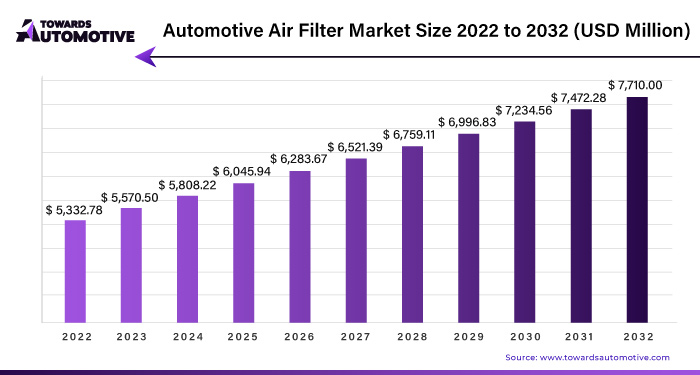
    The automotive air filter market was valued at USD 5,570.5 million in the year 2023 and is expected to reach USD 7,710 million by the year 2032, registering a CAGR of 4.18% over the forecast period.

    Automotive Air Filter Market Size 2023 - 2032

    Download a sample version of this report @ https://www.towardsautomotive.com/download-statistics/1013

    • The intake air filter ensures engine efficiency, while a poorly performing filter can increase emissions. Similarly, cabin air filters prevent harmful pollutants from entering the passenger cabin, directly impacting passenger satisfaction.
    • Soil, dust, road conditions, traffic, and construction all contribute to global air quality variations, with abrasive materials such as quartz and corundum harming engine parts and demanding adequate air filtration.
    • Quartz, found worldwide, is more complex than most metals used in automotive engines, highlighting the importance of air filters in protecting the engine from abrasive particles and road dust.
    • The COVID-19 pandemic significantly influenced the automobile air filter market in 2020, resulting in temporary shutdowns. However, by 2021, car sales had marginally grown, signaling recovery and growth.
    • Intake and cabin air filters play crucial roles in vehicles.
    • The growing automotive market, particularly increased car sales, is driving demand for air filters. Consumers are increasingly aware of the importance of air filters in providing purified air and maintaining a clean passenger cabin environment, thereby driving market growth.
    • Automotive air filters block dirt particles and contaminants from entering a vehicle’s engine or interior.
    • Most modern vehicles are equipped with two types of air filters: air intake filters and cabin air filters.
    • They ensure a proper air-fuel mixture, which supports performance, reduces emissions and enhances vehicle performance.
    • Air intake filters maintain torque, engine power, and fuel efficiency while extending vehicle longevity.
    • Cabin air filters are designed to absorb contaminants like dust and allergens, preserving air quality inside the car.
    • Automotive air filters are typically made from paper, cotton, or foam materials.
    • The global automotive air filter market is growing due to the enforcement of greenhouse gas emission regulations and increased demand for high-end vehicles with enhanced passenger comfort.
    • Additionally, the market benefits from the growth in automotive sales and production.
    • However, the increasing demand for electric vehicles constrains the market’s growth.
    • Despite this limitation, there are opportunities for growth driven by the rising demand for multi-filtration systems and advancements in technology throughout the forecast period.

    Rising Demand for Commercial Vehicle Parts and Components Driving Market Growth

    • The upsurge in commercial vehicle sales is propelled by increased construction, industrial activities, and road freight transit, leading to heightened demand for their parts and components.
    • In 2022, approximately 24 million commercial vehicles, encompassing vehicles for transporting goods or passengers, were sold globally. Notably, there’s a preference shift towards versatile pick-up trucks capable of accommodating both cargo and passengers.
    • Medium and heavy-duty trucks, predominant in the commercial vehicle segment, often cover longer distances than passenger cars, necessitating more frequent servicing and maintenance of their parts and components.
    • The United States is expected to manufacture 9.2 million motor vehicles in 2021, comprising 1.5 million automobiles and a significant 7.6 million commercial vehicles, indicating robust demand for commercial vehicle production.
    • With the ongoing growth in commercial vehicles, automotive air filter manufacturers are poised to capitalize on increased revenue opportunities, driving overall market expansion.
    • The continuous growth of the automobile market, especially in the cars segment, serves as a primary driver for the global automotive air filter market, particularly the cabin filter segment.
    • Increasing awareness among automobile users about the importance of air filters in maintaining clean air and preventing dirt from entering passenger cabins contributes to the robust growth of the cabin air filter market.
    • All automobiles are equipped with various filters, including air, oil, fuel, and cabin filters, which, coupled with rising car production, is expected to fuel market expansion during the forecast period.
    • The automotive air filter market is predicted to expand due to new trends in brake dust filters and gearbox filters for automated gearbox systems.
    • Cellulose medium is commonly used in most car air intake filters due to its cost-effectiveness.
    • Synthetic media types improve combustion airflow, fuel economy, and emissions due to their huge flow area, high performance, and higher water resistance.
    • Companies like MANN+HUMMEL focus on developing synthetic ultra-fine fiber media with excellent separation efficiency to extend filter service life.

    Automotive Air Filter Market Leaders

    • ACDelco Corporation
    • ALCO Filters Ltd.
    • Robert Bosch GmbH
    • Cummins Inc.
    • DENSO Corporation
    • Donaldson Company Inc.
    • MAHLE GmbH
    • Sogefi SpA
    • Parker Hannifin Corp.
    • Ahlstrom-Munksjö
    • Toyota Boshoku Corporation
    • Freudenberg & Co. KG
    • Nirvana Being

    Automotive Air Filter Market News

    • In January 2023, Panasonic Automotive Systems Company, based in the United States, introduced its nanoe X portable in-vehicle air cleaner to improve and preserve cabin air purity in the North American market.
    • In October 2022, Audi announced a partnership with supplier MANN+HUMMEL to create a particle filter tailored for electric vehicles designed to efficiently capture particulate matter from the surroundings.
    • Nirvana Being introduced its artificial car cabin filter solutions in October 2021 as a measure to combat pollution. Targeting potential markets in South Asia, particularly India, the company aims to secure a significant market share with its innovative product.
    • The Nirvana Being Airific Car Cabin Filter utilizes Active Molecular Technology (AMT). This do-it-yourself (DIY) product is designed to replace the existing filter located behind the glove compartment. By forming a barrier, the solution effectively blocks PM 2.5, PM 1, SOX & NOX gases, pollen, germs, TVOCs, and viruses, preventing their entry and recirculation within the car’s interior.

    Automotive Air Filter Industry Segmentation

    • Automotive air filters are essential components within a vehicle’s intake system.
    • They prevent dust, debris, and contaminants from entering the engine.
    • A clean air supply facilitated by air filters promotes optimal engine performance and longevity.
    • Air filters also enhance fuel efficiency by maintaining proper air-to-fuel ratios.
    • Additionally, they play a crucial role in reducing harmful emissions emitted by the vehicle.

    Market Segmentation

    By Type

    • Air Intake Filters
    • Cabin Air Filters

    By Vehicle Type

    • Passenger Cars
    • Commercial Vehicles

    By Geography

    • North America
      • US
      • Canada
      • Rest of North America
    • Europe
      • Germany
      • UK
      • France
      • Italy
      • Rest of Europe
    • Asia-Pacific
      • China
      • Japan
      • India
      • South Korea
      • Rest of Asia-Pacific
    • Latin America
      • Brazil
      • Rest of Latin America
    • Middle-East and Africa
      • South Africa
      • Rest of Middle-East and Africa

    Investigate further: https://automotivewebwire.com/insights/electric-vehicle-battery-market/

    Explore the comprehensive statistics and insights on automotive industry data and its associated segmentation: https://www.towardsautomotive.com/get-an-annual-membership

    To own our research study instantly, Click here @ https://www.towardsautomotive.com/price/1013

    You can place an order or ask any questions, please feel free to contact us at sales@towardsautomotive.com

    About Us

    Towards Automotive is a premier research firm specializing in the automotive industry. Our experienced team provides comprehensive reports on market trends, technology, and consumer behaviour. We offer tailored research services for global corporations and start-ups, helping them navigate the complex automotive landscape. With a focus on accuracy and integrity, we empower clients with data-driven insights to make informed decisions and stay competitive. Join us on this revolutionary journey as we work together as a strategic partner to reinvent your success in this ever-changing automotive world.

    For Latest Update Follow Us: https://www.linkedin.com/company/towards-automotive